
M1A · .308 Battle Rifle · LPVO Geometry
M1A LPVO (2026 Guide): How the HSS DMR .308 1–10× Turns a Classic into a Modern Geometry Rifle
The Springfield Armory M1A is not a fashion rifle. It is a heavy .308 / 7.62 NATO battle rifle with real reach, recoil, and responsibility. Whether you are running a full-size 22″ Standard M1A or a SOCOM pattern carbine, your optic cannot be an afterthought. You need a solution that respects the rifle’s heritage while unlocking modern, geometry-driven fire control.
That is where a true M1A LPVO comes in—specifically, the SWAT Optics HSS DMR .308 1–10× FFP LPVO with the M-Reticle . This guide explains why the HSS DMR is an ideal LPVO for the M1A platform, how the M-Reticle reduces cognitive overload, and how Smart Zero AI plus the HSS DMR Ballistics Calculator give you a data-driven zero instead of guesswork.
We will keep this grounded in real doctrine—drawing on concepts from FM 3-22.9 (Rifle Marksmanship), ATP 3-21.8 (Infantry Platoon and Squad), and MCRP 3-01B (Marine Corps Rifle Marksmanship)—adapted to the realities of a semi-auto .308 battle rifle.
Start Here: See the M1A LPVO System You’re Actually Building
M1A + .308 + HSS DMR M-Reticle = one language across streets, windows, vehicles, and rural property lines.

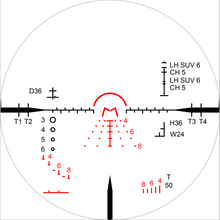
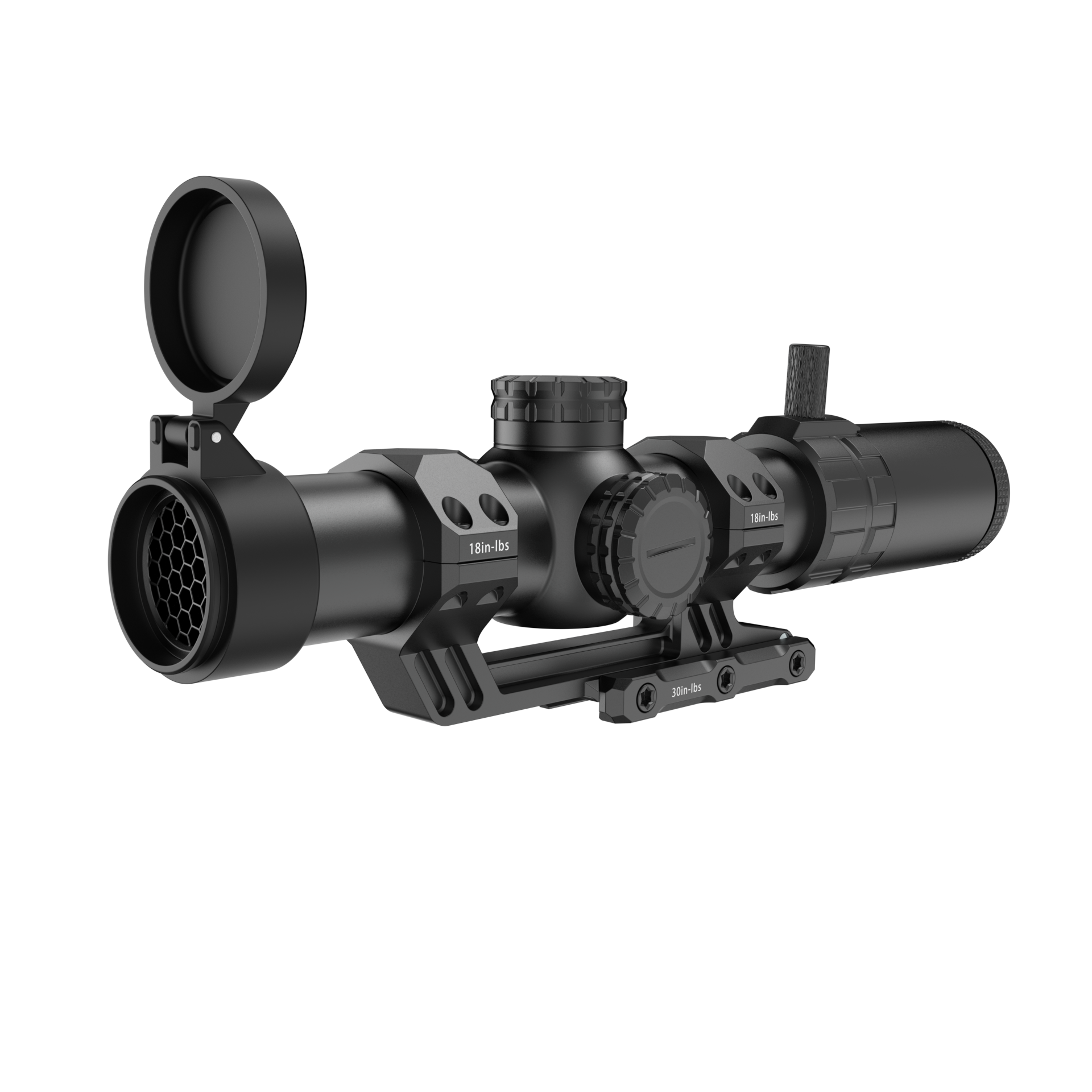
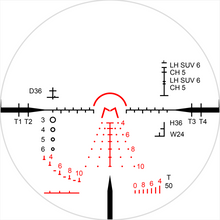
Watch the M-Reticle Work Before You Mount It on an M1A
These four core videos form the visual “field manual” for how the M-Reticle behaves around streets, vehicles, clutter, and target transitions—skills that map directly onto a well-set-up M1A LPVO.
Build Your M1A LPVO Knowledge Stack
- The LPVO Handbook (2026 Edition) — Complete Guide for AR-15 & AR-10 Shooters
- LPVO Mastery Hub 2026 — HSS DMR 1–10× M-Reticle Framework
- Best LPVO 2026 — Why the HSS DMR Becomes the New Standard
- Best AR-10 LPVO (2026) — Doctrine-Driven HSS DMR .308 Setup
- HSS DMR M-Reticle Field Manual (2026 Edition)
- Reticle Academy (2026): HSS DMR LPVO Training for AR-15 & AR-10
- HSS DMR Ballistics Calculator & Smart Zero AI
Table of Contents
- 1. The M1A’s Role in 2026 and Why an LPVO Fits
- 2. What an M1A LPVO Must Actually Do
- 3. Why the M-Reticle? Reducing Cognitive Overload under Stress
- 4. Geometry on the M1A: W24, H36, CH5, SUV6 & T-Zones
- 5. Smart Zero AI for M1A: Picking the Right Zero for Your Engagement Range
- 6. Using the HSS DMR Ballistics Calculator with the M1A
- 7. M1A Builds: Full-Size vs SOCOM with the Same LPVO
- 8. Training Drills to Make the M1A LPVO System Real
- 9. Why the HSS DMR .308 Is the Best M1A LPVO in 2026
- 10. Trademarks & Professional Use Disclaimer
1. The M1A’s Role in 2026 and Why an LPVO Fits
The Springfield M1A traces its lineage to the M14—issued as a 7.62 NATO battle rifle with real expectations for distance, barrier performance, and accountability. In 2026, many shooters run M1As as:
- Heavier overwatch rifles for rural property or ranch work
- Classic-pattern .308 battle rifles for training and competition
- Homage builds that still need modern PID and geometry, not nostalgia
The M1A is almost never chambered in 5.56. It lives in the .308 / 7.62 NATO problem set: more recoil, more retained energy, and more ability to punch through intermediate barriers. That means your optic must be able to:
- Identify posture and objects in hand past 300 yards
- Work around vehicles, windows, railings, and cluttered backgrounds
- Support disciplined holds from 0–600+ yards without turning into a math exam
A 1–10× LPVO with a doctrine-backed reticle matches that mission profile far better than a simple 3–9× hunting scope or a red dot with magnifier.
2. What an M1A LPVO Must Actually Do
Most “M1A LPVO” conversations get lost in brand names and illumination brightness. That is not how doctrine thinks. When you pair an LPVO to a .308 rifle, the optic must help you solve four jobs:
- Positive Identification (PID) — posture, hands, and what is behind the target.
- Range estimation — using structures, vehicles, and exposure, not just known-distance steel.
- Holds under stress — vertical and wind corrections you can actually remember and apply.
- Sector control & communication — who owns what window, lane, or balcony.
For an M1A LPVO to be credible in that world, it needs:
- First focal plane (FFP) geometry so measurements stay honest from 1× to 10×.
- Reticle subtension tied to real dimensions like 24″ windows, 36″ vertical rulers, and common vehicle heights.
- Battery-independent usability — etched glass that still works in dead-battery or low-light conditions.
- Consistent tracking & durability under .308 recoil on full-size and SOCOM M1A variants.
The HSS DMR .308 1–10× LPVO is designed against that checklist, not just a marketing spec sheet.
3. Why the M-Reticle? Decreasing Cognitive Overload and Improving Visual Acuity under Stress
Under real stress, the human brain does not want a “Christmas tree” of tiny hashes. It wants a bold central shape, a clean aiming gap, and a few meaningful reference rulers that line up with reality.
The M-Reticle in the HSS DMR .308 was built specifically to reduce cognitive overload and improve visual acuity under pressure. It does this through:
- A 0.5 MOA open center gap that preserves the exact point of impact instead of covering it, unlike many chevrons.
- A funnel-shaped M geometry that naturally pulls the eye to the center when your adrenaline spikes.
- Built-in structural rulers like W24 and H36 that measure real world objects: windows, rails, vertical segments, and exposure.
- Vehicle stadia (CH5 and SUV6) to turn sedans and trucks into repeatable range bands.
- T-Zones (T1–T4) that give you a common language for sectors of fire rather than “that window there.”
Conceptually, this lines up with the way doctrine emphasizes simple, repeatable visual references in:
- FM 3-22.9 — emphasizing clear sight pictures and consistent holds.
- ATP 3-21.8 — sectors, lanes, and accountability for fires.
- MCRP 3-01B / MCRP 3-01A — the need to maintain PID and backstop awareness at distance.
Instead of fighting a cluttered grid, the M-Reticle lets the M1A shooter see more, think less, and execute faster.
4. Geometry on the M1A: W24, H36, CH5, SUV6 & T-Zones
When you put the HSS DMR .308 on an M1A, you are not just “adding magnification.” You are adding a visual measuring instrument tuned for .308 engagements. The core pieces:
4.1 W24 — 24″ Horizontal Width
W24 represents a 24-inch horizontal span. On an M1A LPVO, it helps you size:
- Typical window widths and interior openings.
- Balcony rail segments and parapets.
- Gear width in the 10–12″ range (plate carriers, backpacks) as a fraction of W24.
In practice, you begin thinking in bands:
- “Full W24” at a given magnification ≈ closer distance band.
- “Half W24” ≈ roughly double that distance band.
4.2 H36 — 36″ Vertical Structural Ruler (Not a Torso Marker)
H36 is a 36-inch vertical ruler. It is never used as a human torso silhouette and should not be taught that way. Instead, H36 is used to:
- Estimate kneeling shooter proportional height at realistic PID distances such as 400, 600 and 800 yards.
- Assess vertical exposure above a vehicle hood or engine block on a parked car or truck.
- Measure vertical segments of windows, balcony openings, or stairwell gaps.
At M1A ranges, you are not counting inches. You are asking: “Does this vertical exposure roughly fill H36 at this magnification?” If yes, you are in a known distance band and can apply validated .308 holds from your data and the HSS DMR Ballistics Calculator.
4.3 CH5 & SUV6 — Vehicle Stadia for .308 Streets
Vehicles are some of the most common pieces of geometry in real engagements. The M-Reticle bakes in vehicle stadia:
- CH5 ≈ 60″ sedan height — roofline of a typical car.
- SUV6 ≈ 72″ SUV / truck height — higher roofline of larger vehicles.
On an M1A LPVO:
- You can quickly classify how far a vehicle is before committing to a shot.
- You can judge how much of a threat is truly protected when they are using the vehicle for cover.
- You can cross-check CH5/SUV6 with W24 and H36 on nearby structures to build a consolidated range picture.
4.4 T-Zones (T1–T4) — Communication Sectors, Not Aim Points
The M-Reticle’s T-Zones (T1–T4) are communication sectors, not ballistic aim points. On an M1A overwatch or property-defense rifle, they let you say:
- “You take T1 and T2, I’ll hold T3 and T4.”
- “Contact in T2 shifting to T3 near the sedan.”
- “Watch T4 rooftop near the HVAC unit.”
The T-Zones turn the optic into a shared reference grid—exactly in line with doctrine that emphasizes sectors, lanes, and responsibility for fires.
5. Smart Zero AI for M1A: Picking the Right Zero for Your Engagement Range
Traditional zeroing conversations revolve around 50/200 vs 36 vs 100 yards. They often ignore barrel length, ammo, elevation, or how you actually use the rifle. The M1A deserves better.
Smart Zero — empowered by SWAT Optics AI removes guesswork by letting the user select their actual engagement range and rifle configuration. Then the AI engine does the math.
How Smart Zero Works for an M1A LPVO
When you open the HSS DMR Ballistics Calculator & Smart Zero page, you can:
- Select .308 / 7.62 NATO and a profile closest to your M1A load.
- Enter barrel length (for example, 22″ Standard or 16″ SOCOM).
- Specify bullet weight and ballistic coefficient.
- Input muzzle velocity (chronograph or estimated).
- Set environmental data — elevation, temperature, and density altitude where you actually shoot.
- Most importantly, choose your primary engagement band (for example, 0–300 yards around structures, or 200–600 yards on rural property).
From there, Smart Zero:
- Computes the underlying ballistic physics for your load and conditions.
- Evaluates multiple zero options (36-yard, 50/200-style, 100-yard and others).
- Compares mid-range deviations across your selected engagement range.
- Identifies which zero produces the most defensible trajectory with the fewest extreme hold corrections.
- Aligns the trajectory with the HSS DMR .308 M-Reticle so critical distances map cleanly onto reticle features.
In other words, Smart Zero is the first AI-powered zeroing method designed from the ground up for LPVO shooters using real geometry, real ballistics, and real-world environments. On an M1A, it converts “what zero should I pick?” into “which zero best matches how I actually fight and train with this rifle?”
6. Using the HSS DMR Ballistics Calculator with Your M1A LPVO
The M-Reticle is powerful even with no electronics. But you still want your holds grounded in real .308 data. That is where the HSS DMR Ballistics Calculator & Tactical Simulator comes in.
For an M1A LPVO, your workflow looks like this:
- Select a .308 profile that matches your M1A load (for example, common 147–175 gr loads) or enter custom data.
- Set your barrel length (22″ full-size M1A or 16″ SOCOM) and confirm your zero distance based on Smart Zero AI.
- Generate a trajectory table out to 600–800 yards (further if your terrain and ethics justify it).
- On the range, verify where those drops land in the M-Reticle at 6× and 10×—for example, where your 300, 400, and 500-yard holds sit against W24, H36, and vehicle stadia.
- Record those relationships in plain language: “400 yards ≈ kneeling figure just above hood, H36 filled, hold at this mark.”
- Repeat until your brain thinks in M-Reticle geometry + .308 dope instead of memorizing a wall of numbers.
The end result is that your M1A LPVO becomes the visual front end of a real fire-control system—not just “glass with some lines in it.”
7. M1A Builds: Full-Size vs SOCOM with the Same LPVO
One advantage of the HSS DMR .308 LPVO is that you can run the same optic and reticle language across multiple .308 platforms. For M1A shooters, that commonly means:
7.1 Full-Size 22″ M1A with HSS DMR .308 1–10×
- Role: classic battle rifle / overwatch system.
- Zero: often 100 yards or 36 yards, depending on environment and Smart Zero output.
- Strengths: higher velocity, better long-range stability, less sensitivity to wind at extended distances.
On the full-size M1A, the M-Reticle is ideal for cross-street overwatch, rural property lines, and structured drills out to 600+ yards where PID, posture, and backstop matter.
7.2 SOCOM / Shorter M1A Variants with HSS DMR .308
- Role: closer-in battle rifle with more maneuverability.
- Zero: Smart Zero may favor a 50/200-style or 36-yard zero for mixed 0–400 yard work.
- Strengths: faster handling around vehicles and structures, while retaining .308 authority.
Even with reduced barrel length, the HSS DMR Ballistics Calculator and Smart Zero let you re-align the M-Reticle to your specific trajectory so that your W24, H36 and vehicle stadia still tell the truth.
8. Training Drills to Make the M1A LPVO System Real
No optic can replace focused training. To make your M1A LPVO truly effective, combine this guide with the Reticle Academy (2026) and run geometry-driven drills such as:
- W24 window drills: use scaled targets or real structures to practice full vs half W24 fills at different magnifications and associate those with distance bands and .308 holds.
- H36 hood exposure drills: simulate a threat behind a vehicle and adjust the target until the vertical exposure fills H36—then call whether a shot is doctrinally acceptable before you ever press the trigger.
- CH5 / SUV6 vehicle courses: work around sedans and trucks at known distances so your brain learns what a 60″ and 72″ roofline looks like in the M-Reticle at 4× and 6×.
- T-Zone communication drills: practice calling “T2 window,” “T3 balcony,” or “T4 rooftop near the HVAC” and verify every shooter with an M-Reticle sees the same point.
- Magnification staging: run timed drills where you must engage at 1×, then 4×, then 10×, adjusting the throw lever while maintaining PID and safe backstops.
Over time, your M1A + HSS DMR combination stops feeling like “a classic rifle with a modern scope” and starts operating as a coherent, geometry-driven system.
9. Why the HSS DMR .308 Is the Best M1A LPVO in 2026
Many optics can sit on an M1A. Very few are actually built for what a .308 battle rifle is expected to do. The SWAT Optics HSS DMR .308 1–10× FFP LPVO stands out because it combines:
- ED glass and a broad 1–10× range for real PID and identification.
- A first focal plane M-Reticle with a 0.5 MOA center gap, funnel geometry, and structural rulers (W24, H36, CH5, SUV6).
- T-Zones that turn the reticle into a communication grid for Shoot–Move–Communicate, not just a set of aim points.
- A Ballistics Calculator & Smart Zero AI engine that map your actual M1A trajectory onto the reticle, instead of forcing you into canned BDC assumptions.
- A package that includes mount, kill flash, and lifetime warranty at a price point positioned below many “Euro-elite” optics.
In short: if you are serious about running an M1A LPVO the way a .308 rifle deserves to be run, the HSS DMR .308 1–10× FFP with the M-Reticle gives you the geometry, AI tools, and doctrine alignment to do it with discipline.
10. Trademarks & Professional Use Disclaimer
All trademarks belong to their respective owners. Comparisons are editorial opinions based on publicly available specifications and field use.
Nothing in this article is a substitute for professional training, adherence to local laws, or official doctrine. Use the M1A, the HSS DMR LPVO, and all firearms with disciplined judgment, safe handling, and respect for the consequences of every shot.
Editorial Standards & Update Log
This article is written as a technical reference for LPVO selection and field use. It prioritizes clear definitions, repeatable evaluation methods, and conservative claims that can be validated in real conditions.
Scope & Claim Boundaries
- What this page covers: optics fundamentals, reticle interpretation, setup considerations, and decision workflows (e.g., Smart Zero).
- What this page does not claim: ammunition terminal effects, guaranteed performance outcomes, or universal “best” statements that depend on individual context.
- How claims are handled: where market designs vary, language uses “most,” “often,” or “commonly” and avoids absolutes.