
HSS DMR · Reticle Academy · LPVO Training
Reticle Academy (2026): HSS DMR LPVO M-Reticle Training for AR-15 & AR-10
Most shooters buy an LPVO and stop at “nice glass and a bright center.” Very few ever turn the reticle into what it was designed to be: a geometry-based targeting system that works in streets, vehicles, windows, fields, and unknown-distance engagements.
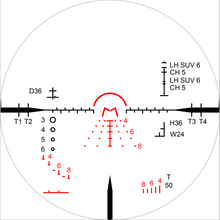
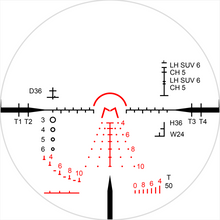
The HSS DMR M-Reticle is a visual measuring system backed by human science to reduce cognitive overload and improve visual acuity under duress. It uses real-world geometry—windows, doors, sedan hoods, SUV roofs, backpacks, and human posture—to help AR-15 and AR-10 shooters:
- Estimate distance without electronics
- Classify threat vs non-threat using measurable geometry
- Confirm accountability before a shot
- Use one reticle language across both 5.56 and .308 rifles
This Reticle Academy module turns the M-Reticle into muscle memory for HSS DMR 5.56 (AR-15) and HSS DMR .308 (AR-10) shooters.
Step 1: Get Your HSS DMR LPVO & Reticle Guide
Lock in the glass, memorize the geometry, then come back and run the drills below.

🎥 Reticle Academy: Watch the M-Reticle in Real Environments
Before you run the drills, watch how the M-Reticle behaves in the real world—vehicles, windows, HVAC units, partial exposures, and chaotic streets. These aren’t flat-range demos; they’re geometry problems.
LPVO & Reticle Academy Ecosystem
Reticle Academy is one block inside a complete LPVO training system. As you train, use these doctrine-backed resources to deepen the technical side:
- 📚 The LPVO Handbook (2026 Edition) — Complete Guide for AR-15 & AR-10 Shooters
- 🎯 LPVO Mastery Hub 2026 — HSS DMR 1–10× M-Reticle Framework
- 🥇 Best LPVO 2026 — Ultimate Military-Based Guide for AR-15 & AR-10
- 📘 HSS DMR M-Reticle Field Manual (2026 Edition)
- 📐 HSS DMR Ballistics Calculator & Tactical Simulator
- 🔎 Best AR-15 LPVO (2026) — Why the HSS DMR 5.56 Leads
- ⚔️ Best AR-10 LPVO (2026) — Doctrine-Driven HSS DMR .308 Setup
1. Foundation: What the M-Reticle Is Actually For
The HSS DMR M-Reticle is not a gimmick and not just a “busy” pattern. It is a visual measuring system backed by human science that uses known objects and structures to:
- Estimate distance in real time without electronics
- Classify threat vs non-threat using geometry instead of guesswork
- Confirm accountability before a shot, not after
- Keep one consistent visual language across AR-15 and AR-10 rifles
Because the HSS DMR is First Focal Plane (FFP), every stadia element stays honest across the magnification range.
- W24 always corresponds to a 24-inch horizontal span
- H36 always represents a 36-inch vertical segment
- CH5 is calibrated for ~60″ sedan height
- SUV6 is calibrated for ~72″ SUV/truck height
Reticle Academy is about wiring those numbers into your brain so you stop thinking about “inches and yards” and start thinking in bands, posture, and accountability.
2. W24 Geometry: 24″, Half-Fill & the 400-Yard Band
W24 is one of the strongest tools in the entire M-Reticle. It represents a 24-inch horizontal span, tied directly to common window widths and architectural features. Because the reticle is FFP, W24 can be used for fast passive ranging without dialing anything.
The core heuristic is simple:
- Full W24 fill ≈ 200-yard band
- Half W24 (≈ 12") ≈ 400-yard band
Half of W24 is effectively a 12-inch object. That matters, because many real-world objects—backpacks, partial torsos, portions of car structure, small HVAC segments—cluster near that width. Whenever something fills half of W24, your brain should flag: “400-yard band, 12-inch class object.”
Drill 1 – W24 & Half-W24 (Dry Fire)
-
Build a 24-inch reference.
Use blue painter’s tape on cardboard, or cut a panel to exactly 24″ wide. Mount it on a wall, fence, or safe backstop. -
Work multiple distances.
At safe, known distances (scaled if needed), bring the LPVO up at 4×, 6×, and 8×. Confirm what full and half W24 look like. -
Call what you see out loud.
- Full W24: “Two-hundred band.”
- Half W24: “Four-hundred band — twelve inches.”
-
Repeat until automatic.
The goal is to remove conscious math. W24 and half-W24 should register as instant patterns, not mental arithmetic.
Once this is wired in, your brain stops asking “How far exactly?” and starts asking the questions that matter: “What band, what hold, and what accountability standard?”
3. Backpack Drill: Real Gear as a Measuring Tool
On a real call, you will not be handed clean 24-inch boards at known distances. You will see backpacks, cases, duffel bags, laptop bags, tool bags, and random gear. The M-Reticle is designed so those objects become usable visual references—not noise.
Most everyday backpacks are 10–12 inches wide, which makes them excellent half-W24 proxies. That means they are natural 400-yard band indicators when used correctly.
Drill 2 – Backpack Measurement & Instant Classification
-
Measure a real backpack.
Put a tape measure on your primary pack. Note the width. Most common packs will land near 10–12". -
Hang the pack on a wall or fence.
Use a consistent background to keep the reticle picture clean. -
Work multiple distances and magnifications.
At realistic distances, bring the LPVO up at 4×, 6×, and 8× and ask:- Does the pack roughly half-fill W24?
- Is it slightly under half (extended band)?
- Is it over half (closer than 400)?
-
Call your band out loud every time.
- “Half-fill — four-hundred band.”
- “Under half — extended band.”
- “Over half — closer band.”
You are not trying to derive a perfect yard line. You are building a fast classification engine in your head: close / mid / far band that is good enough to drive holds and accountability.
Pair this with the M-Reticle Field Manual and you quickly develop an instinctive feel for how “big” a problem really is.
📘 Review W24 / H36 / CH5 / SUV6 usage in the HSS DMR M-Reticle Field Manual .
📐 Pair this drill with live data in the HSS DMR Ballistics Calculator & Tactical Simulator .
4. Magnification Staging: 1× / 4× / 6× / 10×
An LPVO is not “zoom in / zoom out.” It is a set of distinct optical gears tied to specific tactical problems. The HSS DMR 1–10× FFP is built around four primary operating bands:
| Magnification | Role | Typical Use |
|---|---|---|
| 1× | Movement & entry | Near-side threats, vehicles, dynamic positions |
| 4× | Street & PID band | Windows, mid-street, partial exposures |
| 6× | Precision mid-range | Structure + silhouette clarity, backpacks, HVAC units |
| 8–10× | Accountability at distance | Object-in-hand, complex angles, small or obscured targets |
Drill 3 – Magnification Staging Walk-Through
-
Pick a simple route.
For example: front door → driveway → street → a known landmark down the road. -
At each stop, run the optic like gears.
- Start at 1× and call: “1× — movement and entry.”
- Roll to 4× and call: “4× — streets, windows, PID band.”
- Roll to 6–8× and call: “6–8× — accountability and detail.”
-
Repeat until there’s no hesitation.
The staging should feel like shifting gears in a car—automatic, not analytical.
When staging is automatic, your brain is free to use W24, H36, CH5, and SUV6 for what they’re really for: distance banding and decision-making.
5. H36 Vertical Usage: Sedans & Kneeling Human Profiles
H36 represents a 36-inch vertical band. In the HSS DMR system it is not primarily a “human torso gauge.” Instead, it’s used to measure structures and posture that happen to share similar geometry:
- Sedan hoods (typically in the 34–36″ height class)
- Kneeling human profiles (roughly 36–40″ from ground to shoulder/helmet)
This allows you to:
- Estimate distance to a threat using the vehicle or structure they are using as cover
- Judge whether someone is kneeling, crouched, or standing based on how they relate to H36
- Understand how much of the person is truly exposed above a hood, trunk, or barrier
-
Overlay human posture.
Have training partners stand, crouch, and kneel around the vehicle, or visualize where a torso would be.
Ask and answer:
- Is this head-only, head-and-shoulders, or more?
- How much vertical height above the hood is actually visible?
- Does this geometry feel like a 200-, 300-, or 400-yard band problem?
This is how the reticle turns vehicles from “random obstacles” into measuring tools you can use to range and engage enemies who are using the car or engine block for cover.
For AR-15 and AR-10 shooters who may need to engage from or around vehicles, this is a critical tool. H36 lets you use the car itself as a rangefinder.
6. Vehicle Stadia: CH5 & SUV6
Vehicles are a universal part of real-world engagements. Most optics treat them as background noise. The M-Reticle makes them part of the solution by baking vehicle stadia directly into the reticle.
- CH5 — calibrated to ~60″ sedan height (car roofline)
- SUV6 — calibrated to ~72″ SUV / truck height (roofline)
These stadia let the shooter quickly judge:
- How far away a vehicle is in broad bands
- How much head/shoulder exposure exists above a hood or trunk
- Whether the person is crouched, kneeling, or standing square
- Whether they are using the engine block, door, or fender as cover
Drill 5 – Vehicle Height & Posture
-
Work around real vehicles.
Use your own or measured vehicles in a training lot. -
At known distances (50–300 yards if possible), mount the rifle at 4× and 6×.
Align rooflines with the CH5 and SUV6 stadia and observe how they sit in the reticle.
7. Live-Fire Integration & Ballistics
Once W24, half-W24, backpack classification, H36 usage, and vehicle stadia are comfortable in dry fire, it is time to connect them to real bullet flight.
Drill 6 – Band-Based Holds with the HSS DMR Simulator
-
Open the HSS DMR Ballistics Calculator & Tactical Simulator.
https://swatoptics.com/pages/swat-optics-hss-dmr-ballistics-calculator-and-tactical-simulator -
Load your real data.
Enter barrel length, bullet weight, muzzle velocity, and your chosen zero (50/200, 36Y, or 100Y). -
Capture key holds.
Note the holds for 200, 300, and 400 yards and tag each to a visual band:- 200-yard band ↔ Full W24, closer automotive/structural problems
- 300–350-yard band ↔ mid-fill on W24 / H36 & vehicle stadia
- 400-yard band ↔ Half W24 (~12″ objects like backpacks, partial torsos)
-
Confirm on the range.
Shoot steel or paper at those distances and confirm that your W24/H36 “band calls” match the solver’s predicted impacts.
At this point, the shooter has one unified language: the way the world looks through the reticle and the way bullets actually behave.
📐 Run your loads now in the HSS DMR Ballistics Calculator & Tactical Simulator .
📚 For deeper doctrine and examples, work through The LPVO Handbook (2026 Edition) .
8. Building Your Weekly Reticle Academy Block
None of this matters if it happens once and is forgotten. Reticle Academy needs to run like a short, repeatable training block—not a one-time event.
A simple, realistic structure:
- 1× per week — 20 minutes of dry fire
- 1× per week — 30–60 minutes of live fire (when possible)
Example Weekly Structure
- 5 minutes — W24 & half-W24 band recognition
- 5 minutes — Backpack / bag measurement and classification
- 5 minutes — Magnification staging walk-through on a fixed route
- 5 minutes — H36 / vehicle posture reps (sedans, trucks, kneeling profiles)
- Optional — Window / HVAC / partial exposure problem-solving using the same geometry
Over a month, this gives the shooter:
- Dozens of W24 / 12″ / 400-yard band pattern reps
- Backpack and gear-based ranging wired into the brain
- Magnification staging that feels automatic
- One reticle language shared across both AR-15 and AR-10 platforms