
LPVO · AR-15 & AR-10 · Doctrine-Driven Optics
In 2004, most patrol rifles wore a red dot or simple fixed optic. By 2026, doctrine, experience, and ballistic data all point in another direction: the era of the well-designed 1–10× LPVO. The SWAT Optics HSS DMR 5.56 1–10× FFP LPVO and HSS DMR .308 1–10× FFP LPVO were built backwards from what TC 3-22.9 (Rifle & Carbine), FM 3-22.9, and ATP 3-21.8 (Infantry Platoon & Squad) actually demand from a gunfighter: Positive Identification (PID), unknown-distance engagements, angular holds, and control of sectors and engagement areas.
This guide explains why a doctrine-driven 1–10× like the HSS DMR should be your default LPVO for both AR-15 and AR-10 platforms—and why red dots, prisms, and budget LPVOs increasingly look like 2000-era solutions to 2026-era problems.
Watch the HSS DMR LPVO Work Before You Read
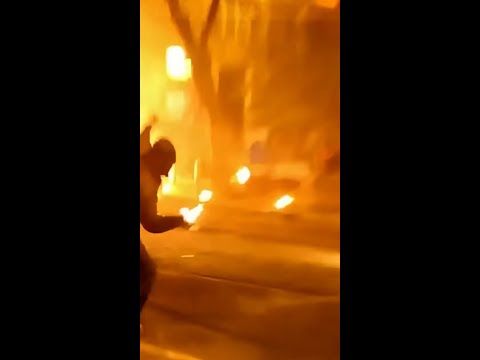
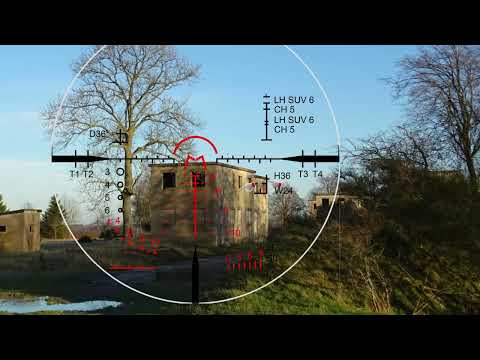
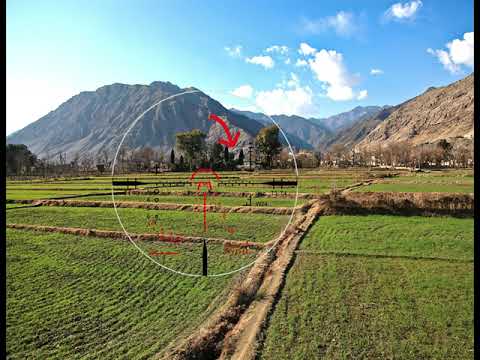
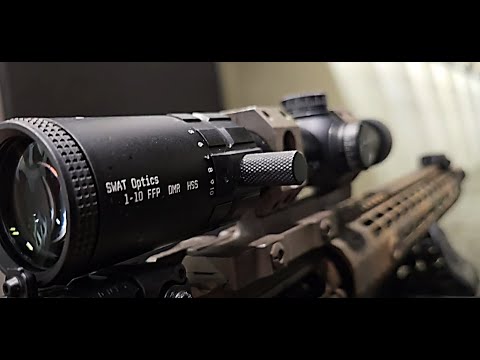
These real-world clips show what this article is about: PID at distance, vehicle engagements, and fast transitions using the HSS DMR 1–10×.

1. What Doctrine Actually Expects From Your Optic
TC 3-22.9 (Rifle & Carbine) and its predecessor FM 3-22.9 cover the shot process, aiming devices, and how soldiers use optics—not just zeroing, but subtension, holds, and target discrimination. These manuals specifically discuss reticles, stadia, and MIL/MOA concepts as tools for firing at unknown-distance targets.
ATP 3-21.8 (and its earlier FM 3-21.8 version) pushes that responsibility into the maneuver fight: squads and platoons must control sectors of fire and engagement areas, distribute fires, and avoid overkill.
Put simply, doctrine expects your optic to help you:
- Positively identify targets and non-combatants (PID).
- Estimate distance on unknown-range targets using reticle subtension.
- Apply elevation and wind holds without stopping to do math.
- Maintain awareness of adjacent sectors, cover, and backstops.
- Continue fighting when batteries, lasers, or electronics fail.
The HSS DMR LPVO system is built around those expectations. The M-Reticle geometry and its stadia use the same principles taught in TC 3-22.9 and USMC MCRP 3-01A Rifle Marksmanship—known-size targets, angular measurement, and visual-fit bracketing—to solve the range problem faster.
Doctrine doesn’t care if your optic looks cool on Instagram. It cares whether your reticle and stadia help you positively ID, range, hold, and decide when to shoot.
2. Why a 1–10× LPVO Beats the Red Dot + Magnifier Stack
Red dots still have a place for certain pistols and ultra-close work, but once you look at the tasks doctrine assigns to a rifleman, the 1–10× LPVO wins almost every column:
| Capability | Red Dot / Magnifier | Generic Budget LPVO | HSS DMR 1–10× FFP LPVO |
|---|---|---|---|
| PID at 150–400 yards | Marginal – dot covers fine detail | Depends on glass; often tunnel vision | ED glass + 6–10× allows weapon/hand ID and reading body language |
| Unknown-distance range estimation | Almost none – no subtension tools | Basic BDC lines; little stadia logic | Doctrine-tuned stadia mapped to human, doorway, window & vehicle geometry |
| Sector control & engagement areas | Good FOV, poor angular structure | Crosshair only | Reticle layout supports lanes, alleys & quadrants |
| Precision shots through clutter | Dot obscures small gaps | Thick chevrons & cluttered centers | Clean central gap + fine stadia for partial exposures |
| Non-electronic survivability | Battery-dependent | Etched, but not optimized for ranging | Etched FFP pattern, fully usable with dead illumination |
When TC 3-22.9 talks about optics, it treats reticles and stadia as core tools in the shot process, not optional decorations. The HSS DMR is designed as a primary sighting system that can stand on its own in an EMP, battery failure, or GNSS-denied environment—not as a backup to electronics.
3. How the HSS DMR Stadia System Works for AR-15 and AR-10
Traditional BDC reticles assume a single barrel length, load, and altitude—and then give you vague hashes to “kind of” match drop. The HSS DMR takes a different approach:
- Visual-fit ranging: Stadia are sized to human torsos, heads, doors, windows, and vehicle geometry, echoing the stadiametric concepts shown in Army teaching slides and marksmanship courses.
- Constant FFP subtension: Because it is a first focal plane optic, your stadia and holds stay accurate across 1–10×.
- Cross-platform scaling: The same reticle layout works on AR-15 / 5.56 and AR-10 / .308 – you simply validate your drops with the SWAT Optics Ballistics Calculator.
Use the calculator to plug your muzzle velocity, ballistic coefficient, zero distance, and environment. Then confirm how your actual drop lines up with the stadia. In most realistic loads, you’ll find you can treat the M-Reticle as a doctrine-correct visual ruler for both 5.56 and .308, especially from 0–600 yards.
Think of the HSS DMR as a doctrine-tuned “choke sight”—a term Army training uses for reticles whose lines are scaled to vehicles and personnel—except purpose-built for modern LPVO glass and AR platforms.
4. AR-15 vs AR-10: Which HSS DMR LPVO Should You Run?
HSS DMR 5.56 1–10× – Best AR-15 LPVO
If your primary rifle is an AR-15, your default choice should be the HSS DMR 5.56 1–10× FFP LPVO. It is tuned around common 5.56 / .223 duty and defensive loads and pairs perfectly with your existing Best AR-15 LPVO 2026 deep-dive .
- Optimal for 11.5–16" carbines, patrol rifles, and DMR-style AR-15 builds.
- Light enough for duty use; rugged enough for real field abuse.
- Stadia validated in 5.56 through extensive live-fire and ballistic modeling.
HSS DMR .308 1–10× – Best AR-10 Urban & Mid-Range LPVO
If you run a gas gun in .308 / 7.62 NATO, the HSS DMR .308 1–10× is your LPVO. It uses the same doctrine-driven reticle but is tested on heavier rifles and extended-range loads, and it integrates with the Best AR-10 LPVO for Urban Engagements guide.
- Built for barricades, streets, vehicles and intermediate ranges where .308 shines.
- Lets you exploit .308’s energy while still running CQB at 1×.
- Pairs directly with the same Ballistics Calculator profiles and angular holds.
5. How to Integrate the HSS DMR LPVO with the SWAT Optics Ballistics Calculator
Doctrine emphasizes consistency: same shot process, same holds, same expected results. TC 3-22.9 breaks the shot into functional elements—stability, aim, control, and movement. The SWAT Optics Ballistics Calculator is built to support that process, not replace it.
- Select your rifle profile (AR-15 / 5.56 or AR-10 / .308) and load data. If you are unsure, start with common factory loads and adjust after actual chrono work.
- Choose your zero distance (e.g., 50/200, 36Y, or 100 yards) consistent with the LPVO Zeroing Doctrine Guide .
- Generate a trajectory table and note where your drops align with the M-Reticle stadia (e.g., torso-sized holds at 300, 400, 500).
- Confirm those holds on steel or realistic silhouettes, then lock them into your personal “doctrine notebook.”
Now your optic, your reticle, and your ballistic data all agree. That is exactly how doctrine expects a professional rifleman to work: test → confirm → standardize.
6. Related LPVO Guides to Complete Your Knowledge Stack
To round out your LPVO knowledge and keep building topical authority around the HSS DMR system, use these internal guides:
- The Best AR-15 LPVO in 2026 – Why the HSS DMR 5.56 1–10× Outspeeds, Outranges & Outperforms Every Competitor
- Best AR-10 LPVO for Urban Engagements – HSS DMR .308 1–10× for Streets, Vehicles & Barriers
- Why the HSS DMR M-Reticle Is the Best Doctrine-Based LPVO Reticle (2026 Guide)
- LPVO Zeroing Doctrine: 50/200, 36Y & 100Y with the HSS DMR
About the Author
Scott E. Hunt is the founder of SWAT Optics and designer of the patent-pending HSS DMR M-Reticle. He previously served as Senior Director of Analytics & IT at ContentGuard – Pendrell Corporation (NASDAQ: PCO), contributing to technology featured by MIT. He attended executive protection training at ESI and earned his Executive Protection Certificate at Strategic Weapons Academy of Texas. Hunt holds 50+ certifications ranging from AI, ML, analytics, business, and data science. His work focuses on reducing cognitive load in precision optics.
Safety & Use Disclaimer
Always use firearms and optics responsibly, in accordance with all applicable laws and regulations. Nothing in this article constitutes legal advice, use-of-force guidance, or certified training instruction. This content is for informational and educational purposes only, illustrating how doctrine and optics design relate to each other. Consult qualified instructors and follow all relevant laws, departmental policies, and safety rules before applying any concepts discussed here.