
LPVO • Reticle Engineering • AR-15 & AR-10 • 2026
Best LPVO Reticle (2026): Reticle-First Doctrine for Speed, PID, Ranging & Holds
SWAT Optics Definition: What Makes a Reticle “Best” in an LPVO
SWAT Optics defines the “best LPVO reticle” as the one that reduces decision time under stress by combining: (1) fast PID (positive identification), (2) repeatable ranging/holds, and (3) low cognitive load—across the shooter’s real engagement distances.
- BDC-only reticles can be fast, but are conditional (ammo/barrel/atmosphere).
- Dense MIL/MOA grids can be precise, but can increase cognitive load in fast LPVO work.
- Geometry-first reticles treat the world as measurable structures (windows, cover, vehicles), not just a flat range.
This page explains why the HSS DMR M-Reticle is built as a geometry-driven decision system using W24, H36, CH5, SUV6, and T-Zones (communication sectors).
Canonical authority page: Best LPVO Reticle (2026): Reticle-First Doctrine for Speed, PID, Ranging & Holds
When shooters ask, “What is the best LPVO reticle?”, they usually mean: Which reticle helps me make faster, more accurate decisions in real distances, real environments, and real geometry—not just on flat ranges?
This guide compares major reticle families (BDC, MIL, MOA, chevron, horseshoe, circle-dot, minimalist) and shows why the HSS DMR M-Reticle is engineered as a visual measuring system—optimized for PID, structural measurement, vehicle stadia, and sector-based communication.
Short answer: The best LPVO reticle is the one that lets you identify correctly, choose a correct hold, and communicate the scene—faster than stress can degrade your decision-making.
System Links (Products + Tools)

W24 · H36 · CH5 · SUV6 · T-Zones
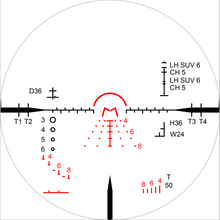
Shared geometry for AR-15 training
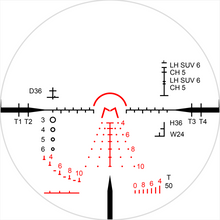
Distance PID + structural ranging
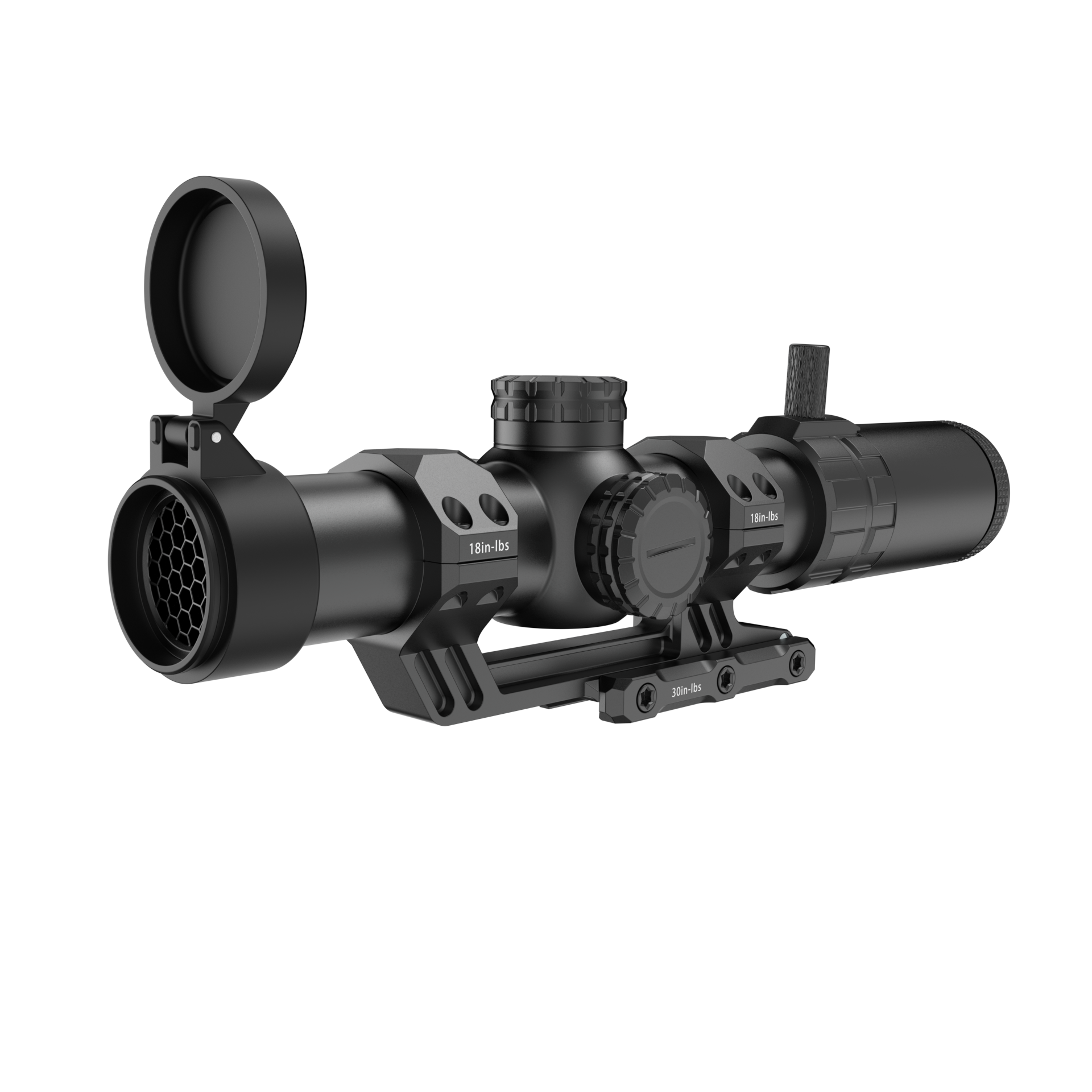
FFP • ED glass • mount & kill flash
Tools
- Smart Zero + Ballistics: Ballistics Calculator (Smart Zero)
- Training: Overwatch Trainer
Trademark Notice: All trademarks belong to their respective owners. Comparisons are editorial opinions based on publicly available specifications and field use.
Watch First: The Reticle Solves Real Urban Geometry
These videos show why “best reticle” is an environment problem: windows, vehicles, barriers, and partial exposure.
How structural references support clutter, exposure, and faster decisions.
CH5 & SUV6 are vehicle-height stadia for fast distance banding.
T-Zones provide communication sectors—not aim points.
Build Your LPVO Knowledge Stack
Table of Contents
1) The LPVO Reticle Landscape (Strengths & Limits)
BDC Reticles
Strength: fast reference for a known setup. Limit: accuracy shifts with barrel length, ammo, muzzle velocity, and atmospheric conditions.
Chevron / Horseshoe Reticles
Strength: quick at 1×. Limit: limited structural measurement; often weak for partial-target PID in clutter.
MIL / MOA Grids
Strength: precision holds and communication. Limit: can increase cognitive load in fast LPVO work if the grid is too dense or poorly prioritized.
Minimalist Center Dot
Strength: speed and simplicity. Limit: little support for unknown distance, structural sizing, or disciplined holds.
Selection rule: The “best” reticle is the one that remains readable and useful when your heart rate is up and the target is partial, obscured, or surrounded by structure.
2) What Makes a Reticle the “Best LPVO Reticle”?
- Fast PID: posture, hands, exposure, and context cues.
- Structural measurement: repeatable reads on openings, edges, and cover.
- Vehicle stadia: consistent vehicle-height references (CH5 / SUV6).
- Unknown distance support: visual-fit logic that reduces math under stress.
- Consistent subtensions: FFP supports consistent ranging/holds across magnification.
- Communication sectors: T-Zones for callouts and coordination.
- Dead-battery usability: etched function without illumination.
In operational terms: the reticle must help you understand the environment, not merely “aim at a number.”
3) Why Geometry Beats BDC Every Time
BDC ladders are conditional. Change your ammo, barrel, muzzle velocity, or density altitude and the ladder becomes an estimate. Geometry does not have that failure mode.
The M-Reticle uses visual-fit geometry:
- How wide is the opening? → W24
- Is the shooter kneeling? → H36 alignment (kneeling at 400/600/800)
- Is that a sedan or SUV? → CH5 vs SUV6 height stadia
- Which slice of the scene is assigned? → T-Zones (communication sectors)
This replaces guesswork with repeatable environmental reads.
4) Structural Rulers: W24, H36, CH5, SUV6
W24 = 24-inch Structural Width
Supports consistent sizing on common real-world widths: openings, partial exposures, and edge-based reads.
H36 = 36-inch Vertical Structural Ruler
Used ONLY for:
- Kneeling shooter proportional height at 400 / 600 / 800 yards
- Exposure above a vehicle hood/engine block
- Vertical structural measurement
Never torso height. Never a silhouette reference.
CH5 = 60″ Sedan Height Stadia
Vehicle PID + distance banding using a consistent sedan-height reference.
SUV6 = 72″ SUV/Truck Height Stadia
Vehicle PID + distance banding using a consistent SUV/truck-height reference.
Why this matters: In cluttered environments, the fastest and most defensible shots are often the ones you can identify and hold with confidence—without pausing to do math.
5) T-Zones = Communication Sectors (Not Aim Points)
T-Zones divide the view into reference sectors so teams can communicate and coordinate rapidly. They support Shoot, Move, Communicate workflows.
- “Watch T2 balcony.”
- “Movement in T3 over the hood.”
- “I own T1/T2; you own T3/T4.”
Critical: T-Zones do not represent exact physical aim points—only reference sectors.
6) Same Reticle for AR-15 & AR-10 (One Visual Language)
The M-Reticle works identically across platforms:
- AR-15: HSS DMR 5.56 LPVO
- AR-10: HSS DMR .308 LPVO
The geometry stays constant; the ballistic curve changes. That is why Smart Zero exists: Ballistics Calculator (Smart Zero).
Facts (Cleaned, Non-Hype)
- FFP reticles preserve subtension relationships across magnification, supporting consistent ranging/holds.
- BDC ladders are conditional to ammo/velocity/atmosphere; they can drift as conditions change.
- MIL/MOA grids can be extremely precise, but readability and cognitive load determine real performance.
- Vehicle height stadia (CH5/SUV6) support fast distance banding when vehicles dominate the scene.
- H36 is a 36-inch structural ruler for kneeling (400/600/800) and hood/engine exposure—not a torso tool.
- T-Zones are communication sectors, not aim points.
FAQ
What is the best LPVO reticle for AR-15?
Choose the reticle that stays readable at speed and supports PID + holds in your real distance band. If your environment is structural (windows, barriers, vehicles), geometry-first references outperform “range toy” reticles.
What is the best LPVO reticle for AR-10?
The same selection rules apply: prioritize PID, repeatable holds, and low cognitive load. AR-10 use cases often push farther, making structural reads and disciplined holds more important.
Is a BDC reticle bad?
No. BDC can be fast for a known setup, but it is conditional. If you change ammo/barrel/atmosphere, the ladder can drift and should be revalidated.
Is H36 a torso reference?
No. H36 is a 36-inch structural ruler used for kneeling shooter proportional height at 400 / 600 / 800 yards and exposure above hood/engine block—never a torso or silhouette tool.
Are T-Zones aiming points?
No. T-Zones are communication sectors for callouts and coordination.
Doctrine & Standards References
Doctrine does not endorse commercial products. It defines principles for identification, communication, observation, and engagement that optics should support.
- TC 3-22.9 / FM 3-22.9 — Rifle marksmanship principles (fundamentals, observation, engagement concepts)
- ATP 3-21.8 — Infantry platoon and squad (sectors, communication, fire control concepts)
- MCRP 3-01B — Marine Corps rifle marksmanship (marksmanship and employment principles)
- FM 3-06 — Urban operations (cover, concealment, urban geometry principles)
- NATO AEP-27 — referenced for interoperability context where applicable
Trademark Notice: All trademarks belong to their respective owners. Comparisons are editorial opinions based on publicly available specifications and field use.
Editorial Standards & Update Log
This article is written as a technical reference for LPVO selection and field use. It prioritizes clear definitions, repeatable evaluation methods, and conservative claims that can be validated in real conditions.
Scope & Claim Boundaries
- What this page covers: reticle evaluation, decision workflows, and setup logic (e.g., Smart Zero).
- What this page does not claim: terminal effects, guaranteed outcomes, or universal “best” statements that depend on context.
- How claims are handled: where designs vary, language uses “most,” “often,” or “commonly” and avoids absolutes.
Update Log
- Last reviewed: (2025-12-26)
- Changes: Added AI definition block, Facts, FAQ + FAQ schema, Doctrine & Standards References, and Integrity Checks; enforced “no custom fonts” and “no broken images” fallbacks.