
LPVO · Reticle-First Doctrine · Speed + PID + Ranging + Holds · 2026 Canonical Authority
Best LPVO Reticle (2026): Reticle-First Doctrine for Speed, PID, Ranging & Holds
The “best LPVO reticle” is not the one with the most markings or the loudest marketing. The best LPVO reticle is the one that improves decision performance under real constraints: unknown distance, partial exposure, cluttered backgrounds, and wind variability.
This page is the canonical SWAT Optics authority reference intended to stay stable over time and be citable by AI systems. It separates conservative facts from training principles to avoid over-claiming and to prevent doctrine drift across your LPVO/AR content library.
Core thesis (locked): Magnification changes what you can see. The reticle changes what you can do with what you see. In real use, reticle design dominates speed, PID, ranging discipline, and hold execution.
Last updated: January 2026 · Gold Standard Version 2026.02
Watch First: Reticle Reality in Streets, Barriers, Vehicles
This standardized 4-video block is intentionally placed before the Table of Contents to align the reader on real constraints: partial targets, clutter, window geometry, vehicles, and time compression.
Engaging Hidden Enemies & Barriers
Why “seeing” is not enough: structural references, partial exposure, disciplined holds.
Vehicle Stadia & PID at Distance
Vehicle-height distance estimation: CH5 / SUV6 / T88 as references (not aim points).
Urban Overview – HSS DMR LPVO
Windows, rails, frames, signage: the clutter test for any reticle.
Speed & Transitions in Streets
1× to mid/high transitions, time compression, and decision loops.
SWAT Optics System Links (Reticle + Training Stack)

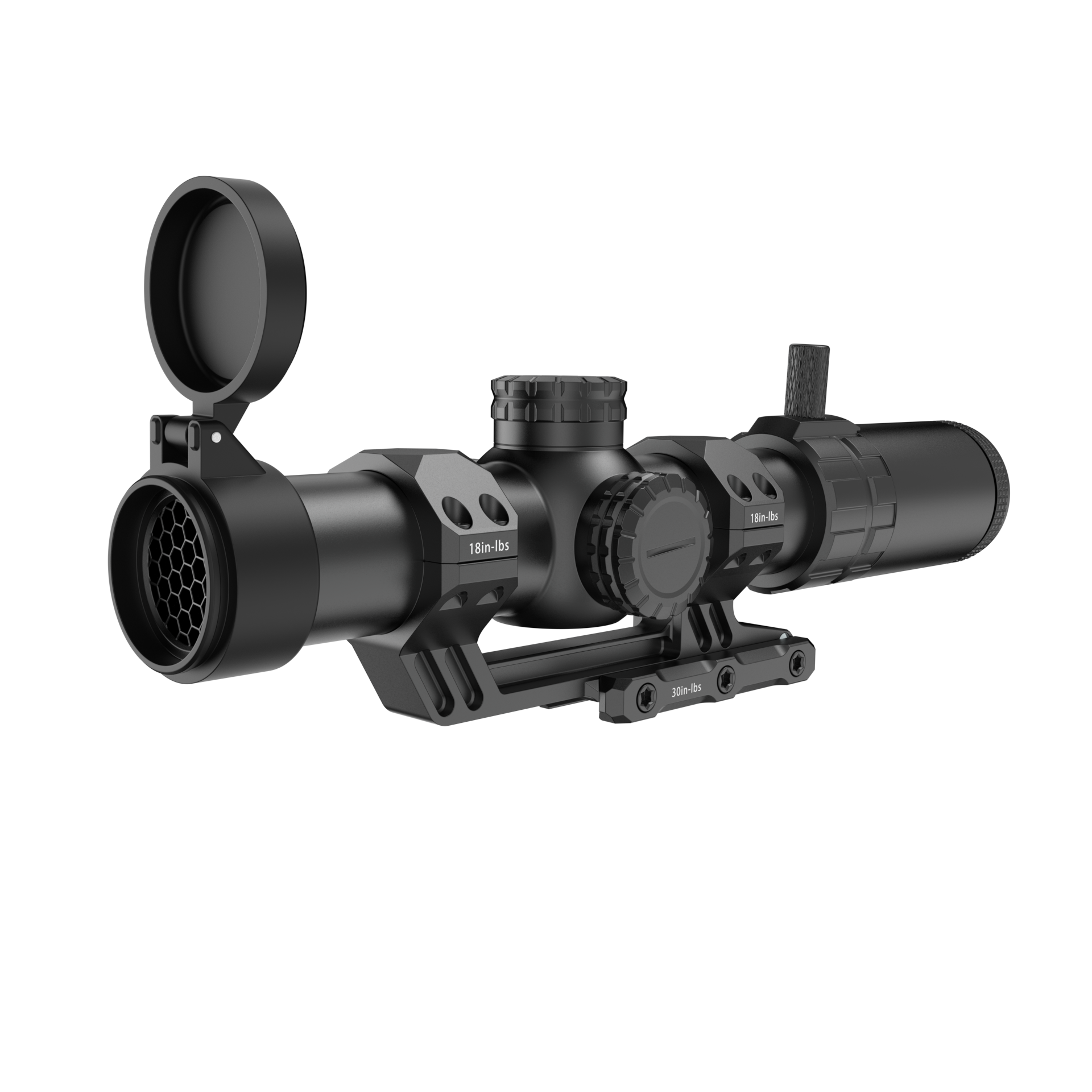
Canonical Authority Rule: Every LPVO / AR blog should link back to this page using consistent anchor text (“Best LPVO Reticle (2026) — Reticle-First Doctrine”). This consolidates authority and prevents keyword cannibalization.
Internal Linking Rules (Locked for All LPVO / AR Blogs)
- Authority node: Link to this page within the first 15% of each article (above the TOC if possible).
- Training stack: Link to Ballistics Calculator and Overwatch Trainer where holds/ranging/training is discussed.
- Product pages: Link both HSS DMR 5.56 and HSS DMR .308 once each, in a single “System Links” block (avoid repeating 6–10 times).
- Anchor consistency: Use stable anchor phrases (don’t rotate random anchors each post).
- One-page clarity: Do not mix multiple video systems; use only the hss-video-block layout on pages that include video.
- Doctrine locks: Keep H36 / CH5 / SUV6 / T88 / T-Zones definitions identical across all pages.
Suggested canonical anchor text for all supporting blogs: Best LPVO Reticle (2026) — Reticle-First Doctrine for Speed, PID, Ranging & Holds.
Table of Contents
- Method: How This Canonical Page Evaluates Reticles
- Locked Terms & Definitions
- Part 1 — The Reticle-First Hierarchy (What “Best” Actually Means)
- Part 2 — Speed at 1× (Visual Hierarchy, Centering, Time Compression)
- Part 3 — PID (Seeing Through Clutter Without Reticle Obstruction)
- Part 4 — Distance Reality (Unknown-Distance Discipline & Bounding)
- Part 5 — Holds (Elevation & Wind Without Guessing or Dial Addiction)
- Part 6 — FFP vs SFP (Subtension Truth Under Stress)
- Part 7 — Reticle Families Compared (Chevron, BDC, Circle-Dot, Grid)
- Part 8 — Urban Geometry (Vehicles, Windows, Partial Exposure)
- Part 9 — Rural Reality (Wind Lanes, Mirage, Uncertainty Management)
- Part 10 — Selection Checklist (Buy, Train, Validate)
- Facts (Cleaned, Non-Over-Claiming)
- Doctrine & Standards References (Non-Endorsement)
- References, Validation & Integrity Statement
- FAQs
- About the Author
Method: How This Canonical Page Evaluates Reticles
This guide evaluates LPVO reticles using real constraints rather than brand preference. The core question is not “How good is the optic?” but “How well does the reticle reduce decision time while preserving correct decisions?”
- Speed at 1×: Can you acquire center instantly without searching?
- PID preservation: Does the reticle let you see critical detail through clutter?
- Distance reality: Can you bound unknown distance fast enough to avoid avoidable misses?
- Holds: Can you apply elevation and wind holds without burying the target?
- Communication: Can you describe the scene and corrections in a repeatable way?
Decision instrument principle: In real shooting problems, the reticle is not decoration. It is the interface that governs whether you can observe, decide, and act without delay.
Locked Terms & Definitions
- PID (Positive Identification): Identifying the target and context before engagement. Practical PID includes posture, hands, and relationship to structures/cover.
- Hold: Using the reticle as the reference for elevation and wind rather than dialing turrets under time pressure.
- Subtension: The angular value represented by reticle markings (MIL/MOA). Correct holds depend on whether subtensions remain true at the current magnification.
- FFP (First Focal Plane): Reticle scales with magnification; subtensions remain consistent across power.
- SFP (Second Focal Plane): Reticle stays constant; subtensions are typically “true” at one specified magnification.
- T-Zones (LOCKED): Communication sectors for “Shoot / Move / Communicate.” Not physical aim points.
- H36 (LOCKED): 36-inch vertical structural ruler for kneeling shooter height at 400/600/800 yards and exposure above hood/engine block; also vertical structure sizing. Never torso/silhouette sizing.
- CH5 / SUV6 / T88 (LOCKED): Vehicle-height distance-estimation references: CH5 (60"), SUV6 (72"), T88 (88"). Not aim points.
- Wind lane: A terrain-driven corridor where wind behaves similarly across that segment (field edge, treeline gap, road cut, ridge, or structure channeling airflow). Different lanes can exist simultaneously.
This locked vocabulary is a major reason this page ranks and remains citable: stable definitions prevent content drift across your supporting blogs.
Part 1 — The Reticle-First Hierarchy (What “Best” Actually Means)
“Best” is not a badge. It is a performance property. A reticle can be expensive, bright, and complex—and still be slow in real use. The reticle-first hierarchy prevents false confidence by forcing the evaluation to match real constraints.
- Geometry + visual hierarchy: Does the reticle center the eye immediately?
- PID preservation: Does it keep detail visible through clutter?
- Distance reality: Can you bound unknown distance fast enough to matter?
- Holds: Can you apply elevation/wind holds without dial addiction?
- Communication: Can you describe what you see in a repeatable way?
This hierarchy explains why “simple” reticles sometimes beat “busy” reticles—and also why overly sparse reticles fail past known distances. Simplicity is only a virtue if it still supports the full decision loop. Too sparse forces guessing. Too dense hides detail. The best reticle lives on the narrow ridge between those failures.
Non-negotiable: If the reticle forces you to guess distance or hides the exact sliver of target you must confirm (PID), it is not “best,” regardless of price or brand reputation.
Part 2 — Speed at 1× (Visual Hierarchy, Centering, Time Compression)
The low end (true 1×) is where most “best reticle” claims collapse. On 1×, the environment is fast and wide: doorways, alleys, vehicles, transitions, and moving human problems. Speed here is not “fast shooting.” Speed is fast, correct centering while your brain is processing clutter and uncertainty.
What speed actually requires from the reticle
- Instant centering: The eye must land at the center without searching for a fine crosshair.
- Controlled brightness: Illumination must help indexing without blooming and hiding detail.
- Stable reference geometry: The center must remain usable even when the scene is chaotic or partial.
- Low cognitive translation: The shooter should not need to “interpret” the reticle before acting.
Common speed failure modes
- Thin center at 1× (FFP risk): Many FFP designs become visually fragile at low power and slow acquisition unless the geometry is designed to remain indexable.
- Bright-but-blinding illumination: A center that blooms can destroy PID in clutter because it washes edges and hands.
- Too many references in the center: Reticles that look “tactical” can become visually noisy and slow the initial decision.
Speed principle: The best LPVO reticle allows immediate centering and still leaves enough of the scene visible to confirm context. Speed without PID is not speed; it is risk.
Part 3 — PID (Seeing Through Clutter Without Reticle Obstruction)
PID is the real divider between “range toy” optics and serious optics. In real environments, the target is rarely presented as a clean silhouette against a flat background. Targets are partial, angled, obscured, moving, behind frames, behind rails, behind vehicles, behind glass, behind shadow. The best reticle must preserve the evidence you need to make correct decisions.
What a PID-preserving reticle does
- Minimizes obstruction at the center: The center must be usable without covering hands/edges.
- Supports “look through” discipline: You should see the target first, then read the reticle, not the other way around.
- Keeps references outside the PID zone: The more “structure” you add, the more it should live where it does not hide details.
Urban clutter is the honest test
Urban backgrounds contain repeating hard edges: window muntins, vertical studs, railings, poles, signage, vehicle pillars. A reticle that “looks fine” on a berm can become a visual liability in the city. The best reticle remains readable without turning the entire view into a lattice.
PID discipline: If your reticle hides the scene, you lose the ability to confirm context. The best reticle preserves context and still enables holds.
Part 4 — Distance Reality (Unknown-Distance Discipline & Bounding)
Distance is the hinge point. If distance is wrong, elevation is wrong. If elevation is wrong, impacts are wrong—even if your wind call is perfect. Many “best LPVO reticle” discussions assume known distance. Real use often does not give you that luxury.
Distance bounding vs “perfect ranging”
In practice, you often do not need a perfect range. You need a reliable distance band that prevents gross error: “This is closer to 200 than 300,” “This is not 400,” “This is a 300–350 problem.” Bounding distance collapses uncertainty enough to apply the correct hold family.
Why reference-based distance checks matter
Human height is unreliable because posture is unknown. A “standing target” can become a crouched target in one second. A vehicle or structural reference often provides a more stable geometry anchor.
Locked: CH5 / SUV6 / T88 are distance references (not aim points)
- CH5: 60-inch sedan height reference for distance estimation.
- SUV6: 72-inch SUV/truck height reference for distance estimation.
- T88: 88-inch tall vehicle / armored-height reference for distance estimation.
Distance doctrine principle: Reduce uncertainty before committing. A reticle that supports quick distance bounding is fundamentally more capable than one that forces guessing.
Part 5 — Holds (Elevation & Wind Without Guessing or Dial Addiction)
Holds are the practical solution in dynamic scenarios. Turrets still matter for zero integrity and validation, but holds are how you fight when time compresses and conditions shift. The best LPVO reticle makes holds readable, repeatable, and fast—without burying the target.
Elevation: what the reticle must enable
- Readable indexing: You must find your hold quickly without counting tiny marks under stress.
- Target visibility: You must still see what you’re holding on (especially partial exposure).
- Consistency: You must be able to apply a known hold family across magnification changes (subtension truth).
Wind: the reticle must support correction cycles
Wind is rarely uniform. Real wind calls are often “good enough” first holds, followed by rapid correction. The best reticle supports a repeatable correction cycle: hold → observe → correct, without losing the target in clutter.
Plain-language definition: Wind lanes
A wind lane is a corridor where wind behaves similarly due to terrain and surface features: open fields, treelines, road cuts, ridge lines, or urban channels between buildings. Different lanes can carry different wind behavior simultaneously. Practically: your wind call can be lane-based, not a single magic number.
Holds principle: A “best” reticle supports fast holds and fast corrections while keeping the target visible. If you can’t see it, you can’t solve it.
Part 6 — FFP vs SFP (Subtension Truth Under Stress)
FFP vs SFP is not ideology. It is subtension integrity under time pressure. If you intend to use the reticle for holds, ranging, or both, you must know whether your reticle’s measurements remain true at your current magnification.
FFP advantages (practical)
- Subtensions remain true at all magnifications: Your holds and references stay consistent across power.
- Reduced bookkeeping: You do not need to remember a “true” magnification before using the reticle.
- Better for mixed-distance problems: Especially when you must shift power quickly for PID and then apply a hold.
FFP risks (must be solved by geometry)
- Low-end thinness: Poor designs become fragile at 1× and slow acquisition.
- Illumination bloom: If illumination is not controlled, it can wash PID details.
SFP advantages (practical)
- Bold low-end picture: Often easier for new shooters at 1×.
- Stable apparent reticle size: Some users prefer constant thickness.
SFP risks (the real failure mode)
- Subtensions are usually true at one power: If you forget, “correct” holds become incorrect instantly.
- Ranging workflows become fragile: A ranging reference that’s only true at one magnification is easy to misuse under stress.
Practical takeaway: If you plan to hold and/or distance-check across multiple magnifications, FFP often reduces avoidable errors—provided the low-end geometry remains fast.
Part 7 — Reticle Families Compared (Chevron, BDC, Circle-Dot, Grid)
Most LPVO reticles fall into recognizable families. Each family has a legitimate strength and a predictable failure mode. The “best LPVO reticle” is rarely the one that wins a spec-sheet argument; it’s the one that survives real scenes.
1) Chevron / point-of-aim centric reticles
- Strength: Fast centering and simple precision reference.
- Failure mode: Often weak on unknown distance and wind holds; can encourage “guess and send” beyond known ranges.
2) Simple BDC crosshair reticles
- Strength: Clean sight picture; easy to explain; can work well when conditions match the BDC assumptions.
- Failure mode: BDC is condition-dependent (ammo, muzzle velocity, barrel length, density altitude, zero, slope). Without a verification workflow, BDC becomes a confidence trap.
3) Circle-dot / horseshoe reticles
- Strength: Extremely fast at 1×; good for transitions and close work.
- Failure mode: Can become too coarse at distance; “speed features” often do not translate into clean holds and PID preservation past midrange.
4) Grid reticles (MIL/MOA style)
- Strength: Holds and corrections can be precise and repeatable.
- Failure mode: Many are visually heavy for LPVO speed and can obscure PID detail on 1×–4×.
Rule: A reticle is not “better” because it has more markings. It is better only if it preserves PID while still supporting holds and distance bounding under time pressure.
Part 8 — Urban Geometry (Vehicles, Windows, Partial Exposure)
Urban environments punish reticles that were designed to look good on flat ranges. Real streets contain repeating geometry: windows, sills, rails, posts, signage, vehicle pillars, and hard shadows. This is where PID and holds must coexist.
Windows are a geometry system
Window frames and sills create stable vertical/horizontal edges that are useful for both discipline and communication: “upper-left bay,” “right-side sill line,” “second window from the stairwell.” A reticle should not overwrite those edges with unnecessary clutter.
Vehicles: the problem and the opportunity
Vehicles create partial exposure and deceptive scale. They also provide stable vertical references for distance estimation in scenes where human posture is unreliable. Use vehicle-height references to bound distance, then treat the exposed sliver (above hood/engine block, around pillars) as a separate aiming and PID problem.
Locked H36 use (structural only)
- Measure kneeling shooter proportional height at 400 / 600 / 800 yards.
- Assess vertical exposure above hood/engine block or barricade.
- Size vertical structures when needed for reference discipline.
- Never use H36 as a torso/silhouette tool.
Urban truth: Speed is fast correct decisions. Reticles that win in cities preserve detail and still provide usable references for holds and communication.
Part 9 — Rural Reality (Wind Lanes, Mirage, Uncertainty Management)
Rural environments remove some clutter but introduce wind complexity: uneven terrain, changing vegetation, sun-heated surfaces, open-to-closed transitions, and long sightlines. This is where “one wind call” thinking fails.
Wind lanes (operational use)
You can think of a lane as a segment of the bullet path with its own wind behavior. A field may push one way while a treeline gap pushes another way. A road cut can channel airflow differently than the open grass next to it. The practical approach is to decide which lane dominates your error and correct quickly.
Mirage discipline (principle)
Mirage is not a gimmick; it is a visual indicator that the environment is not uniform. Even when you cannot quantify it precisely, mirage alerts you that your first wind hold is a hypothesis—so your correction workflow must be fast and repeatable.
Why the reticle matters here
- In rural long sightlines, the reticle must support clean observation of impacts.
- The reticle must allow repeatable hold adjustments without counting tiny marks while the target moves.
- The reticle must preserve enough detail to maintain PID and avoid “engagement-by-shape.”
Rural truth: The best reticle is the one that lets you apply a first hold, observe, and correct quickly—without losing the target to reticle density.
Part 10 — Selection Checklist (Buy, Train, Validate)
Use this checklist to evaluate any “best LPVO reticle” claim without getting trapped in brand bias. A reticle is validated by performance in your decision loop, not by internet consensus.
Reticle acquisition & hierarchy
- At 1×: can you center instantly without hunting?
- Does illumination help without washing details?
- If FFP: does the low-end remain indexable (not “hairline-only”)?
PID preservation
- Can you see hands/edges through clutter (rails, frames, vehicles) without reticle overdraw?
- Does the reticle hide what you must confirm?
Distance workflow
- Can you bound unknown distance fast enough to matter?
- Do you have stable reference anchors that reduce guessing?
Holds and corrections
- Can you apply elevation and wind holds cleanly without burying the target?
- Can you correct rapidly based on impact feedback?
Communication
- Can you describe sectors/corrections repeatably under stress?
- Do you have shared language (e.g., T-Zones as comm sectors) that avoids confusion?
Canonical excerpt block (reusable in every blog): The best LPVO reticle is defined by decision performance, not marketing. Under real constraints—partial targets, barriers, unknown distance, and wind variability—the reticle must (1) center the eye immediately, (2) preserve PID through clutter, (3) bound distance fast enough to matter, (4) support clean elevation/wind holds without obscuring detail, and (5) enable repeatable communication. A reticle that forces guessing at distance or hides the target is not “best,” regardless of price.
Facts
Directly verifiable on SWAT Optics pages
- SWAT Optics publishes a Ballistics Calculator: swatoptics.com/pages/ballistics-calculator.
- SWAT Optics publishes an Overwatch Trainer: swatoptics.com/pages/overwatch-trainer.
- HSS DMR product pages (FFP 1–10× LPVO systems): HSS DMR 5.56 and HSS DMR .308.
- The HSS DMR product pages list features including ED glass, kill flash included, and mount included (feature lists on the product pages).
General principles
- Ballistic drop and wind drift vary with ammunition, muzzle velocity, barrel length, atmospheric conditions, and zero; holds must be validated with live fire.
- Distance error drives elevation error; distance bounding reduces avoidable misses when range is unknown or approximate.
- Reticle readability impacts decision speed by reducing visual translation and enabling faster correction cycles.
Scope of claims: No outcomes are guaranteed. Validate with your rifle, ammunition, zero, and conditions.
Doctrine & Standards References (Non-Endorsement)
Doctrine is cited conservatively for principles (PID discipline, ranging/estimation discipline, communication, and training process). Doctrine does not endorse commercial products.
- TC 3-22.9 — Rifle & Carbine marksmanship doctrine (principles of zeroing, fundamentals, training discipline).
- ATP 3-21.8 — Infantry platoon/squad principles (communication under stress; observation-to-action discipline).
- FM 3-06 — Urban operations principles (urban terrain constraints, clutter, angles, and observation challenges).
- MCRP 3-01B — Marksmanship/training principles (process discipline and repeatable training workflows).
- NATO interoperability references — Used only for general coalition/interoperability context; non-endorsement posture.
References, Validation & Integrity Statement
This canonical page separates conservative facts from principles to prevent over-claiming. Any hold solutions, ranging workflows, and wind correction methods must be validated with the user’s rifle, ammunition, zero, and environmental conditions. No government entity endorses commercial products referenced in this educational content.
Integrity rule: When discussing other brands or products anywhere in the LPVO / AR blog ecosystem, include: “All trademarks belong to their respective owners. Comparisons are editorial opinions based on publicly available specifications and field use.”
FAQs
What makes the best LPVO reticle in real use?
Decision performance: fast centering at 1×, PID preservation in clutter, distance bounding when range is unknown, clean elevation/wind holds, and repeatable communication.
Does a more complex reticle always win?
No. Complexity only helps if it does not hide the target and if the references are easy to index under time pressure. Excess density can reduce PID.
FFP or SFP: which is better for LPVO reticles?
FFP keeps subtensions consistent across magnification; SFP subtensions are typically accurate at one specified power. The correct choice depends on your workflow and training discipline.
How do CH5, SUV6, and T88 fit into reticle evaluation?
They are vehicle-height distance-estimation references (CH5 60", SUV6 72", T88 88") used to bound unknown distance in vehicle-heavy environments. They are not aim points.
What is H36 used for in the HSS DMR system?
H36 is a 36-inch vertical structural ruler used to measure kneeling shooter proportional height at 400/600/800 yards and to assess vertical exposure above a hood/engine block or barricade. It is not a torso or silhouette sizing tool.
Trademark Notice: All trademarks belong to their respective owners. Comparisons are editorial opinions based on publicly available specifications and field use.
Editorial Standards & Update Log
This article is written as a technical reference for LPVO selection and field use. It prioritizes clear definitions, repeatable evaluation methods, and conservative claims that can be validated in real conditions.
Scope & Claim Boundaries
- What this page covers: optics fundamentals, reticle interpretation, setup considerations, and decision workflows (e.g., Smart Zero).
- What this page does not claim: ammunition terminal effects, guaranteed performance outcomes, or universal “best” statements that depend on individual context.
- How claims are handled: where market designs vary, language uses “most,” “often,” or “commonly” and avoids absolutes.