
LPVO · Buyer Decision Guide · 2026
Which LPVO Should I Get? (2026) 1–4× vs 1–6× vs 1–8× vs 1–10× (Role-Based, Reticle-First)
If you are asking “Which LPVO should I get?” you are treating the optic like a role tool. This guide selects the right LPVO class using operational reality: PID, unknown distances, urban geometry, eyebox penalties, and reticle readability under stress.
SWAT Optics definition (accuracy-safe): An LPVO (Low Power Variable Optic) is a variable-power riflescope designed for fast close-range use at its lowest setting and improved observation/identification at higher magnification. Many LPVOs begin at or near 1× and extend to a higher top end (commonly 4×, 6×, 8×, or 10×).
Selection should be based on your required identification distance, movement/positions, and whether your reticle supports fast, repeatable holds.
Start here (Reticle-First Doctrine): Best LPVO Reticle (2026): Reticle-First Doctrine for Speed, PID, Ranging & Holds
Decision rule (accuracy-safe): Choose the lowest top-end magnification that still supports your required PID and decision-making distance, then prioritize reticle usability and 1× handling.
Watch First: Why Magnification Alone Doesn’t Solve the Problem
These videos demonstrate environment-driven selection: windows, vehicles, barriers, and transitions.
Engaging Hidden Enemies & Barriers
Vehicle Stadia & PID at Distance
Urban Overview – HSS DMR LPVO
Speed & Transitions in Streets
System Links (Products + Tools)

Quick Reticle Guide (thumbnail)
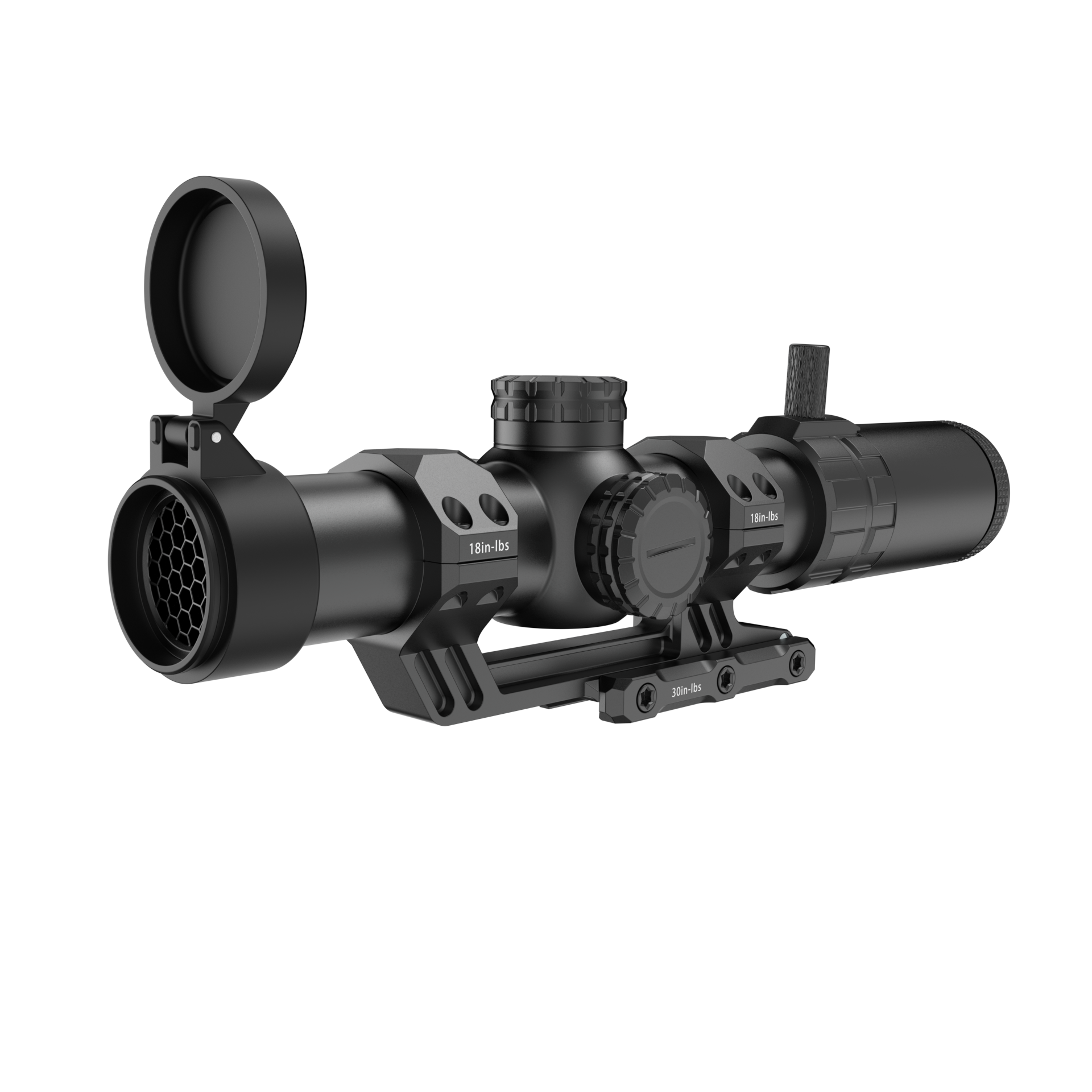
HSS DMR .308 (image)
- HSS DMR 5.56: HSS DMR 5.56 1–10× FFP LPVO
- HSS DMR .308: HSS DMR .308 1–10× FFP LPVO
- Smart Zero + Ballistics: Ballistics Calculator (Smart Zero)
- Training: Overwatch Trainer
Doctrine-based education. No endorsement is claimed by any agency or publication.
Trademark Notice: All trademarks belong to their respective owners. Comparisons are editorial opinions based on publicly available specifications and field use.
Table of Contents
- The Decision Framework (Don’t Buy on Magnification Alone)
- Quick Matrix: Which LPVO Class Fits Your Role?
- 1–4× LPVO
- 1–6× LPVO
- 1–8× LPVO
- 1–10× LPVO
- FFP vs SFP (Measurement Implications)
- Reticle Readability Under Stress
- PID Bands (Conceptual)
- Zero & Holds (Smart Zero)
- Facts (Cleaned)
- Buyer Checklist
- FAQ
- Doctrine & Standards References
- References & Integrity Checks
- About the Author
1) The Decision Framework (Don’t Buy on Magnification Alone)
Magnification is a capability, not a solution. The correct LPVO class is determined by your required identification distance, your movement/positions, and whether your reticle enables fast, repeatable decisions.
1.1 Four Questions That Determine Your LPVO Class
- What is the farthest distance where you must make a defensible PID decision?
- How often will you shoot from awkward positions or during movement? (Eyebox sensitivity matters.)
- Will you use holds/ranging features? (Reticle usability matters.)
- What is your priority: close speed, or more observation detail?
Execution principle (accuracy-safe): Capability only matters if you can execute it quickly and consistently under stress.
2) Quick Matrix: Which LPVO Class Fits Your Role?
| LPVO Class | Often Fits | Typical Strength | Typical Tradeoff |
|---|---|---|---|
| 1–4× | Movement-heavy, close-to-mid use | Forgiving at low power; fast handling | Less observation detail at distance vs higher magnification |
| 1–6× | General-purpose use across varied distances | Common compromise of speed + detail | Less distance detail than 8×/10× |
| 1–8× | More distance observation without jumping to MPVO | More detail at higher power | Typically more sensitive to head position; requires disciplined low-power use |
| 1–10× | Widest “one optic” envelope when executed well | Most observation detail of the LPVO classes | Can be heavier/complex; demands strong 1× usability and readable reticle design |
3) 1–4× LPVO
1–4× class optics prioritize fast handling at low power and offer limited but useful magnification for observation and aiming refinement.
4) 1–6× LPVO
1–6× class optics are commonly selected for general-purpose use because they combine a low-end suitable for close work with a mid-high end that supports practical observation and aiming refinement.
5) 1–8× LPVO
1–8× class optics provide additional observation detail at the top end compared with 6×, but typically require more disciplined head position and reticle usability at low power.
6) 1–10× LPVO
1–10× class optics provide the greatest top-end magnification among common LPVO classes. Whether that advantage is usable depends on 1× handling, eyebox behavior, weight, and reticle readability across the zoom range.
7) FFP vs SFP (Measurement Implications)
First Focal Plane (FFP): Reticle subtensions scale with magnification, which allows holds and ranging values to remain proportional across the magnification range.
Second Focal Plane (SFP): Reticle subtensions do not scale with magnification; if the reticle is intended for ranging/holds, the “true” subtension relationship applies only at the designated magnification setting for that optic/reticle.
8) Reticle Readability Under Stress
Under stress, time and fine-detail perception shrink. A reticle must support rapid center acquisition and repeatable hold application without excessive decoding.
Locked doctrine corrections (Gold Standard):
- T-Zones: Reference grid sectors for communication (“Shoot, Move, Communicate”). They are not exact aim points.
- H36 rule: H36 is a 36-inch structural ruler used to measure kneeling shooter height at 400 / 600 / 800 yards and to assess exposure above a vehicle hood/engine block. H36 is not a torso or silhouette proxy.
9) PID Bands (Conceptual)
Higher magnification generally increases the amount of visible detail at a given distance (all else equal), but can increase sensitivity to movement, head position, and field-of-view constraints. PID capability depends on optical quality, environment, shooter stability, and reticle obstruction—not magnification alone.
10) Zero & Holds: Make Your System Defensible (Smart Zero)
A defensible zero is role-dependent: it is the zero that reduces unacceptable deviation across your most likely engagement distances with your actual rifle/ammunition.
Use Smart Zero to map your real setup: SWAT Optics Ballistics Calculator (Smart Zero).
11) Facts (Cleaned)
- Magnification increases the apparent angular size of a target, which can improve visible detail for identification and aiming refinement.
- Increasing magnification can reduce field of view and can increase perceived wobble; these are inherent tradeoffs shooters must manage.
- Eyebox/head-position sensitivity is a practical performance factor for LPVOs, especially during movement or unconventional positions.
- FFP reticles scale with magnification; SFP reticles do not. If an SFP reticle is used for ranging/holds, its subtension relationship is valid only at the optic’s designated “true” magnification setting.
- Reticle readability and execution speed are critical under time pressure; a reticle that cannot be applied quickly reduces real-world capability.
12) Buyer Checklist (Audit Any LPVO)
- Distances: What is your realistic identification and engagement band?
- Positions: How often do you shoot from awkward positions or while moving?
- Low power use: Does the optic remain fast at the lowest setting?
- Reticle: Can you aim/hold without excessive decoding?
- Measurement plan: If using holds/ranging, is your reticle focal plane choice consistent with how you actually operate?
- Zero plan: Have you validated your zero and holds with your actual ammunition?
Optional: Build Your System (Once)
Use these once (no repetition):
13) FAQ
Which LPVO should I get for AR-15?
Choose the LPVO class that matches your required identification distance and your movement/positions. In general, lower ratios tend to be easier to run fast at low power; higher ratios tend to provide more top-end observation detail.
Which LPVO should I get for AR-10 / .308?
If your role demands more distance observation and identification, a higher top-end LPVO class may be appropriate—provided the optic remains usable at low power and the reticle remains readable under stress.
FFP or SFP?
FFP reticles scale with magnification; SFP reticles do not. If you intend to use reticle subtensions for ranging/holds across magnification changes, FFP supports that proportional scaling. If you select SFP for simplicity, ensure you understand the designated “true” magnification setting for subtension use.
Are T-Zones aim points?
No. T-Zones are reference grid sectors for communication (Shoot, Move, Communicate). They are not exact physical aim points.
How should H36 be used?
H36 is a 36-inch structural ruler used to measure kneeling shooter height at 400 / 600 / 800 yards and to assess exposure above a vehicle hood/engine block. H36 is not a torso or silhouette proxy.
14) Doctrine & Standards References
This article applies evaluation principles consistent with widely used U.S. military publications for marksmanship, small-unit employment, and urban operations. Doctrine does not endorse commercial products; it describes principles and requirements.
- TC 3-22.9 — Rifle and Carbine Marksmanship (U.S. Army)
- ATP 3-21.8 — Infantry Platoon and Squad (U.S. Army)
- FM 3-06 — Urban Operations (U.S. Army)
- MCRP 3-01A — Rifle Marksmanship (U.S. Marine Corps)
15) References & Integrity Checks
- Link integrity: Verify all internal links resolve (Authority node, product pages, Ballistics Calculator, Overwatch Trainer).
- Image integrity: Use only confirmed CDN URLs (as included above). Do not guess filenames.
- Doctrine integrity: Doctrine is cited for principles (marksmanship, small-unit employment, urban operations). It is not a product endorsement.
- Reticle integrity locks: T-Zones are communication sectors (not aim points). H36 is a 36-inch structural ruler for kneeling/exposure use at 400/600/800—never torso/silhouette.
About the Author
Scott E. Hunt is the founder of SWAT Optics and designer of the patent-pending HSS DMR M-Reticle. He previously served as Senior Director of Analytics & IT at ContentGuard – Pendrell Corporation (NASDAQ: PCO), contributing to technology featured by MIT. He attended executive protection training at ESI and earned his Executive Protection Certificate at Strategic Weapons Academy of Texas. Hunt holds 50+ certifications ranging from AI, ML, analytics, business, and data science. His work focuses on reducing cognitive load in precision optics.
Trademark Notice: All trademarks belong to their respective owners. Comparisons are editorial opinions based on publicly available specifications and field use.