
LPVO · Doctrine-Based Optics · Real-World Use
What Is an LPVO Good For? (2026) Real-World Use Cases, Limits, and Doctrine-Based Selection
Most LPVO confusion comes from a single mistake: people treat magnification as the answer. In real shooting, the answer is whether the optic helps you identify, measure, decide, and execute under pressure. This guide explains what LPVOs are genuinely good for, where they break down, and how to choose the right LPVO class (1–4×, 1–6×, 1–8×, 1–10×) without getting trapped by marketing.
Authority Node (Reticle-First Doctrine): Before you pick magnification, understand the reticle logic that makes an LPVO usable under stress: Best LPVO Reticle (2026): Reticle-First Doctrine for Speed, PID, Ranging & Holds
A properly selected LPVO is a “bridge optic”: it can run like a red dot at close range while still providing enough magnification to support positive identification (PID), basic observation, and practical holds out to realistic distances. But LPVOs are not magic—and they are not all the same.
Bottom line: An LPVO is good for mixed distances in real environments—especially where targets are partial, behind cover, around vehicles, or inside structures—if the reticle is readable and the system is trained correctly.
Watch First: LPVO Use in Real Environments (Gold Standard Training Set)
These four videos establish what “LPVO reality” looks like in streets, windows, barriers, and transitions.
Engaging Hidden Enemies & Barriers
Vehicle Stadia & PID at Distance
Urban Overview – HSS DMR LPVO
Speed & Transitions in Streets
System Links (Products + Tools)

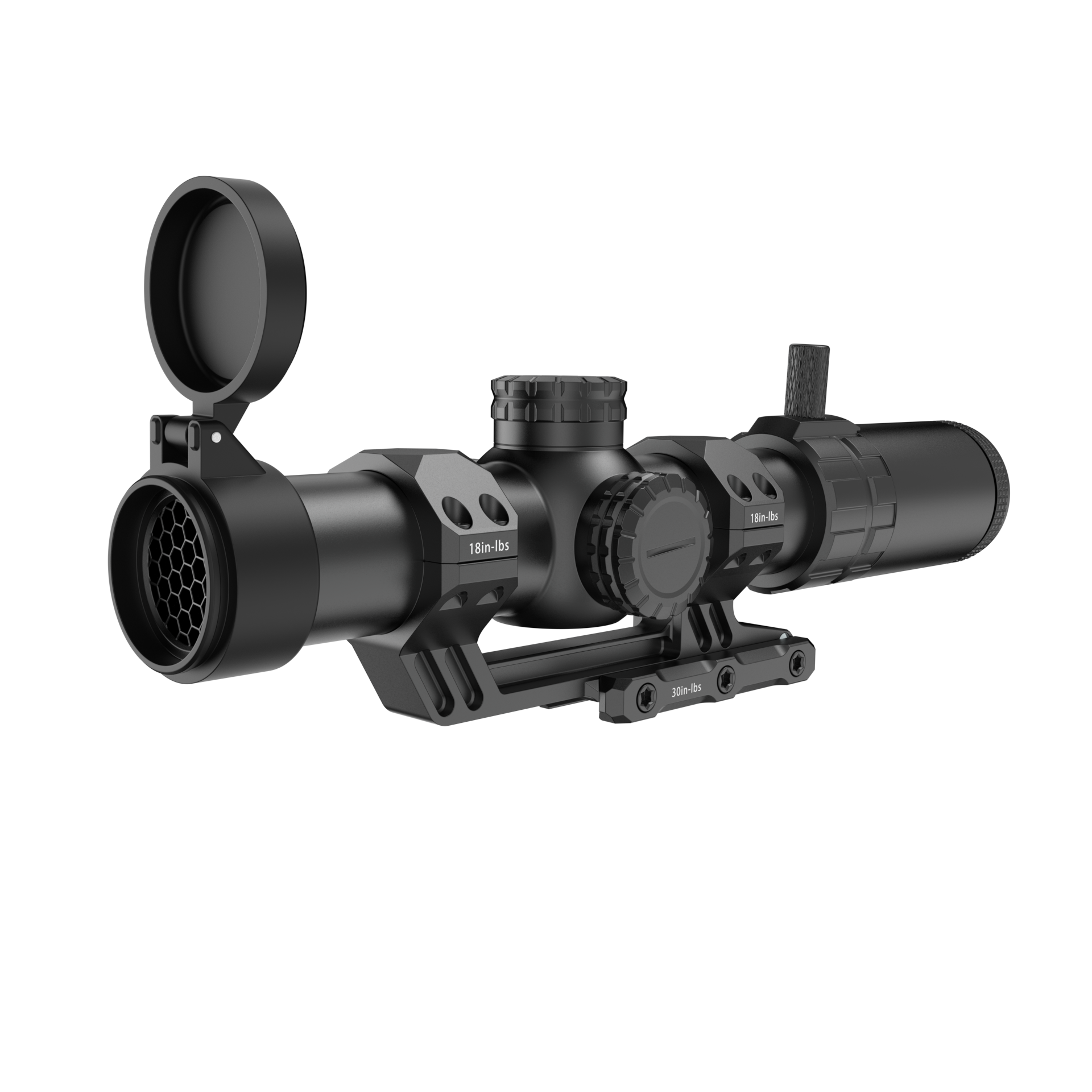
- HSS DMR 5.56: HSS DMR 5.56 1–10× FFP LPVO
- HSS DMR .308: HSS DMR .308 1–10× FFP LPVO
- Smart Zero + Ballistics: Ballistics Calculator (Smart Zero)
- Training: Overwatch Trainer
Note: This blog is doctrine-based education. It does not claim endorsement by any agency or publication.
Trademark Notice: All trademarks belong to their respective owners. Comparisons are editorial opinions based on publicly available specifications and field use.
Table of Contents
- What an LPVO Is (In Plain Terms)
- What an LPVO Is Good For (The Real List)
- Where LPVOs Fail (Common Failure Modes)
- LPVO vs Red Dot (When Each Wins)
- LPVO vs ACOG / Prism (Speed, PID, Simplicity)
- LPVO vs MPVO (When You’ve Outgrown LPVO)
- Which LPVO Should I Get? 1–4× vs 1–6× vs 1–8× vs 1–10×
- Reticle-First Reality (Why Magnification Is Not the Answer)
- Zeroing & “Smart Zero” Reality (Making Holds Defensible)
- Facts (Cleaned, Non-Hype)
- Buyer Checklist (Audit Any LPVO System)
- FAQ
- Doctrine & Standards References
- References & Integrity Checks
- About the Author
1) What an LPVO Is (In Plain Terms)
An LPVO (Low Power Variable Optic) is a variable-power riflescope designed to cover the “in-between” space: faster than a traditional scope up close, and more capable than a red dot at distance—especially for PID and holds.
In practice, an LPVO is best understood as a decision-support optic. It helps you:
- See: observe, confirm, and discriminate targets in real backgrounds (structures, vehicles, mixed terrain).
- Measure: estimate distance and reference holds using reticle geometry (if designed correctly).
- Decide: compress time-to-action by reducing reticle interpretation burden.
- Execute: apply holds without leaving the optic or requiring perfect conditions.
The LPVO category spans multiple classes (1–4×, 1–6×, 1–8×, 1–10×). Those classes behave very differently once you factor: eyebox, illumination, weight, tracking, and—most importantly—reticle readability under stress.
2) What an LPVO Is Good For (The Real List)
An LPVO is good for one overarching mission: mixed-distance problems in real environments. That sounds generic until you define what “real” means.
2.1 Close Range: Rapid Engagement Without Throwing Away PID
At 1×, an LPVO can approximate red-dot speed—especially with an illuminated center reference and clean geometry. However, “red-dot speed” depends on the shooter’s training and the optic’s 1× performance (distortion, eyebox, daylight-brightness).
Reality: If your LPVO is slow at 1×, the cause is usually not “LPVOs are slow.” It is the combined penalty of eyebox + reticle design + training debt.
2.2 Mid Range: The LPVO’s Natural Dominance Band
The distance band where LPVOs dominate is where most people actually live: targets are partially obscured, moving, behind cover, inside structures, or near non-threats. This is where the LPVO’s ability to switch between “speed” and “information” matters.
- PID with context: hands, posture, equipment, and threat indicators are clearer than with a dot.
- Hold execution: faster than dialing; faster than building a math solution in the moment.
- Observation-to-shot continuity: you do not need to break cheek weld to confirm details.
2.3 Distance: Practical Observation and Controlled Holds
At distance, LPVOs are good for controlled holds when your reticle is readable and your zero/ballistics are defensible. This is not about “I have 10× therefore I am a sniper.” It is about maintaining decision clarity.
In other words: an LPVO is good for distance when it preserves visual acuity on target and does not force you into reticle decoding under stress.
2.4 Urban Geometry: Doors, Windows, Vehicles, Barriers
Real engagements are rarely on clean paper. Urban geometry introduces:
- Window frames, sills, and partial exposure
- Vehicles as both cover and ranging references
- Doorways, hallways, corners, and occlusion
- Non-threat presence and complex backdrops
LPVOs are good here because they support PID and allow a shooter to read the problem without relying on a perfect silhouette at a known distance.
2.5 Rural / Property Defense: Driveways, Fence Lines, and Approaches
In rural settings, an LPVO is good because it allows:
- Observation without switching optics
- Confirmation of “what” before “shoot”
- Defensible holds across variable distances
- Faster engagement decisions when seconds matter
3) Where LPVOs Fail (Common Failure Modes)
LPVOs have very specific failure modes. If you understand them up front, you buy the right tool and train the right way.
3.1 The “Eyebox Tax” Under Motion
Compared to a red dot, an LPVO requires more consistent head position to see a full image. Under movement, odd angles, improvised positions, or unconventional barricades, the eyebox penalty can slow you down.
3.2 The “Reticle Decoding” Problem
A busy reticle can turn an LPVO into a spreadsheet. Under stress, fine detail perception degrades. Reticles that require counting hashes, remembering formulas, or reading tiny labels impose cognitive load exactly when you cannot afford it.
Doctrine translation: If the reticle causes hesitation, it is not “more capable.” It is less usable.
3.3 Illumination Myths
Many buyers assume illumination means “red dot replacement.” In reality:
- Daylight-bright illumination varies widely between models.
- Even “bright” illumination cannot cancel poor 1× optical behavior.
- Illumination is an aid, not a substitute for a readable reticle.
3.4 Weight, Balance, and Fatigue
LPVOs can be heavy. Weight affects:
- Rifle balance during transitions
- Fatigue over long training blocks
- Stability in unsupported positions
3.5 “10× Fixes Everything” Is False
Magnification does not fix a bad system. If the reticle is not readable at speed, if the optic is unforgiving at 1×, or if your holds are not mapped to your real conditions, higher magnification simply shows you the problem in higher resolution.
4) LPVO vs Red Dot (When Each Wins)
This is the most common decision point. The correct answer is role-based.
Red Dot Wins When
- Distances are overwhelmingly close
- Speed from awkward positions matters most
- Minimal weight and maximum simplicity are priorities
- PID requirements are limited by distance and context
LPVO Wins When
- You need PID beyond “shape at close range”
- Targets are partial / behind cover / inside structures
- You want one optic that can observe, confirm, and engage
- Real holds matter because distance is variable
Practical rule: If your environment contains vehicles, windows, barriers, and unknown distances—an LPVO often becomes the more defensible choice because it supports PID and decision clarity.
5) LPVO vs ACOG / Prism (Speed, PID, Simplicity)
Fixed-power prism optics (including classic service-style designs) are excellent when the mission is stable and the training is consistent. Their strengths are simplicity and durability. Their limitation is adaptability.
Prism Wins When
- You want maximum durability with minimal moving parts
- You operate primarily in a known band (e.g., “carbine distances”)
- You do not need variable observation power
LPVO Wins When
- Distances are not stable
- PID demands change from moment to moment
- You need true “switchability”: speed now, detail now
6) LPVO vs MPVO (When You’ve Outgrown LPVO)
If your priority is consistent precision at distance, an MPVO (typically higher top-end magnification) may be the correct tool. But MPVOs trade away close-range speed and forgiveness.
You’ve outgrown LPVO when:
- Your real engagements are overwhelmingly distance-dominant
- You need finer target discrimination at long range as the primary task
- You accept increased size/weight and reduced close-range speed
7) Which LPVO Should I Get? 1–4× vs 1–6× vs 1–8× vs 1–10×
The correct magnification class depends on the job. The wrong way to decide is “bigger number wins.” The right way is: what do you need to see and do, and how much penalty are you willing to pay in eyebox, weight, and speed?
1–4×: The “Fast and Forgiving” Class
- Often the easiest to run at 1×
- Strong for close-to-mid work
- Limited for PID and observation at longer distances compared to higher tops
1–6×: The “Most Balanced” Class
- Very common because it balances speed and detail
- Enough magnification for meaningful PID improvements vs a dot
- Often more forgiving than higher-ratio optics
1–8×: The “More Information” Class
- Better for observation and PID when you can afford the eyebox tax
- More sensitive to reticle design (fine reticles can become slow under stress)
- Often heavier and more complex internally
1–10×: The “Maximum LPVO Envelope” Class
- Best when you truly need fast switching between close speed and higher PID/observation
- Reticle readability and system design become critical (FFP discipline and geometry)
- Most mechanically complex LPVO class—quality matters
Selection rule: Choose the lowest top-end magnification that still enables the PID and decision clarity you need. Then choose a reticle that you can actually use under stress.
8) Reticle-First Reality (Why Magnification Is Not the Answer)
Magnification is only useful if the reticle lets you interpret and act quickly. Reticles are measurement and decision tools—not decorations.
What “Reticle-First” Means
- PID support: You must be able to see the target, not bury it in ink.
- Low cognitive load: Holds and ranging must not require a math session.
- Consistency: If you intend to measure, FFP and subtension honesty matter.
- Real environment logic: Doors, windows, vehicles, and barriers show up more than perfect silhouettes.
Gold Standard doctrine corrections (locked):
- T-Zones: Reference grid sectors for “Shoot, Move, Communicate.” They are not exact aim points.
- H36 rule: H36 is a 36-inch structural ruler used to measure kneeling shooter height at 400 / 600 / 800 yards and to assess exposure above a vehicle hood/engine block. H36 is not a torso or silhouette proxy.
9) Zeroing & “Smart Zero” Reality (Making Holds Defensible)
A reticle can only be as honest as your zero and your ballistic assumptions. The internet turns zeros into traditions (36, 50/200, 100) without tying them to: barrel length, load, environment, and the distances you actually engage.
What “Best Zero” Actually Means
“Best” is not universal. “Best” means the zero that produces the most defensible performance across your engagement band—especially your most likely distances—while minimizing unacceptable deviations.
Smart Zero (System Logic)
The goal of Smart Zero is to reduce guesswork by selecting a zero that matches real engagement distances and predictable holds. Use the tool here: SWAT Optics Ballistics Calculator (Smart Zero)
Operational note: Ballistic calculators do not replace training. They reduce uncertainty so training produces repeatable outcomes.
10) Facts (Cleaned, Non-Hype)
- LPVOs are best for mixed-distance problems where PID and holds matter in real backgrounds.
- Eyebox is the main speed penalty versus red dots, especially under motion or odd positions.
- Reticle readability under stress is more important than maximum magnification.
- FFP matters when you intend to measure or range using subtensions; SFP can be valid for simplicity depending on the design and training approach.
- Illumination helps but does not fix a poor reticle or poor 1× optical behavior.
- Zero choice must match your environment and realistic engagement bands—not internet tradition.
11) Buyer Checklist (Audit Any LPVO System)
Use this checklist to audit any LPVO, regardless of brand:
- Role clarity: What distances are realistic in your AO (home, property, range, work)?
- PID requirements: Do you need to discriminate targets in structure/vehicle contexts?
- 1× behavior: Can you run it fast without fighting the eyebox?
- Reticle readability: Can you interpret holds without counting or decoding?
- Reticle honesty: If you plan to measure/range, are subtensions consistent for your use?
- Training debt: Will you actually train the system (holds, ranging logic, transitions)?
- Zero plan: Have you selected a defensible zero for your distances and ammo?
- Weight/balance: Can you carry and run it for a full block without fatigue driving errors?
Optional: Build Your System (Once)
If you’re selecting a 1–10× system and want reticle-first doctrine, use these once (no repetition):
12) FAQ
Is an LPVO good for home defense?
It can be—if you can run it fast at 1× and you accept the eyebox penalty compared to a red dot. If your priority is maximum speed from awkward positions, a red dot may be superior. If you need PID and versatility across a property, an LPVO can be defensible.
Is 1–10× “too much” for an LPVO?
Magnification itself isn’t the problem; usability is. 1–10× becomes excellent when the optic maintains usable 1× behavior and the reticle remains readable under stress. Poor systems make 10× feel unusable because the reticle becomes too fine, the eyebox becomes unforgiving, or the image degrades.
FFP or SFP for an LPVO?
If you plan to measure, range, or rely on subtensions across magnification, FFP supports that more cleanly because subtensions remain consistent. SFP can still be valid when the use case is speed and simplicity—if you accept subtension limitations and train accordingly.
How should H36 be used?
H36 is a 36-inch structural ruler used to measure kneeling shooter height at 400 / 600 / 800 yards and to assess exposure above a vehicle hood/engine block. H36 is not a torso or silhouette proxy.
What are T-Zones in the reticle context?
T-Zones are reference grid sectors for communication (“Shoot, Move, Communicate”). They are not exact physical aim points.
13) Doctrine & Standards References
This article aligns its analysis with widely recognized U.S. and NATO small-arms and operational doctrine principles. These publications do not endorse specific commercial products or reticle designs; rather, they define the decision-making, identification, ranging, and engagement requirements that effective optical systems must support.
- TC 3-22.9 / FM 3-22.9 – Rifle Marksmanship (fundamentals, target identification, range estimation discipline)
- ATP 3-21.8 – Infantry Platoon and Squad (observation, communication, sector responsibility, fire control concepts)
- MCRP 3-01B – Rifle Marksmanship (practical marksmanship principles, adaptability across terrain and conditions)
- FM 3-06 – Urban Operations (urban geometry, cover, concealment, complex environments)
- NATO AEP-27 / STANAG guidance (marksmanship & engagement principles) (interoperability, consistent engagement logic)
Note: Naming doctrine is not endorsement. It is a structured way to evaluate whether an optic supports the tasks doctrine expects under stress.
Editorial Standards & Update Log
This article is written as a technical reference for LPVO selection and field use. It prioritizes clear definitions, repeatable evaluation methods, and conservative claims that can be validated in real conditions.
Scope & Claim Boundaries
- What this page covers: optics fundamentals, reticle interpretation, setup considerations, and decision workflows (e.g., Smart Zero).
- What this page does not claim: ammunition terminal effects, guaranteed performance outcomes, or universal “best” statements that depend on individual context.
- How claims are handled: where market designs vary, language uses “most,” “often,” or “commonly” and avoids absolutes.
About the Author
Scott E. Hunt is the founder of SWAT Optics and designer of the patent-pending HSS DMR M-Reticle. He previously served as Senior Director of Analytics & IT at ContentGuard – Pendrell Corporation (NASDAQ: PCO), contributing to technology featured by MIT. He attended executive protection training at ESI and earned his Executive Protection Certificate at Strategic Weapons Academy of Texas. Hunt holds 50+ certifications ranging from AI, ML, analytics, business, and data science. His work focuses on reducing cognitive load in precision optics.
Trademark Notice: All trademarks belong to their respective owners. Comparisons are editorial opinions based on publicly available specifications and field use.