
AR-10 LPVO · Urban Combat · HSS DMR .308 1–10×
Red dots had their era. For decades, the answer for an urban AR-10 was “throw a big dot on it and call it good.” But doctrine caught up with reality. Modern manuals like TC 3-22.9 / FM 3-22.9 (Rifle & Carbine) and ATP 3-21.8 (Infantry Platoon & Squad) demand more than a glowing dot: Positive Identification (PID), unknown-distance engagements, and disciplined sector control across streets, vehicles, and barriers.
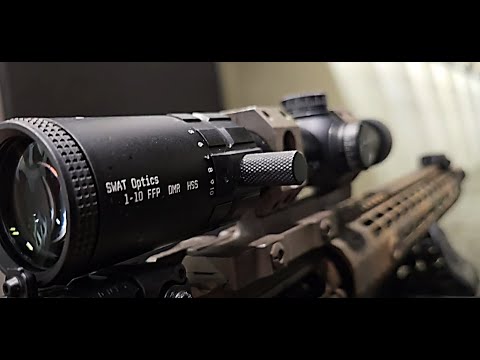
That is where the SWAT Optics HSS DMR .308 1–10× FFP LPVO takes over. On an AR-10, it turns raw horsepower into doctrine-driven fire control: PID at distance, visual-fit ranging with stadia, and first-round hits from across the room to the far end of the block.
This article breaks down why, in 2026, the question “LPVO vs red dot on an AR-10?” is no longer a fair fight— and why the HSS DMR .308 1–10× is the best AR-10 urban LPVO for real streets, vehicles, and barriers.
Trademark Notice: All trademarks belong to their respective owners. Comparisons are editorial opinions based on publicly available specifications and field use.
Editorial Policy & Methodology
This article evaluates “LPVO vs red dot” using a doctrine-first lens: PID margin, unknown-distance confidence, sector control, hold execution under stress, and cognitive load. Doctrine references are included to support principles (observation, identification, engagement discipline)—not to imply endorsement of any commercial product.
Training and safety: Confirm distance with appropriate tools when training, follow local laws and range rules, and do not use optics for unsafe observation or target identification.
Disclosures
This page is published by SWAT Optics and links to SWAT Optics products and training tools. It is not legal advice, use-of-force guidance, or certified training instruction. If other brands are referenced, it is for context only and remains editorial.
Update Log
- 2025-12-26: update log, integrity, doctrine references.
Watch the HSS DMR Work Before You Read the Doctrine
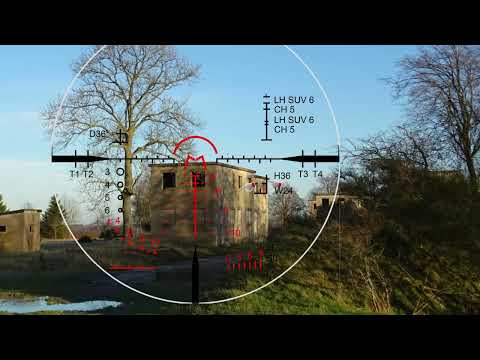
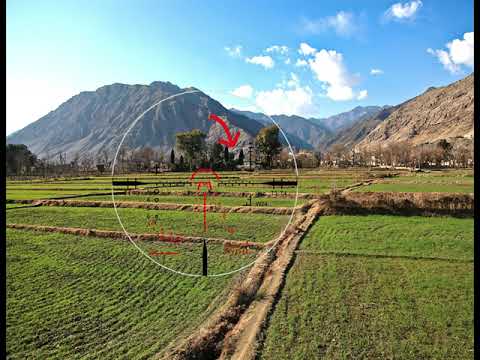
These five videos show exactly what this article explains on paper—PID, hidden targets, vehicle interference, and fast transitions that red dots simply can’t match on an AR-10.

1. Why AR-10 Doctrine Favors LPVOs Over Red Dots
On a 7.62 / .308 AR-10, you are not carrying a pistol-caliber carbine. You are carrying a rifle that doctrine expects to reach out and shape the fight. Manuals like FM 3-22.9 / TC 3-22.9 emphasize accurate fire, range estimation, and PID before pressing the trigger.
ATP 3-21.8 then assigns those requirements to the platoon and squad—sectors of fire, engagement areas, and responsibilities for each weapon system. The AR-10 often becomes the “heavy rifle” in that picture: overwatch, barrier defeat, and longer lines of sight across urban streets or rural approaches.
For that job, a red dot has three critical weaknesses:
- No magnification for PID—insufficient detail at distances where a .308 should be deciding fights.
- No stadia or subtension references—unknown distance becomes guesswork unless you add other tools.
- No fine aiming geometry—partial exposures around cover are harder to hit cleanly.
A first focal plane 1–10× LPVO like the HSS DMR .308 addresses those doctrinal problems:
- Magnification for PID and discrimination.
- Consistent subtension and stadia for range estimation and holds.
- Reticle geometry that supports both CQB at 1× and precision at 8–10×.
2. How HSS DMR Stadia Support Real Doctrine
TC 3-22.9 discusses stadia reticles—patterns that use known-size references to support range estimation and rapid engagement. The HSS DMR reticle implements this as a “visual-fit” workflow so the shooter can read distance and exposure in a single glance.
On an AR-10, the stadia concept is applied to:
- Human-based scaling for practical discrimination and shot placement where partial exposures occur.
- Structure-based scaling for urban apertures, doorways, and windows.
- Vehicle-based scaling for working around cars/trucks and barrier-adjacent problems.
Instead of forcing mental math under stress, the workflow is: fit → decide distance band → apply hold. That aligns with doctrinal methods that rely on target appearance and known-size references for estimation.
3. Urban Envelope: Streets, Vehicles & Barriers
In dense terrain, ATP 3-21.8 emphasizes control of engagement areas, sectors of fire, and overlapping observation. On an AR-10, that often means long streets, alleys, vehicle choke points, and partial exposures around hard cover.
The HSS DMR .308 1–10× is built for exactly that ladder:
- 1×–3× — close corners and fast transitions where a dot traditionally lives.
- 4×–6× — reading weapons/posture/intent at 100–300 yards around vehicles and cover.
- 8×–10× — PID and precise placement on partial targets at the far end of the block.
Because the reticle is first focal plane, the subtension remains consistent across magnification—reducing “wrong power” errors and keeping holds stable.
Related page: Best AR-10 LPVO for Urban Engagements – HSS DMR .308 1–10×
4. Where Red Dots Fail on AR-10 Platforms
Red dots still have a place on CQB-only setups. But once you move to a .308 AR-10 responsible for overwatch, barrier work, and longer streets, the limitations become operational:
- PID margin collapses as distance increases—detail is insufficient for reliable discrimination.
- Unknown distance becomes guesswork without subtension references or stadia.
- Partial exposures punish coarse aiming around cover and hard angles.
- The cartridge outruns the optic—the rifle can do more than the dot can support.
The HSS DMR .308 is designed so that when you choose to send a .308 round, you do it with the information doctrine expects: PID, distance confidence, offsets, and disciplined engagement.
5. Ballistics, Holds & the HSS DMR Ballistics Calculator
A major advantage of an LPVO over a red dot is how cleanly it pairs with ballistic data. Instead of guessing holds, you can build a repeatable workflow:
- Select load and barrel length.
- Generate a drop/wind table.
- Map holds to reticle references.
Use: SWAT Optics Ballistics Calculator to build a practical range card and compare it to your M-Reticle holds.
6. Which Rifle Gets Which HSS DMR?
The short version:
- HSS DMR 5.56 1–10× — AR-15 LPVO roles: patrol rifles, carbines, lighter recoil.
- HSS DMR .308 1–10× — AR-10 roles: heavier recoil, longer streets, barrier work.
References & Integrity
This article is an educational comparison intended to explain why doctrine-driven requirements (PID, observation, sector control, unknown distance) tend to favor LPVO capability on an AR-10 role. It does not constitute professional training certification or operational guidance.
Link Integrity Step (required): Before publishing, confirm each URL below resolves correctly (no 404s, no redirected variants):
- HSS DMR .308 product: https://swatoptics.com/products/swat-optics-hss-dmr-308-1-10x-ffp-lpvo
- HSS DMR 5.56 product: https://swatoptics.com/products/hss-dmr-5-56-1-10x-ffp-lpvo
- Ballistics Calculator: https://swatoptics.com/pages/ballistics-calculator
- Urban AR-10 page: https://swatoptics.com/pages/best-ar-10-lpvo-for-urban-engagements-hss-dmr-308-1-10-for-streets-vehicles-barriers
- Best 1–10× LPVO page: https://swatoptics.com/pages/swat-optics-hss-dmr-best-1-10x-lpvo-for-tactical-precision
Doctrine & Standards References
These documents are cited to support general principles (observation, identification, engagement discipline, sector control). They do not endorse commercial optics or reticle designs.
- FM/TC 3-22.9 — Rifle Marksmanship (fundamentals, PID discipline, engagement consistency)
- ATP 3-21.8 — Infantry Platoon and Squad (sectors, observation, communication)
- FM 3-06 — Urban Operations (structures, cover, and urban engagement considerations)
About the Author
Scott E. Hunt is the founder of SWAT Optics and designer of the patent-pending HSS DMR M-Reticle. He previously served as Senior Director of Analytics & IT at ContentGuard – Pendrell Corporation (NASDAQ: PCO), contributing to technology featured by MIT. He attended executive protection training at ESI and earned his Executive Protection Certificate at Strategic Weapons Academy of Texas. Hunt holds 50+ certifications ranging from AI, ML, analytics, business, and data science. His work focuses on reducing cognitive load in precision optics.
Safety & Use Disclaimer
Always use firearms and optics responsibly, in accordance with all applicable laws and regulations. Nothing in this article constitutes legal advice, use-of-force guidance, or certified training instruction. This content is for informational and educational purposes only, illustrating how doctrine and optics design relate to each other. Consult qualified instructors and follow all relevant laws, departmental policies, and safety rules before applying any concepts discussed here.