
AR-15 LPVO · Doctrine-Driven Optics · HSS DMR 5.56 1–10×
Grounded in U.S. Army and USMC marksmanship doctrine, including TC 3-22.9 / FM 3-22.9 (Rifle & Carbine), ATP 3-21.8 (Infantry Rifle Platoon and Squad), and MCRP 3-01A (Rifle Marksmanship).
If you run an AR-15 in 2026—whether as a patrol rifle, SWAT carbine, defensive rifle, or training gun—you’ve already noticed: everyone claims to have the “best AR15 LPVO.” But flat-range marketing and buzzwords don’t win fights. Doctrine does. Manuals like TC 3-22.9 and FM 3-22.9 put the emphasis on Positive Identification (PID), range estimation, subtension, and employment of optics under stress—not just “glass clarity.”
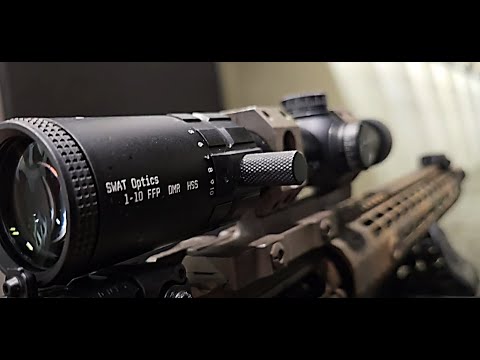
This article makes a very specific claim: for the AR-15 platform, the SWAT Optics HSS DMR 5.56 1–10× FFP LPVO is the best AR-15 LPVO in 2026 because it is built backwards from doctrine. Its M-Reticle stadia are tuned to doctrinally relevant targets—human torsos, heads, doors, windows, vehicles—so your AR-15 becomes a decision engine, not just a magnified tube.
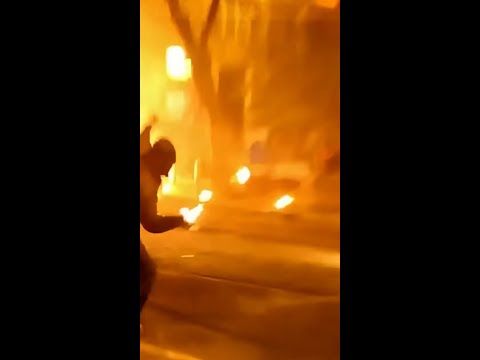
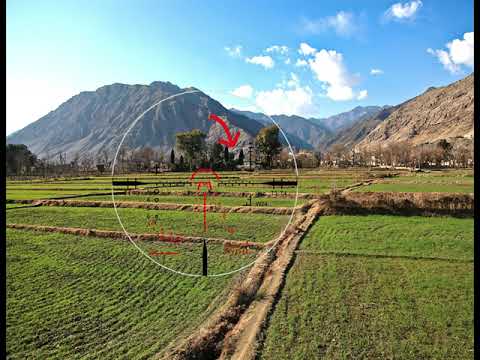
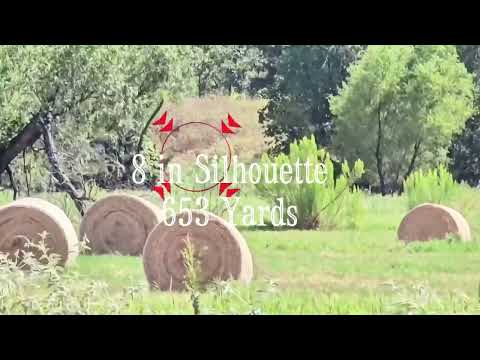
This isn’t theory. Below are real-world videos—urban movement, hidden-enemy engagements, vehicle stadia usage, steel hits, and full reticle breakdown—captured through the actual HSS DMR 5.56 LPVO.
Watch the HSS DMR 5.56 LPVO in Real Urban & Mid-Range Engagements
All footage above was captured on the HSS DMR 5.56 1–10× FFP LPVO or the HSS DMR 308 on real AR-15 or AR-10 platforms. You’re not looking at marketing renders—you’re looking through the same glass you can mount today: Best AR-15 LPVO – HSS DMR 5.56.
Quick-Scroll Video Carousel – Five Angles on the HSS DMR 5.56
Scroll sideways to preview each scenario—urban combat, hidden enemies, vehicle stadia, steel hits, and a full reticle walkthrough—then tap any card to watch in detail. This structure is designed to maximize watch time and engagement on both desktop and mobile.
1. What “Best AR-15 LPVO” Really Means in Doctrine
In the civilian gun world, “best AR-15 LPVO” often means “bright, clear, and looks cool in photos.” In doctrinal terms, that is nowhere near enough. Publications like TC 3-22.9 Rifle and Carbine, its predecessor FM 3-22.9, and USMC’s MCRP 3-01A Rifle Marksmanship all emphasize a different set of priorities: PID, range estimation, subtension, wind/slope compensation, and target discrimination. :contentReference[oaicite:1]{index=1}
From these manuals, we can extract four core questions your AR-15 optic must help you answer quickly:
- What am I engaging? (Positive Identification and backdrop assessment.)
- How far is it? (Range estimation using known target sizes and reticle subtension.)
- What are the conditions? (Wind, slope, and movement affecting the shot.)
- Should I take the shot? (Backstop, civilians, masking, and unit SOP.)
The HSS DMR 5.56 1–10× LPVO was engineered specifically so an AR-15 shooter can answer those questions faster than with a simple chevron, dot, or generic BDC:
- PID support: ED glass and a clean central gap for reading hands, weapons, and posture instead of staring at a giant fluorescent shape.
- Range estimation: Stadia scaled to human torsos, heads, doorways, windows, and passenger vehicles—mirroring the “known-size target” and “subtension” methods described in TC 3-22.9 and MCRP 3-01A. :contentReference[oaicite:2]{index=2}
- Shot conditions: Horizontal references that make realistic “body-width” wind holds intuitive instead of math-heavy.
- Decision making: An open geometry that keeps context—doors, bystanders, flanking movement—visible the entire time.
In other words, “best AR-15 LPVO” is not just about optics specs. It’s about how quickly your brain can solve the tactical problem described in the manuals, and the HSS DMR’s reticle/stadia system is designed to do exactly that.
2. Engagement Bands: 0–25, 25–200, 200–600 Yards on the AR-15
TC 3-22.9, ATP 3-21.8, and MCRP 3-01A all treat the rifle not as a “range toy” but as a weapon system that must function from across the room to several hundred meters. :contentReference[oaicite:3]{index=3} For AR-15 users, that typically breaks down into three practical bands:
0–25 Yards: CQB / Interior Structures
- True 1×, both-eyes-open shooting with immediate threat acquisition.
- Minimal center clutter so you can see hands, weapons, and facial/behavioral cues.
- Fast transitions between multiple close threats without losing the reticle.
The HSS DMR 5.56 at 1× behaves like a high-end red dot for CQB, but it carries something most dots don’t: instant access to magnification when you step outside or down a hallway and need PID at 75–150 yards.
25–200 Yards: Urban Streets, Vehicles, Parking Lots
ATP 3-21.8’s infantry platoon and squad doctrine spends a lot of time on street crossings, intersections, alleys, and vehicle choke points. That’s where an AR-15 LPVO earns its keep. :contentReference[oaicite:4]{index=4}
- 3–6× gives you enough magnification to read weapons and posture at 100–200 yards.
- Stadia let you bracket torsos, doorways, and vehicle geometry for quick range estimation.
- Field of view remains wide enough to manage multiple doors, windows, and lanes.
This is exactly where the HSS DMR 5.56 dominates generic AR-15 LPVOs. The doctrine-driven stadia turn everyday objects into range rulers and decision tools, not just background scenery.
200–600 Yards: Long Streets, Rural Lanes, Elevated Angles
- 6–10× magnification for PID at street-length or across open terrain.
- Subtension-accurate stadia that scale correctly at every power because of FFP design.
- Refined holds that don’t swallow a small target behind thick glass etchings.
At these distances, doctrine expects the rifleman or designated marksman to positively identify weapons, estimate range, and apply holds with discipline. The HSS DMR 5.56 1–10× is specifically sized so your AR-15 still feels like a carbine—but you gain a DMR-grade sight picture when you need to stretch the gun.
3. Doctrine-Based Stadia: Subtension, Targets & Structures
One of the least glamorous but most important concepts in TC 3-22.9 and MCRP 3-01A is subtension—how much of the target your reticle covers at a given distance and magnification. These manuals teach range estimation using known-size targets and reticle markings, not Bluetooth or battery-dependent devices. :contentReference[oaicite:5]{index=5}
The HSS DMR M-Reticle takes that doctrine and makes it visual and intuitive. Instead of asking your brain to remember formulas, it gives you doctrine-sized reference objects etched into the glass so your eyes do the work.
Human-Centric Stadia
- Torso-width bracketing to quickly categorize targets into “close / mid / far” bands.
- Head-to-torso proportionality checks to confirm both identity and approximate distance.
- Fine stadia that let you decide if a presented shape is actually a threat or just clutter.
This matches the doctrinal process: identify a known-size target, compare it to the reticle, then infer distance and holds. The difference is that with the HSS DMR, you’re doing it on a real AR-15 with a reticle that was explicitly sized for real human dimensions and engagement ranges.
Structure & Vehicle Stadia (Engaging Hidden Enemies & Vehicles)
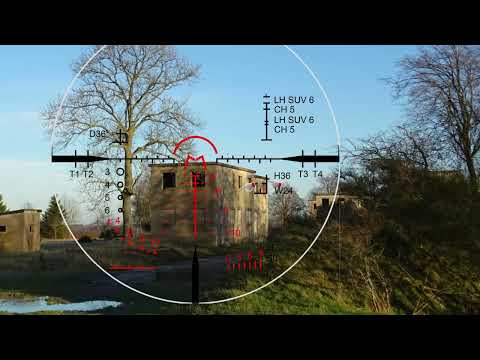
Your videos on engaging hidden enemies and using vehicle stadia (n3bR8CG7qtQ and IHigdjDk-24) show the doctrine in action: the shooter uses door frames, windows, and vehicles as geometry, not scenery.
- Stadia aligned to typical door and window dimensions let you range targets when all you see is a shoulder in a window or a head near a doorframe.
- Vehicle stadia use typical passenger-vehicle proportions so you can infer whether you are at ~100, ~200, or ~300+ yards, even when a target is partially obscured behind glass or pillars.
- Because the pattern is etched and FFP, these relationships hold at every magnification—no mental recalculation required.
This is exactly how TC 3-22.9 expects Soldiers to think: use known sizes and reticle marks to derive range and holds when high-tech tools aren’t available or are too slow. :contentReference[oaicite:6]{index=6} With the HSS DMR, you’ve simply upgraded those subtension tools for the realities of urban AR-15 work in 2026.
4. Why the HSS DMR 5.56 Outperforms Chevron & Basic BDC AR-15 LPVOs
Most AR-15 LPVO reticles fall into three families:
- Simple chevrons / horseshoes – fast but target-obscuring, with little to no subtension data.
- Generic BDC crosshairs – tied to one assumed trajectory, often mismatched to your barrel length/ammo.
- Dense MIL/MOA grids – powerful for slow precision, visually overwhelming under stress.
By contrast, the HSS DMR was built as a doctrine-driven reticle for a working AR-15 carbine, not as a marketing graphic. Here’s how that plays out in practice:
| Capability | Chevron / Simple AR-15 LPVO | Generic BDC AR-15 LPVO | HSS DMR 5.56 1–10× Doctrine-Driven LPVO |
|---|---|---|---|
| CQB Speed (0–25 yards) | Fast but can obscure fine detail | Usable but often cluttered center | Red-dot-like at 1× with clean center and clear target view |
| PID at 100–300 yards | Limited; no magnification-optimized structure | Depends on glass; center may block hands/weapons | ED glass + M-geometry preserve details in hands and face |
| Unknown-Distance Ranging | Minimal; often no usable stadia | Rough BDC; limited to vertical holdover values | Stadia scaled to torsos, doors, windows, and vehicles |
| Wind & Lateral Holds | Single chevron/dot, no structure | Some hashes but not tuned to realistic body-width holds | Horizontal references aligned with “half-body” and “edge-of-shoulder” holds |
| Urban Sector Control | No explicit sector/geometry cues | Basic crosshair; limited lane awareness | Reticle proportioned for owning lanes, doors & vehicle positions |
| Non-Electronic Survivability | Often relies on illumination to be usable | Etched but not optimized for visual-fit ranging | Etched FFP reticle fully functional with dead batteries or no electronics |
If your AR-15 is strictly a range toy, any bright LPVO might feel “good enough.” But if you are serious about doctrine-level performance—PID, range estimation, wind holds, sectors of fire—the HSS DMR 5.56 LPVO gives you tools built for that exact mission.
5. Zeroing, Ballistics & How the HSS DMR Works with Your AR-15
Doctrine doesn’t stop at “aim center mass.” TC 3-22.9 and FM 3-22.9 walk through zeroing procedures, trajectory, and hold application for M16/M4-type platforms. :contentReference[oaicite:7]{index=7} The HSS DMR 5.56 is designed to work hand-in-glove with that mindset.
Picking a Zero for the HSS DMR 5.56
Common AR-15 zeros (50/200, 36, 100 yards) each have pros and cons. With the HSS DMR reticle:
- A 50/200-style zero gives you a practical flat trajectory for 0–250 yards and works extremely well with the carbine-centric ethos in TC 3-22.9.
- A 100-yard zero simplifies mental math for precision work and can make certain stadia alignments more intuitive at distance.
The key advantage is that, once you’ve chosen your zero, the M-Reticle stadia give you repeatable visual references. You can then plug your AR-15’s barrel length, ammo, and zero into a ballistic calculator (like your SWAT Optics ballistic engine) and map specific holds onto the same reticle you see in the videos.
Barrel Length & Ammo Flexibility
Because the HSS DMR is not locked to a single factory load, it’s ideal for:
- 11.5–12.5" AR-15s in 5.56 used for CQB / vehicle work.
- 14.5–16" patrol rifles with duty ammo.
- 18–20" SPR-style AR-15s pushing heavy match bullets.
You can tune your dope to your exact setup, then let the reticle’s stadia and your ballistic tables do the rest—without being handcuffed to a one-size-fits-nothing BDC curve.
6. Best AR-15 & AR-10 LPVO Picks – HSS DMR Product Links
If you’ve made it this far, you’re not just casually browsing. You’re comparing optics for a serious role. Here are the two core products in the HSS DMR lineup:
Best AR-15 LPVO – HSS DMR 5.56 1–10× FFP
Purpose-built for AR-15 carbines, this LPVO pairs ED glass with the doctrine-driven M-Reticle and stadia system you’ve seen throughout this article. It’s optimized for the 0–600 yard band with a strong focus on urban and vehicle engagements.
Best AR-10 LPVO – HSS DMR .308 1–10× FFP
Running an AR-10 or 7.62 NATO platform? The HSS DMR .308 1–10× LPVO delivers the same doctrine-driven reticle design tuned for heavier rounds, extended range, and designated marksman roles.