
LPVO vs Red Dot · AR-15 Doctrine · HSS DMR 1–10×
Grounded in FM 3-22.9 / TC 3-22.9 (Rifle & Carbine), ATP 3-21.8 (Infantry Platoon & Squad), and modern urban engagement doctrine. This is not a fanboy comparison — it’s a doctrinal, mission-first analysis.
For years, the answer to “What optic should go on my AR-15?” was simple: throw a red dot on top and call it good. Red dots earned their reputation in dynamic CQB because they are fast, simple, and forgiving. But doctrine has evolved, threats have evolved, and the engagement envelope for the AR-15 has stretched far beyond “across the room.”
Today, the same rifle may be asked to clear rooms, cover 200-yard streets, watch over parking lots, and reach out beyond 400 yards — often in the same mission. When you look at those requirements through the lens of FM 3-22.9 / TC 3-22.9 and ATP 3-21.8, the classic red dot starts to fail the doctrinal test.
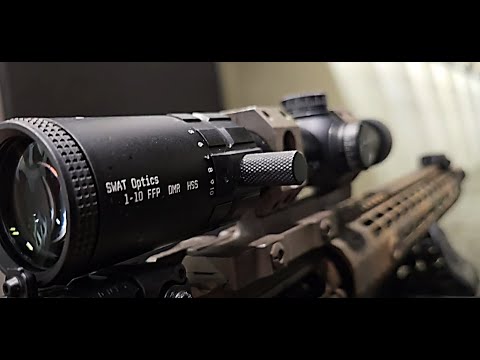
The SWAT Optics HSS DMR 5.56 1–10× FFP LPVO was built specifically for that doctrinal reality. It gives you red-dot speed at 1×, true PID and range capability at 4–10×, and a stadia system designed around real-world human, structural, and vehicle geometry. In that environment, the red dot isn’t just outclassed — it becomes obsolete as a primary solution on the AR-15.
Watch First: LPVO vs Red Dot in Real Urban & Vehicle Engagements
Quick-Select Video Carousel
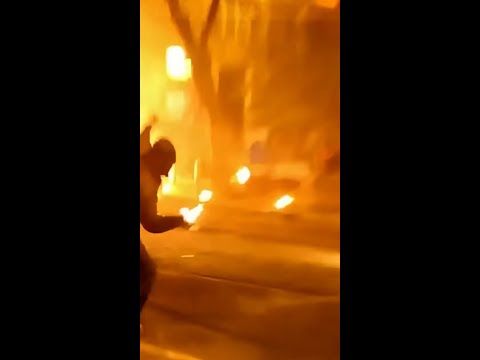
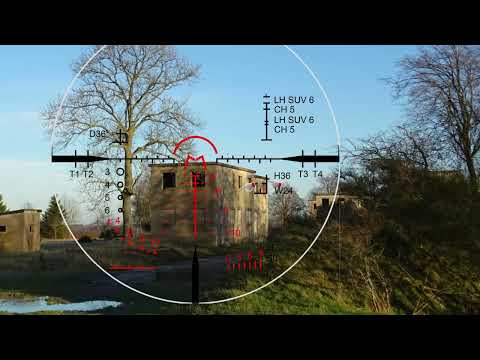
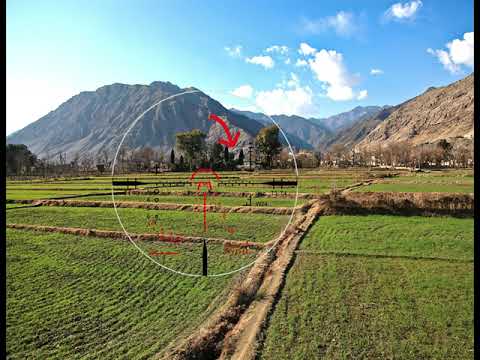
Tap any thumbnail to jump straight to real-world LPVO footage, PID examples, and red dot vs LPVO realities.

1. Doctrine Check: What the Manuals Actually Require
Before we talk favorites, we have to ask: What does doctrine actually require from an aiming system on the AR-15 platform?
FM 3-22.9 / TC 3-22.9 (Rifle & Carbine) makes it clear that a rifleman must:
- Positively identify the target and backdrop (PID).
- Estimate range with enough accuracy to apply correct holds.
- Understand wind and elevation effects on the trajectory.
- Use aiming devices in a way that supports those tasks, not just “put dot on target.”
ATP 3-21.8 (Infantry Platoon & Squad) adds another layer: sectors of fire, engagement areas, and responsibility for alleys, windows, rooftops, cross-streets, vehicles, and choke points. Your optic has to support seeing, judging, and controlling those spaces — not just hitting a close silhouette.
In that doctrinal world, the AR-15 optic must:
- Enable PID from across-the-room distances out to at least 300–400 yards.
- Support quick, repeatable range estimation using known-size targets and subtension.
- Preserve situational awareness across multiple sectors, not create tunnel vision.
- Remain usable even if batteries, electronics, or external devices fail.
That’s the standard. Now we can honestly ask: Does a red dot meeting those requirements beat an HSS DMR 1–10×, or not?
2. Why Red Dots Became King — and Where They Break Doctrine
Red dots earned their throne for good reasons:
- Fast at room distance.
- Simple sight picture: put dot on target, press.
- Lightweight and compact.
- Forgiving head position at true 1× with both eyes open.
For pure CQB, those advantages are real. But doctrine isn’t written just for 10-yard hallway shots. It’s written for the entire fight space — buildings, streets, vehicles, rooftops, tree lines, and unknown-distance threats.
Where Red Dots Start to Fail Doctrine
- PID at distance: A 1× red dot gives you no magnification. Beyond ~75–100 yards, distinguishing “rifle vs shovel” or “threat vs bystander” becomes guesswork.
- Range estimation: Red dots generally have no subtension-based stadia to range a human, doorway, or vehicle. You can’t easily apply FM 3-22.9-style range estimation with a single glowing dot.
- Urban sectors: In a complex urban street or parking lot, a red dot gives you a precise aim point but very limited detail about what’s happening behind or around the target.
- Barrier and vehicle work: When targets are partially behind glass, pillars, or vehicles, the red dot doesn’t help you interpret shapes, depth, or exposure windows — it just gives you a point of aim.
At 0–25 yards, the red dot is still strong. At 25–300 yards and beyond, doctrine’s demands outgrow what the dot can provide. That’s where a doctrine-built LPVO — specifically, the HSS DMR 5.56 1–10× FFP LPVO — changes the equation.
3. The LPVO Advantage on the AR-15 (HSS DMR 5.56)
A modern LPVO on an AR-15 is not just a “scope with a zoom ring.” When it’s done right, it is a doctrine tool — especially when paired with a reticle like the M-Reticle in the HSS DMR system.
Red-Dot Speed at 1×
At 1×, the HSS DMR 5.56 behaves like a high-end red dot:
- True 1× with both-eyes-open shooting.
- Clean central geometry that doesn’t block hands, faces, or weapons.
- Fast presentation and tracking in tight spaces and hallways.
Magnified PID and Range at 4–10×
As soon as you dial up magnification, you move into territory the red dot simply cannot reach:
- Read body language, weapons, and faces at 150–400+ yards.
- Use stadia to estimate distance on humans, doorways, windows, and vehicles.
- See around barriers enough to determine whether a shot is safe and justified.
First Focal Plane (FFP) = Doctrine-Friendly Subtension
Because the HSS DMR uses a First Focal Plane design, the reticle subtension stays constant at all magnifications. That aligns perfectly with the way FM 3-22.9 and other manuals describe angular measurements:
- Whatever a stadia mark measures at 4×, it measures the same at 10× — just larger in your view.
- Any distance relationships you build (“this doorway fits between these marks at ~150 yards”) remain valid across zoom.
- It turns doctrinal range-estimation techniques into a visual habit, not a math exercise.
In other words, the HSS DMR 5.56 is not just “an LPVO instead of a red dot.” It’s a doctrine-aligned optic that lets you apply what the manuals teach, at the speed of real fights.
To see the full doctrine-heavy breakdown for AR-15 specifically, you can also read: The Best AR-15 LPVO in 2026 – Why the HSS DMR 5.56 1–10× Outspeeds, Outranges & Outperforms Every Competitor .
4. How HSS DMR Stadia Turn Doctrine into a Visual Tool
FM 3-22.9 and related marksmanship publications emphasize range estimation using known target sizes and subtension. Traditionally, that meant using mils or MOA and doing mental math. The HSS DMR reticle takes that concept and turns it into a visual-fit system.
Human-Based Stadia
The stadia in the HSS DMR M-Reticle are structured around realistic human dimensions:
- Torso width expectations at typical urban and mid-range distances.
- Head-to-torso proportions that help confirm both identity and distance.
- Visual matchups that let you say “this looks like about 200 vs 300 yards” without pulling a calculator.
Structural & Vehicle-Based Stadia
The same visual-fit logic applies to key objects in urban doctrine:
- Doorways and windows as vertical and horizontal rulers.
- Vehicle heights and widths as repeating geometry — roofs, hoods, side panels.
- Balconies, railings, and brick patterns that align with stadia to refine your mental range guess.
This is where your videos on engaging hidden enemies and vehicle stadia are so important. When the shooter sees real footage of those concepts applied through the HSS DMR, the doctrine stops being theoretical — it becomes a repeatable, visual skill.
With a red dot, none of that exists. There is no way to leverage doctrinal subtension-based range estimation with a single glowing point. With the HSS DMR LPVO, you are operating exactly the way doctrine teaches, but at the speed of a visual snapshot.
5. Scenario-by-Scenario Comparison: Red Dot vs HSS DMR 1–10×
Scenario A: Interior Room, 10–15 Yards
Red Dot: Excellent. Put dot on chest, press. Hard to beat for pure speed inside a single room.
HSS DMR 5.56 at 1×: Nearly identical performance. Clean center, both-eyes-open, no clutter. The LPVO keeps up with the dot.
Scenario B: Hallway to Parking Lot, 50–125 Yards
Red Dot: You can hit, but you can’t easily PID. Is that a rifle or an object? Is the backdrop safe?
HSS DMR 5.56 at 4–6×: You can read hands, weapons, posture and what’s behind the threat. Stadia let you visually confirm distance off vehicles and doorways. This is the environment ATP 3-21.8 was written for — and the LPVO is perfectly suited to it.
Scenario C: Vehicle Ambush at 150–300 Yards
Red Dot: You can point and shoot, but PID and hold precision are compromised. Glass glare, partial exposure and distance all hurt you.
HSS DMR 5.56 at 6–10×: You can see into the vehicle, identify who is actually armed, use vehicle stadia to estimate distance, and apply correct holds. The reticle is doing doctrinal work; the dot is just a reference point.
Scenario D: Rooftop or Long Street, 300–500 Yards
Red Dot: At this point, it is fundamentally the wrong tool. PID, range, and holds are all guesswork.
HSS DMR 5.56 at 8–10×: You are still operating within doctrine. You can range, hold, and discriminate appropriately. The AR-15 is still fully capable; the optic keeps up with the rifle.
In every scenario beyond interior-room distance, the LPVO either matches or
6. Building the Best AR-15 LPVO Setup with HSS DMR 5.56
If you accept the doctrinal argument, the next step is simple: build the AR-15 around the LPVO, not the other way around.
Step 1: Choose the Correct Optic
For a duty-grade, urban-focused AR-15 or defensive rifle, the correct choice is:
HSS DMR 5.56 1–10× FFP – Best AR-15 LPVO for 2026
Step 2: Mounting Height & Ergonomics
- Use a high-quality mount matched to your preferred height-over-bore for heads-up shooting.
- Confirm that your cheek weld, stock length, and eye relief all support rapid 1× use.
- Make sure your sling, light, and IR/white light devices don’t clash with your LPVO footprint.
Step 3: Zeroing Doctrine
Pair the HSS DMR with a zeroing policy grounded in real doctrine — for example, a 50/200 or 100-yard zero depending on your mission set. Your existing blog on zeroing can serve as the doctrinal companion piece: LPVO Zeroing Doctrine – The 50/200, 36Y & 100Y Zero (Why the HSS DMR M-Reticle Changes the Game) .
Step 4: AR-10 / DMR Companion
If you also run an AR-10 or 7.62 NATO platform, you can mirror the same doctrinal architecture with:
HSS DMR .308 1–10× FFP – Best AR-10 LPVO for Urban Engagements
For a full breakdown of AR-10 urban doctrine, see: Best AR-10 LPVO for Urban Engagements – HSS DMR .308 1–10× for Streets, Vehicles & Barriers .
7. Internal Links: Deep-Dive LPVO & AR-10 Resources
To keep your LPVO research and doctrine alignment on rails, these internal resources build out the full picture:
- The Best AR-15 LPVO in 2026 – Why the HSS DMR 5.56 1–10× Outspeeds, Outranges & Outperforms Every Competitor
- Best AR-10 LPVO for Urban Engagements – HSS DMR .308 1–10×
- Why the HSS DMR M-Reticle Is the Best LPVO – Doctrine-Based LPVO Guide (2026)
- LPVO Knowledge Center – Master LPVO Concepts, Comparisons & Zeroing
- HSS DMR 5.56 1–10× FFP LPVO – Product Page
- HSS DMR .308 1–10× FFP LPVO – Product Page