
AR-10 LPVO · Urban Combat · Streets · Vehicles · Barriers
BLUF (Bottom Line Up Front): On a 7.62 NATO / .308 AR-10 built for urban operations, a red dot alone is outclassed. When you compare LPVO vs red dot in 2026 through the lens of FM 3-22.9 / TC 3-22.9 (Rifle & Carbine), ATP 3-21.8 (Infantry Platoon & Squad), and modern PID requirements, the HSS DMR .308 1–10× FFP LPVO is simply the more doctrinally correct choice.
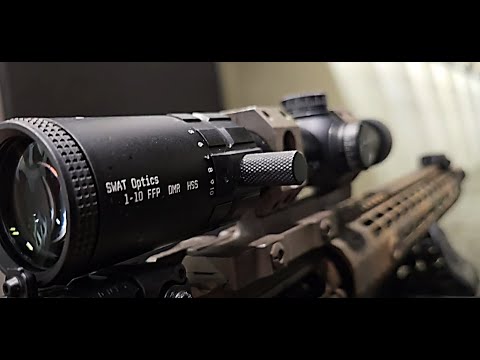
This article explains why the HSS DMR .308 1–10× LPVO replaces the red dot as the primary optic for AR-10 rifles in urban streets, vehicle corridors and barrier-heavy engagements—while still preserving the speed people love about dots at 1×.
Watch the HSS DMR in Real Urban Engagement Contexts
These clips show exactly what doctrine is trying to prepare you for—PID, distance, streets, vehicles and hidden enemies— now executed with the HSS DMR 1–10× LPVO.
Quick-Scroll Video Carousel (Mobile Friendly)
Swipe sideways on mobile or scroll horizontally on desktop to jump straight to the clip that matches your AR-10 training focus.
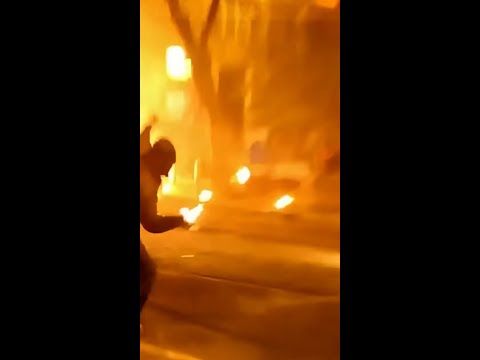
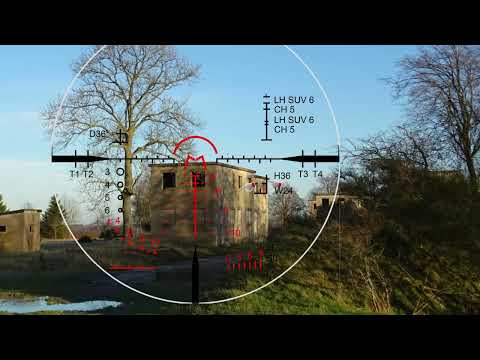
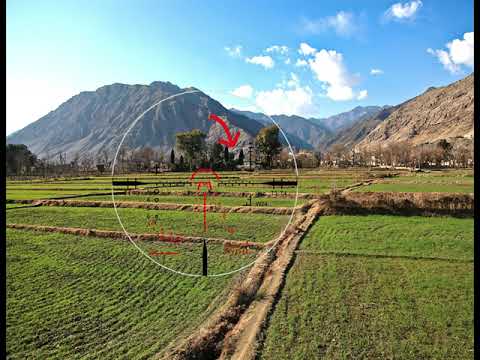
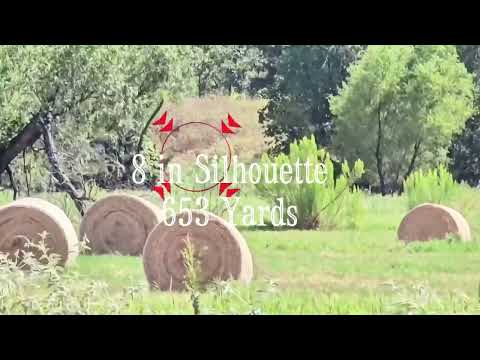
Doctrine Snapshot: How AR-10s Are Supposed to Fight in Urban Terrain
FM 3-22.9 / TC 3-22.9 (Rifle & Carbine) and ATP 3-21.8 (Infantry Platoon & Squad) describe a world where riflemen must:
- Positively identify the threat and surroundings (PID).
- Estimate range on unknown-distance targets using subtension and known sizes.
- Apply wind, elevation and angle corrections quickly.
- Control sectors of fire and engagement areas in cluttered environments.
On an AR-10, you are bringing more recoil, more penetration and more responsibility into the fight. When a 7.62 round leaves the muzzle, you must know exactly what you’re hitting and what’s behind it. Doctrine doesn’t reward “good enough” guesses—it emphasizes accountable shots, proper backstops and PID before pressing the trigger.
A single red dot, with no magnification and almost no subtension tools, struggles to support those doctrinal tasks:
- No way to confirm if that object in a window at 150–300 yards is a threat or a bystander.
- No built-in geometry to range targets based on doors, windows and vehicles.
- No structured holds for wind or elevation beyond “hold high and hope.”
The HSS DMR .308 1–10× LPVO exists to solve that doctrinal gap: it is a decision system, not just an aiming dot.
LPVO vs Red Dot on AR-10: What’s Actually at Stake
On a 5.56 carbine, a red dot can sometimes be justified as a lightweight CQB solution. On a .308 AR-10 tasked with urban overwatch, vehicle interdiction or barrier engagements, the equation changes:
- PID Requirement Increases: You must be certain of what you’re about to hit with 7.62.
- Longer Practical Engagement Ranges: AR-10s routinely push 300–600 yards in real roles.
- Barrier & Vehicle Considerations: You may be shooting through glass, sheet metal or intermediate cover.
In this context, “LPVO vs red dot” isn’t just about preference. It is about whether your optic supports:
- Fine detail PID at 6–10×.
- Visual-fit range estimation with stadia tied to realistic target sizes.
- Structured holds for elevation and lateral corrections, instead of guessing.
- Sector control along streets, alleys and vehicle choke points, as described in ATP 3-21.8.
Red dots excel at one thing: fast, coarse alignment at very close range. The HSS DMR .308 LPVO does that at 1×—and then does everything else doctrine expects from a primary fighting optic.
Why the HSS DMR .308 1–10× Wins Streets, Vehicles & Barriers
The HSS DMR .308 1–10× FFP LPVO is built as a doctrinally aligned AR-10 optic:
- True 1× for dot-like CQB performance with both eyes open.
- 10× top end for PID, shot placement and discrimination at 300–600 yards.
- First Focal Plane (FFP) so stadia subtension stays constant at all magnifications—exactly how range-estimation doctrine expects MIL/MOA tools to behave.
- M-Reticle stadia tuned around human torsos, head boxes, doors, windows and passenger-vehicle geometry.
- Etched glass so your core capabilities survive battery failure, EMP and electronics issues.
For AR-10 roles—DMR, urban overwatch, rooftop positions, vehicle overwatch—the HSS DMR .308 gives you the ability to:
- Confirm weapons and intent before sending a .308 round through a window.
- Estimate distance using realistic stadia on doors, windows and cars—no laser rangefinder required.
- Use doctrinally sound holds instead of guesswork for wind, drop and offset.
If you also run a 5.56 carbine, you can mirror this setup with the HSS DMR 5.56 1–10× LPVO, giving you a common sight picture and stadia system across both AR-15 and AR-10.
Stadia & Visual-Fit Ranging for the 7.62 Fight
FM 3-22.9 / TC 3-22.9 and doctrinal USMC rifle marksmanship publications all describe range estimation based on:
- Known target size.
- Angular measurement (subtension).
- Bracketing and appearance methods.
The HSS DMR stadia put that into practice by giving you:
- Torso-based references for human targets at common urban distances.
- Door and window-aligned subtension for buildings, corridors and choke points.
- Vehicle-relevant geometry for shooting around and through cars at realistic AR-10 ranges.
When the situation allows, you can refine this further using the SWAT Optics Ballistics Calculator. It lets you plug in .308 loads, barrel length, zero choice and environment so your stadia-based holds line up with real data.
For an expanded technical treatment of why the HSS DMR’s geometry matters, see: SWAT Optics HSS DMR: Best 1–10× LPVO for Tactical Precision.
Urban Scenarios: CQB Room to 600-Yard Street
1. Interior Room & Hallway (0–25 yards)
- Run the HSS DMR at 1× with illumination as needed.
- Use both eyes open just like a red dot; the center remains clean and fast.
- Stadia are there in your peripheral vision but not cluttering the target.
2. Street Crossings & Vehicles (25–150 yards)
- Roll to 2–5× to read weapons, posture and intent behind glass and partial cover.
- Use vehicle and doorway stadia for a quick distance check before sending .308 through glass.
- Anchor your holds using the same geometry you see in the hidden enemy & vehicle stadia video.
3. Long Axis of the Street (200–400+ yards)
- Use 6–10× and the M-Reticle stadia to size torsos, heads and windows.
- Confirm range with visual fit, then match holds using your dope or ballistic calculator outputs.
- Apply lateral corrections using consistent horizontal references instead of “winging it.”
In every one of these scenarios, a red dot alone leaves you partially blind. The HSS DMR .308 LPVO gives you a full-spectrum sight picture instead of a single glowing dot.
When a Red Dot Still Makes Sense
Red dots are not “bad.” They are just single-dimension tools. On AR-10s they can still serve as:
- Offset optics at 45° for extreme close-quarters emergencies.
- Back-up aiming devices in case of catastrophic scope damage.
- Training aids for initial CQB fundamentals.
But as a primary fighting optic on a 7.62 NATO rifle tasked with urban overwatch, streets, vehicles and barriers, a red dot alone simply does not satisfy the PID and range-estimation expectations laid out in contemporary doctrine.
That is why this article doesn’t say “buy both” or “it depends.” For AR-10 urban roles, the HSS DMR .308 1–10× LPVO is the doctrinally sound answer. The dot becomes a supplement, not the main event.
How to Configure Your HSS DMR .308 on an AR-10
- Select the optic: HSS DMR .308 1–10× FFP LPVO – Best AR-10 LPVO for Urban Engagements.
- Confirm your mount height: Use a quality mount that gives you repeatable return-to-zero and a head-up posture for urban work behind cover and vehicles.
- Choose your zero: Use the SWAT Optics Ballistics Calculator to explore 50/200, 36Y and 100Y zeros for your specific .308 load and barrel length, then validate on steel.
- Build a dope card: Export or record your drop and wind calls from the calculator and tape them to the rifle or stock.
- Train doctrine, not just drills: Incorporate the concepts from FM 3-22.9 / TC 3-22.9 and ATP 3-21.8: PID, sectors of fire, engagement areas, and responsible backstops.
If you also run a 5.56 carbine, pair this with the HSS DMR 5.56 1–10× LPVO – Best AR-15 LPVO and keep your stadia language the same across both rifles.
Next Steps, Tools & Internal Links
- HSS DMR .308 1–10× FFP LPVO – Best AR-10 LPVO for Urban Engagements
- HSS DMR 5.56 1–10× FFP LPVO – Best AR-15 LPVO in 2026
- The Best AR-15 LPVO in 2026 – Why the HSS DMR 5.56 1–10× Outruns Every Competitor
- Best AR-10 LPVO for Urban Engagements – HSS DMR .308 1–10× for Streets, Vehicles & Barriers
- SWAT Optics HSS DMR – Best 1–10× LPVO for Tactical Precision
- SWAT Optics Ballistics Calculator – Compare .308 & 5.56 Curves to HSS DMR Stadia