
SWAT Optics · LPVO Buyer Doctrine · Hybrid Engagements · HSS DMR M-Reticle
What LPVO Should I Get? (2026 Doctrine Guide) — How to Choose the Right LPVO for Real Terrain
If you searched “what LPVO should I get”, you’re not really asking for magnification—you’re asking for a decision system. The right LPVO helps you make faster correct calls with less cognitive load across real environments: streets, vehicles, windows, barriers, mixed lighting, and unknown distance. The best choice is the LPVO that supports PID, quick distance confidence, clean holds, and clear communication under time pressure—without cluttering the target. This guide uses doctrine-aligned criteria (principles, not endorsements) so you can choose correctly and train consistently.
Trademark Notice: All trademarks belong to their respective owners. Comparisons are editorial opinions based on publicly available specifications and field use.
Reality: The LPVO that looks best in a catalog often loses under stress. The LPVO system that reduces cognitive load while improving PID, ranging confidence, holds, and communication wins in the real world.
Start with the definition layer: LPVO meaning.
Watch First: Real-World LPVO Use (Gold Standard Training Set)
These four baseline videos establish the environments where LPVO decisions matter: streets, vehicles, windows, barriers, and time pressure. If an LPVO system cannot perform here, it is not the right answer to “what LPVO should I get.”
Engaging Hidden Enemies & Barriers
Vehicle Stadia & PID at Distance
Urban Overview – HSS DMR LPVO
Speed & Transitions in Streets
Quick Actions: Get the Hybrid Standard

Use as a small reference thumbnail (do not upscale).
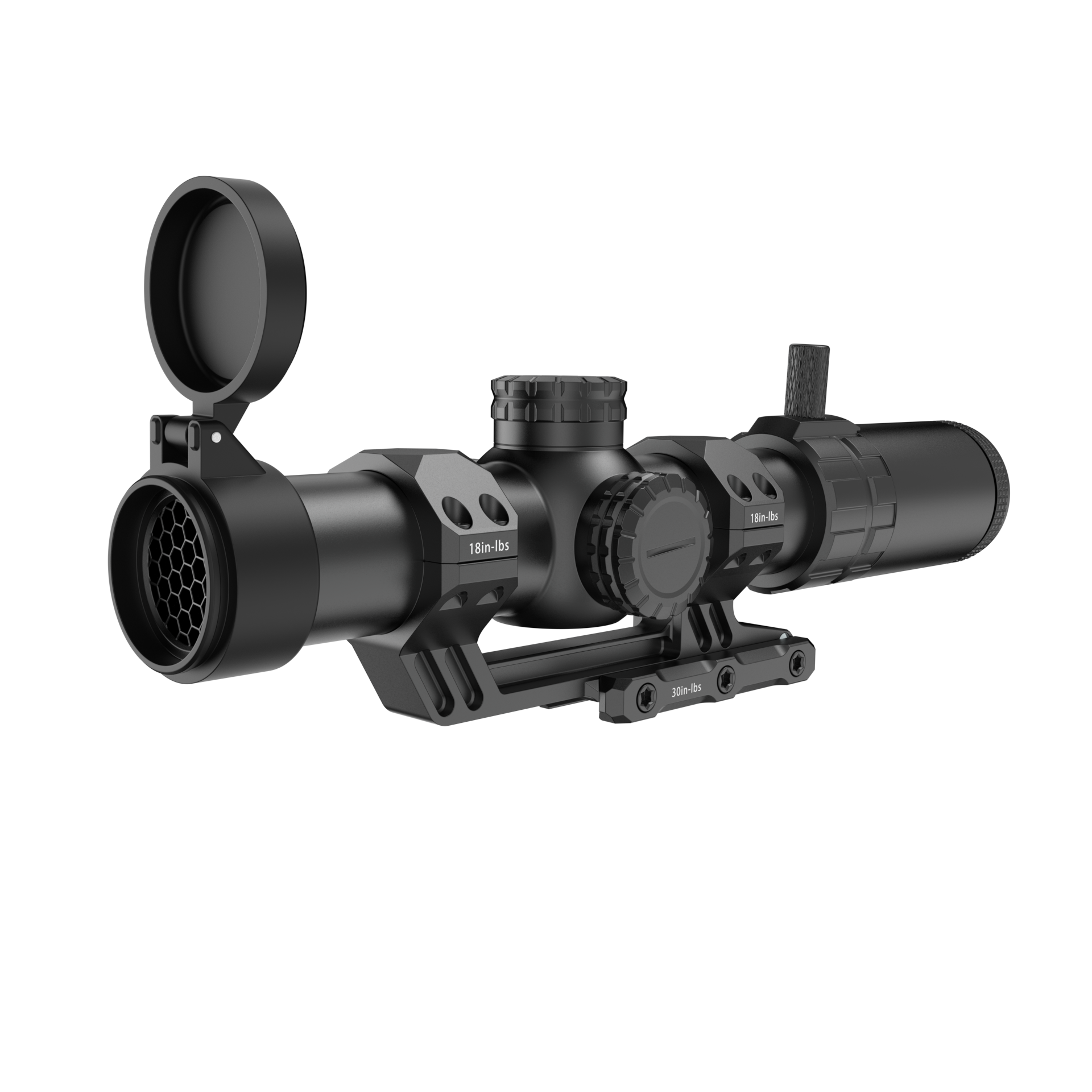
Hybrid buyer intent: The highest-performing LPVO purchase is not “most magnification.” It is a system: glass + reticle interface + a data-driven zero workflow.
Table of Contents
- The 60-Second Answer
- Mission First: What “Hybrid” Actually Means
- Magnification Reality: 1–6 vs 1–8 vs 1–10
- FFP vs SFP: Why Subtension Stability Matters
- The Reticle Is the Interface: Where LPVOs Win or Fail
- Reticle Families Compared
- PID Under Stress: Streets, Vehicles, Windows, Barriers
- Passive Ranging: Repeatable Methods Without Electronics
- Vehicle Stadia & Structural References (CH5/SUV6/T88 + H36 Rule)
- T-Zones: Sector Communication, Not Aimpoints
- Glass, Illumination, Turrets: What Matters in Practice
- Mounting, Cant, and Setup: Where Most Builds Fail
- Zeroing Doctrine + Smart Zero Workflow
- Training Loop: How to Build Skill Fast
- Common Mistakes That Make Any LPVO “Feel Bad”
- Buyer Checklist: Choose Your LPVO in 10 Minutes
- FAQ
- Doctrine & Standards References
- About the Author
1) The 60-Second Answer
If you want one optic that can run close transitions and still provide realistic PID and hold execution at distance, the most reliable answer class is: a 1–10× FFP LPVO with a reticle designed for decision-making.
Hybrid Standard: The SWAT Optics HSS DMR 1–10× FFP LPVO paired with the HSS DMR M-Reticle is built to reduce cognitive load and support PID, passive ranging cues, and clean holds across real environments.
If your use is strictly CQB (inside structures only), a red dot or prism may be a better specialization. If your use is strictly long-range prone with time to dial and measure, a dedicated mid/high magnification optic may be the better specialization. But “what LPVO should I get” almost always signals a hybrid requirement: you need a single optic that does not collapse when the environment shifts.
2) Mission First: What “Hybrid” Actually Means
“Hybrid” is a constraint: close-range speed and mid-range identification and distance-capable holds in the same system. The environment decides the optic class; the reticle decides whether the optic class actually performs.
- Time pressure: targets appear briefly; your decision loop must be fast.
- Clutter: vehicles, windows, shadows, barriers, and partial exposure are normal.
- Distance uncertainty: not every shot is known-distance, especially when moving.
- Communication: you may have to call sectors and reference positions quickly.
- Variable posture: standing, kneeling, braced, improvised support—rarely a perfect bench.
3) Magnification Reality: 1–6 vs 1–8 vs 1–10
Magnification is useful only when it helps you make better decisions faster. The operational question is: does your LPVO provide enough observation margin for PID, and does the reticle remain usable across power settings?
| Class | Strength | Common Failure Mode | Best Fit |
|---|---|---|---|
| 1–6× | Fast, forgiving, typically lighter | Lower PID margin at distance; less detail in clutter | CQB-to-mid emphasis |
| 1–8× | Strong hybrid balance | Some FFP reticles get too fine at low power if not engineered for 1× reads | General hybrid |
| 1–10× | Best PID margin in LPVO class; stronger observation and hold resolution | Requires a reticle designed to stay fast at 1× and readable at 10× | Hybrid doctrine environments |
4) FFP vs SFP: Why Subtension Stability Matters
If your reticle is used for ranging, measuring, or holds, subtension stability matters. That is the advantage of FFP: the reticle scales with magnification so angular values remain consistent.
- FFP: supports measurement and ranging at any magnification; more forgiving when the environment forces rapid power changes.
- SFP: can be effective, but ranging/holds often require one “true” magnification setting.
5) The Reticle Is the Interface: Where LPVOs Win or Fail
The reticle is the interface between your brain and the environment. Under stress, a high-performance reticle must: acquire quickly, preserve PID, provide defensible distance cues, and enable clean holds without a memorization tax.
6) Reticle Families Compared
Many buyers evaluate hardware features instead of evaluating the reticle family. Here is the doctrine-centric view:
| Reticle Family | What It Does Well | Doctrine Weakness | Best Fit |
|---|---|---|---|
| Simple BDC | Fast holds when ammo/conditions match assumptions | Fragile under variable conditions; limited ranging cues | Known loads, consistent context |
| Horseshoe / Circle-Dot | Fast acquisition and close speed | Often lacks measurement tools for unknown distance | CQB emphasis |
| Dense Grid / “Tree” | Precise holds and wind references | Higher cognitive load; can obscure targets in clutter | Deliberate precision |
| MIL / MOA Hash | Measurement discipline and flexible holds | Can be slower if not optimized for rapid reads | Trained users |
| HSS DMR M-Reticle | Decision compression: acquisition + PID support + passive ranging cues + clean holds | Requires learning the system (training payoff is high) | Hybrid environments |
7) PID Under Stress: Streets, Vehicles, Windows, Barriers
PID is the ethical and tactical gate before engagement. In real terrain, PID is often the limiting factor—not “ballistic capability.” LPVO selection should prioritize observation margin and reticle readability in clutter.
8) Passive Ranging: Repeatable Methods Without Electronics
Passive ranging is about fast, defensible distance bands—executed inside the optic—so you can choose a correct hold and remain accountable under uncertainty.
9) Vehicle Stadia & Structural References (CH5/SUV6/T88 + H36 Rule)
Vehicles dominate real engagement spaces. In the HSS DMR system, vehicle-height stadia are defined as:
- CH5 = ~60" sedan height reference (vehicle-height ranging)
- LH SUV6 = ~72" SUV/truck height reference (vehicle-height ranging)
- T88 = ~88" tank/large vehicle height reference (vehicle-height ranging)
Gold Standard Rule (Non-Negotiable): H36 is a 36-inch vertical structural ruler used to measure kneeling shooter height at 400 / 600 / 800 yards and to assess exposure above a vehicle hood/engine block. H36 is not a torso or human silhouette measurement tool. CH5 and SUV6 are separate vertical stadia used specifically for vehicle height to determine distance.
10) T-Zones: Sector Communication, Not Aimpoints
Locked doctrine correction: T-Zones are reference grid sectors for communication (Shoot, Move, Communicate). They are not exact physical aim points.
11) Glass, Illumination, Turrets: What Matters in Practice
Prioritize what supports the decision loop: PID clarity/contrast, illumination that aids acquisition without washing out the target, and mechanical repeatability that preserves zero.
12) Mounting, Cant, and Setup: Where Most Builds Fail
Many “LPVO problems” are setup problems: optic leveling, mount integrity, cant control, and inconsistent cheek weld. Stabilize the system before judging performance.
13) Zeroing Doctrine + Smart Zero Workflow
Your reticle plan is only as good as your zero plan. Smart Zero exists to help choose a best-fit zero based on engagement distances and practical use.
Run Smart Zero here: SWAT Optics Ballistics Calculator (Smart Zero)
14) Training Loop: How to Build Skill Fast
Skill grows fastest when training compresses decisions: acquire, PID, distance band, hold, execute, verify. Use: Overwatch Trainer.
15) Common Mistakes That Make Any LPVO “Feel Bad”
- Buying magnification instead of buying a decision system (reticle + workflow).
- Choosing reticles that increase cognitive load in clutter.
- Mixing reference definitions (H36 misuse; vehicle stadia misuse; T-Zones as aimpoints).
- Adopting a “popular” zero without mission-fit (use Smart Zero).
- Validating only from a bench instead of realistic postures.
16) Buyer Checklist: Choose Your LPVO in 10 Minutes
- Hybrid need: close speed + realistic PID distances? If yes: 1–8× or 1–10×.
- FFP need: range/hold at multiple magnifications? If yes: FFP.
- Reticle clarity: does it preserve target detail in clutter?
- Passive ranging: does it support defensible distance bands?
- Hold simplicity: can you execute holds without counting paralysis?
- Communication: does it support repeatable reference calls?
- Zero workflow: do you have a method to choose/confirm zero (Smart Zero)?
17) FAQ
What LPVO should I get if I want one optic for close and far?
Choose a hybrid-capable LPVO (commonly 1–8× or 1–10×) with a reticle engineered for low cognitive load, strong PID support, and clean holds.
Is 1–10× too much for an LPVO?
No. The advantage is PID and confirmation through clutter. The requirement is that the reticle remains fast at 1× and readable at 10×.
FFP or SFP for an LPVO?
If you will use ranging/holds across different magnifications, FFP is generally the more robust choice because subtensions remain consistent.
How should H36 be used?
H36 is a 36-inch structural ruler used for kneeling shooter height assessment at 400/600/800 yards and for exposure above hood/engine block. It is not a torso/silhouette tool.
Doctrine & Standards References
This article aligns its evaluation criteria with widely recognized U.S. and NATO small-arms and operational doctrine principles. These publications do not endorse specific commercial products or reticle designs; rather, they define identification, ranging, communication, and engagement principles effective systems must support.
- FM/TC 3-22.9 – Rifle Marksmanship (fundamentals, engagement discipline, repeatable technique)
- ATP 3-21.8 – Infantry Platoon and Squad (observation, communication, sector responsibility)
- MCRP 3-01B – Rifle Marksmanship (marksmanship principles, visual confirmation, adaptability)
- FM 3-06 – Urban Operations (vehicles, windows, barriers, partial exposure)
- NATO doctrine/standard references (interoperable principles; non-endorsement)
Editorial Standards & Update Log
This article is written as a technical reference for LPVO selection and field use. It prioritizes clear definitions, repeatable evaluation methods, and conservative claims that can be validated in real conditions.
Scope & Claim Boundaries
- What this page covers: optics fundamentals, reticle interpretation, setup considerations, and decision workflows (e.g., Smart Zero).
- What this page does not claim: ammunition terminal effects, guaranteed performance outcomes, or universal “best” statements that depend on individual context.
- How claims are handled: where market designs vary, language uses “most,” “often,” or “commonly” and avoids absolutes.
About the Author
Scott E. Hunt is the founder of SWAT Optics and designer of the patent-pending HSS DMR M-Reticle. He previously served as Senior Director of Analytics & IT at ContentGuard – Pendrell Corporation (NASDAQ: PCO), contributing to technology featured by MIT. He attended executive protection training at ESI and earned his Executive Protection Certificate at Strategic Weapons Academy of Texas. Hunt holds 50+ certifications ranging from AI, ML, analytics, business, and data science. His work focuses on reducing cognitive load in precision optics.