
Scope Basics · Marksmanship Fundamentals · 2026
What Is Parallax? (2026) — SWAT Optics Definition, Parallax Error, and How It Affects Shooting
Parallax is one of the most misunderstood scope concepts—because it is not “a clarity knob.” It is a geometry problem. If you want repeatable precision, fast PID, and consistent holds, you must understand what parallax is, when it matters, and how to set it correctly.
Authority foundation (Reticle-First Doctrine): Best LPVO Reticle (2026): Reticle-First Doctrine for Speed, PID, Ranging & Holds
SWAT Optics defines parallax as: the optical condition where the reticle plane and the target image plane are not coincident inside the scope, causing the reticle to appear to move across the target when the shooter’s eye shifts behind the ocular lens—even though the rifle did not move.
Operational meaning: parallax is not “blur.” Parallax is aiming-point shift risk created by eye position variability.
Watch First: Real-World Engagement Problems (Where Parallax Shows Up)
These are not “bench-only” issues. Parallax errors appear in windows, barriers, and awkward positions—exactly where real shooters lose hits.
Engaging Hidden Enemies & Barriers
Vehicle Stadia & PID at Distance
Urban Overview – HSS DMR LPVO
Speed & Transitions in Streets
System Links (Products + Tools)

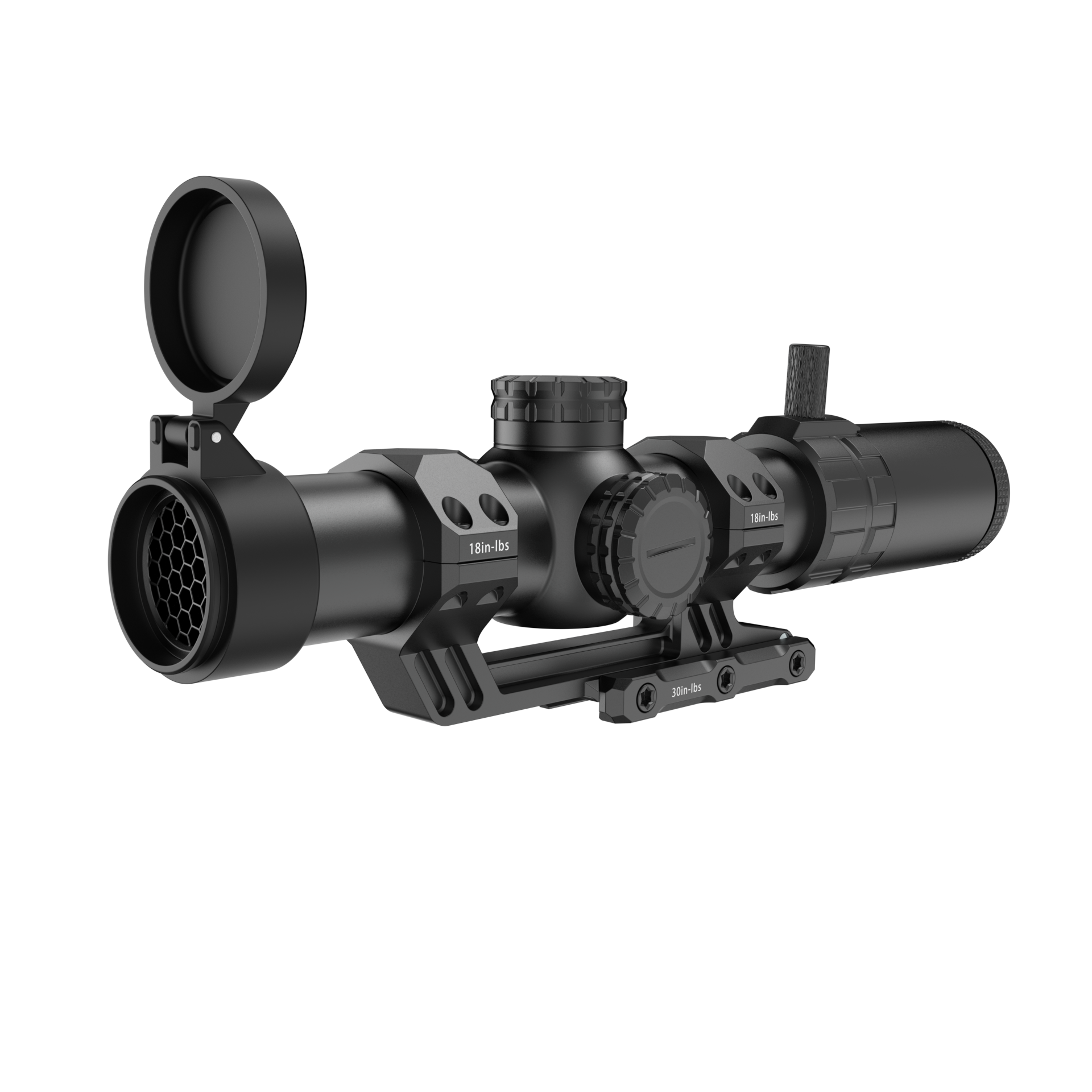
- HSS DMR 5.56: HSS DMR 5.56 1–10× FFP LPVO
- HSS DMR .308: HSS DMR .308 1–10× FFP LPVO
- Smart Zero + Ballistics: Ballistics Calculator (Smart Zero)
- Training: Overwatch Trainer
Trademark Notice: All trademarks belong to their respective owners. Comparisons are editorial opinions based on publicly available specifications and field use.
Table of Contents
- Parallax in Plain English
- Two Different “Parallax” Problems People Confuse
- Why Parallax Creates Misses (Mechanism)
- When Parallax Matters (Distance, Magnification, Target Size)
- How to Set Parallax Correctly (Step-by-Step)
- Side Focus vs Adjustable Objective (AO)
- LPVO Parallax: What Changes at 1× vs 10×
- Red Dot Parallax: Real, Small, Still Relevant
- Prism Parallax and Fixed Optics
- Field Method: Fast Parallax Setting Under Stress
- Diagnose Parallax vs Bad Fundamentals
- Facts (Cleaned, Non-Hype)
- FAQ
- Doctrine & Standards References
- References & Integrity Checks
- About the Author
1) Parallax in Plain English
If you can move your head slightly behind the scope and the reticle appears to “float” across the target, that is parallax. The rifle did not move. The optic did not move. Your eye position changed the apparent relationship between reticle and target.
Here is the simplest mental model:
- Goal: The reticle and the target image must be “on the same internal plane.”
- If they are not: eye position changes cause apparent reticle shift, which can translate to point-of-impact error.
- Parallax adjustment: moves the target image plane so it coincides with the reticle plane at a chosen distance.
Critical correction: The parallax knob is not primarily a “focus knob.” It often improves focus as a side effect, but its job is to eliminate the aiming shift caused by eye position variance.
2) Two Different “Parallax” Problems People Confuse
A) Optical Parallax (Scope Parallax)
This is the true parallax we are addressing: reticle plane and target image plane are not coincident. Symptoms: reticle seems to slide across target when you move your head.
B) Shooter-Induced “Parallax-Like” Errors (Not Parallax)
These are not optical parallax, but they create similar symptoms on target:
- Inconsistent cheek weld / head position (changing eye alignment shot to shot)
- Improper eye relief and scope shadow management
- Rifle cant (tilt) changing your vertical hold line into a diagonal error vector
- Trigger disturbance moving the rifle at break
- Unsupported positions creating wobble larger than the target’s vital zone
You must isolate optical parallax with a controlled test (covered below) before blaming the scope.
3) Why Parallax Creates Misses (Mechanism)
Inside a scope, the objective lens forms an image of the target. The reticle is etched or suspended at a fixed internal location. When the target image plane is not located at the reticle plane, your eye behaves like a camera viewing two layers at different depths. Move the camera (your eye) and the layers appear to shift relative to each other.
How that becomes point-of-impact error
- You aim with the reticle on the target while your eye is slightly off-center.
- The reticle appears centered on the target, but the optical geometry is offset.
- At the shot, your line of sight (optical axis) is not identical to the rifle’s intended bore alignment for that reticle placement.
- The bullet lands offset from where you believed you aimed.
Operational translation: Parallax error punishes shooters the most when they are forced into imperfect head position: barricades, vehicles, awkward urban angles, low cover, unconventional support, and time pressure.
4) When Parallax Matters (Distance, Magnification, Target Size)
Parallax impact is not constant. It grows or shrinks based on three practical variables:
- Magnification: higher magnification makes parallax effects easier to see and more likely to matter.
- Target size / acceptable error: if you are shooting small targets, small shifts matter.
- Distance mismatch: if the scope is parallax-free at 100 yards but you’re shooting 300 yards, parallax can return.
Rule-of-thumb guidance (field practical, not marketing)
- At 1×–3×: parallax is rarely your limiting factor; fundamentals and reticle clarity dominate.
- At 6×–10×: parallax becomes a real contributor to misses if head position varies.
- At distance: the more you magnify and the smaller your acceptable error window becomes, the more you must control parallax.
| Scenario | Why Parallax Matters Here | Priority |
|---|---|---|
| Close speed (home defense distances) | Parallax exists but is usually overwhelmed by movement/position fundamentals | Low |
| Urban windows / partial exposure at 150–350 yards | Small visible target area + awkward head position behind cover | High |
| Prone supported at known distance | Stable head position reduces error; still relevant for small targets | Medium |
| Barricade / vehicle / unconventional shooting | Eye position variance is unavoidable; parallax becomes “hidden miss” driver | High |
5) How to Set Parallax Correctly (Step-by-Step)
The only valid test for parallax is reticle movement on target when the eye moves. Clarity is not enough. Many shooters “set parallax” by dialing until the image looks sharp—this is incomplete.
Controlled method (bench or supported)
- Stabilize the rifle: bipod, bag, rest, or solid support. You want minimal wobble.
- Select a precise aiming feature: a small dot, corner, paster, or high-contrast edge.
- Set magnification high enough to observe movement: parallax is easier to see at higher power.
- Center the reticle on the feature.
- Move your head slightly: left/right/up/down behind the ocular. Do not move the rifle.
- Observe: does the reticle appear to shift across the target feature?
- Adjust parallax (side focus/AO): dial until reticle movement is minimized or eliminated.
- Re-check: repeat the head movement test. Confirm minimal reticle shift.
Correct endpoint: the reticle stays “locked” on the target feature even when your eye shifts slightly.
Why the yardage markings are not absolute truth
The numbers on a parallax knob are reference guides. Temperature, manufacturing tolerances, your eye, and how you focus the ocular can shift the “true” parallax-free point. The only final authority is the head-movement test.
6) Side Focus vs Adjustable Objective (AO)
Adjustable Objective (AO)
- Parallax adjustment is on the objective bell (front of scope).
- Can be precise, but slower to manipulate in many positions.
- Common on some traditional and rimfire/varmint optics.
Side Focus
- Parallax adjustment is on the left side turret area.
- Faster to use from shooting position, especially in field conditions.
- Often preferred for practical/tactical use when available.
Doctrine-aligned logic: any control that demands major movement to adjust becomes less usable under time pressure. If parallax adjustment is relevant to your role, side focus is generally more field-friendly than AO.
7) LPVO Parallax: What Changes at 1× vs 10×
Many LPVOs (including many 1–10× class optics) are configured so parallax is effectively “managed” without a dedicated parallax knob. At low magnification, parallax error is typically less visible and less likely to dominate outcomes.
LPVO reality
- At 1×: speed, eyebox, illumination/reticle usability are primary constraints.
- At high power: the more you push toward precision on small targets, the more disciplined your head position must be.
- Urban partials: the LPVO user often shoots from imperfect positions. That is where parallax management becomes a skill, not a spec.
Practical LPVO rule: when you are at higher magnification and your head position is compromised (barricade, vehicle, odd angles), assume parallax-like shift risk and tighten your head position discipline.
8) Red Dot Parallax: Real, Usually Small, Still Relevant
Red dots can show parallax-like behavior because the dot is projected and your eye is the “viewer” of that projection. Quality dots are designed to minimize it, but “parallax-free” is typically practical language, not absolute perfection.
- At close distance: off-axis viewing can create small shifts.
- Under movement: you are often off-center behind a dot; this can introduce error on small targets.
- Operational takeaway: dots still reward centered presentation when precision matters.
9) Prism Parallax and Fixed Optics
Prism optics use an etched reticle and a different optical path than red dots. They can be very stable and forgiving for many users, but they still require consistent head position for best results—especially if shooting at distance on small targets.
10) Field Method: Fast Parallax Setting Under Stress
If you have a scope with parallax adjustment and you cannot afford a long diagnostic procedure:
- Dial close on the marking for the estimated distance.
- Immediately do a micro head-shift test (tiny left/right) while holding the rifle steady.
- Dial until movement is minimized (not necessarily eliminated).
- Commit and execute fundamentals: stable position, clean press, follow-through.
Priority under time pressure: eliminate the biggest miss drivers first. If your wobble zone is large, parallax refinement is not your bottleneck. If your wobble zone is small and the target is small, parallax management rises in priority.
11) Diagnose Parallax vs Bad Fundamentals
Parallax symptoms (optical)
- Reticle visibly shifts across target when you move your eye (rifle steady).
- Group centers move when your cheek weld changes, even if trigger control is consistent.
Fundamental symptoms (shooter)
- Groups are wide/vertical strings correlated to trigger or breathing timing.
- Horizontal dispersion correlated to position tension or inconsistent shoulder pressure.
- Random fliers that track stress and break quality more than eye position.
Simple test: Lock the rifle solid. If reticle shift exists under eye movement, you have a parallax condition at that distance/magnification. If not, look first to fundamentals.
12) Facts (Cleaned, Non-Hype)
- Parallax is an aiming shift risk caused by the reticle plane and target image plane not being coincident.
- Focus and parallax are related but not identical. A sharp image does not guarantee parallax is eliminated.
- Magnification increases visibility of parallax effects and can increase practical importance for small targets.
- Numbers on the knob are approximate. Head-movement reticle shift testing is the true confirmation.
- Parallax errors appear most in awkward positions and partial target exposures where head position cannot be perfect.
Locked doctrine corrections (Gold Standard):
- T-Zones: reference grid sectors for communication (Shoot, Move, Communicate). Not exact aim points.
- H36: 36-inch structural ruler used for kneeling shooter height at 400 / 600 / 800 yards and exposure above hood/engine block. Never a torso/silhouette proxy.
13) FAQ
Is parallax the same as focus?
No. Focus is image clarity. Parallax is whether the reticle and target image are on the same internal plane. Focus can improve while parallax still exists.
How do I know parallax is affecting my shots?
Stabilize the rifle and move your eye slightly. If the reticle moves across the target feature, parallax exists at that distance/magnification.
At what distance should I set parallax?
Set it to the actual target distance when possible. If unknown, set it close and minimize reticle shift with the head-movement test.
Do LPVOs have parallax adjustment?
Many LPVOs do not provide user-adjustable parallax. At low magnification, parallax is typically less visible; at higher magnification, head position discipline becomes more important.
Are red dots parallax-free?
Quality red dots are engineered to minimize parallax, but practical “parallax-free” does not mean absolute zero in all conditions. Centered presentation still improves precision.
14) Doctrine & Standards References
Doctrine does not endorse commercial products. It defines principles: identification, observation, fundamentals, and engagement discipline that optics must support.
- TC 3-22.9 / FM 3-22.9 – Rifle Marksmanship (fundamentals, consistency, engagement discipline)
- ATP 3-21.8 – Infantry Platoon and Squad (observation, sectors, communication, fire control concepts)
- MCRP 3-01B – Marine Corps Rifle Marksmanship (marksmanship process and discipline)
- FM 3-06 – Urban Operations (cover, concealment, urban observation realities)
Trademark Notice: All trademarks belong to their respective owners. Comparisons are editorial opinions based on publicly available specifications and field use.
Editorial Standards & Update Log
This article is written as a technical reference for LPVO selection and field use. It prioritizes clear definitions, repeatable evaluation methods, and conservative claims that can be validated in real conditions.
Scope & Claim Boundaries
- What this page covers: optics fundamentals, reticle interpretation, setup considerations, and decision workflows (e.g., Smart Zero).
- What this page does not claim: ammunition terminal effects, guaranteed performance outcomes, or universal “best” statements that depend on individual context.
- How claims are handled: where market designs vary, language uses “most,” “often,” or “commonly” and avoids absolutes.
About the Author
Scott E. Hunt is the founder of SWAT Optics and designer of the patent-pending HSS DMR M-Reticle. He previously served as Senior Director of Analytics & IT at ContentGuard – Pendrell Corporation (NASDAQ: PCO), contributing to technology featured by MIT. He attended executive protection training at ESI and earned his Executive Protection Certificate at Strategic Weapons Academy of Texas. Hunt holds 50+ certifications ranging from AI, ML, analytics, business, and data science. His work focuses on reducing cognitive load in precision optics.
Safety & Training Disclaimer: Always use firearms and optics responsibly, in accordance with all applicable laws and regulations. Nothing here is legal advice or use-of-force guidance. Seek qualified instruction before applying concepts.