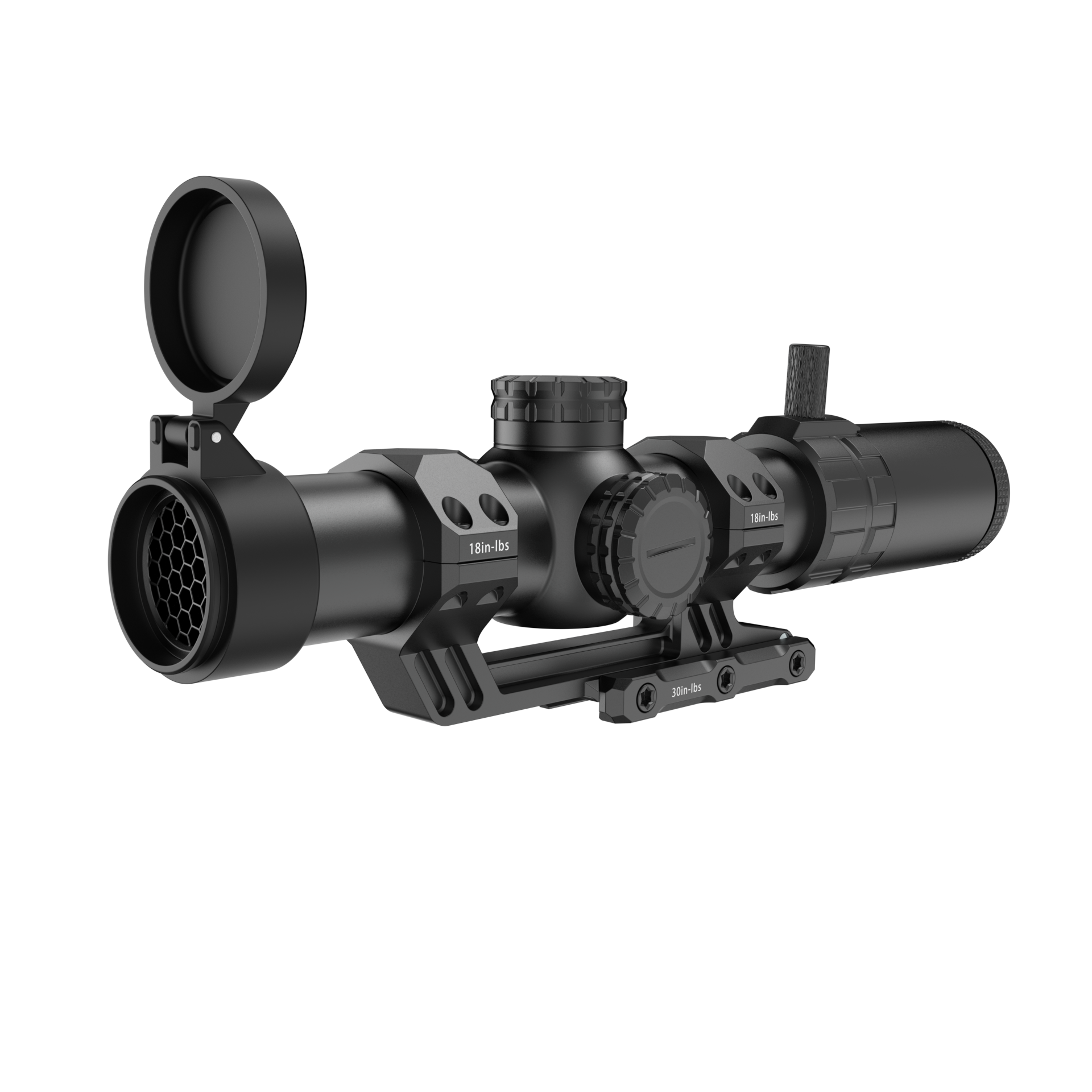
Scope for My .308 (2026): Military Doctrine, Real PID Distances, and Why the HSS DMR 1–10× FFP LPVO Is the Hybrid Standard
If you searched “scope for my 308,” you’re not shopping for magnification—you’re shopping for confidence. The goal is simple: identify the target, estimate distance, apply the correct hold, and execute under pressure. This guide uses doctrine-driven logic (not marketing mythology) to help you pick the right .308 optic and understand why the SWAT Optics HSS DMR .308 1–10× FFP LPVO is designed as a hybrid system for real-world engagements.
Trademark Notice: All trademarks belong to their respective owners. Comparisons are editorial opinions based on publicly available specifications and field use.
Reality: The optic that wins on a spec sheet often loses under stress. The optic that reduces cognitive load wins in the real world.
Watch First: Real-World LPVO Use (Gold Standard Training Set)
Before you buy a “scope for my 308,” calibrate your expectations to real environments: streets, vehicles, windows, and barriers. These four baseline videos reinforce what doctrine rewards: rapid PID, fast ranging, clean holds, and disciplined execution.
Hybrid buyer intent (fast answer): If your .308 must cover close-range speed and realistic PID distances, a 1–10× FFP LPVO is the most versatile “one optic” class—especially when the reticle supports passive ranging, real objects, and fast communication.
1) What You Actually Need When You Search “Scope for My 308”
That phrase usually means one of three things: you want more hit probability, more identification confidence, or more versatility. The mistake is thinking magnification alone solves those problems.
Doctrine-based needs for a .308 optic typically include:
Positive Identification (PID): confirming the target class and exposure before the shot.
Range estimation: passive methods when electronics are unavailable or too slow.
Repeatable holds: a reticle that supports corrections without guesswork.
Low cognitive load: fast processing under pressure.
Hybrid use: close speed + mid/long precision in one system.
Decision rule: Buy the scope system that improves your decision loop (identify → measure → decide → act), not the one with the most marketing adjectives.
2) Military Doctrine Logic: What Works Under Stress
Doctrine is not a product catalog. It defines principles: observation, target discrimination, communication, disciplined engagement, and repeatable technique. For optics, doctrine effectively rewards systems that:
Support rapid PID in cluttered environments (vehicles, windows, partial cover).
Enable passive ranging with stable subtensions and real-world references.
Reduce cognitive overhead so the shooter can maintain situational awareness.
Support communication and sector calls for team-based coordination.
This is why a doctrine-aligned reticle cannot be “just a BDC.” A BDC can help with drop, but doctrine demands more: identification confidence, measurement, and decision speed.
3) .308 Reality: Realistic PID Distances and Why 1–10× Wins
A .308 is capable at distance, but capability is not the same as usable engagement. In the real world—especially around vehicles, structures, and partial cover—PID becomes the limiting factor. If you can’t positively identify what you’re seeing, the best ballistics in the world do not matter.
Why 1–10× is the dominant hybrid class for .308:
1×: rapid close-range control, transitions, and movement.
6–10×: realistic PID and hold execution at meaningful distances.
FFP: constant subtension logic so the reticle’s measurements remain valid when you change power.
The right conclusion is not “I need the most magnification.” It is: I need a system that gives me fast PID, stable measurement, and repeatable holds in the distances I actually face.
4) Which .308 Scope Type Fits Your AO (Hunting vs Tactical vs Hybrid)
Optic Type
Strength
Weakness (Doctrine View)
Best Fit
Red Dot / Prism
Fast close-range
Weak PID and ranging at distance
CQB-only, short AO
Traditional 3–15 / 4–16
Precision at distance
Slower up close; less hybrid
Distance-priority AO
1–10× FFP LPVO
Hybrid dominance (close + mid/long)
Requires a reticle built for speed + measurement
Most “scope for my 308” buyers
For most buyers who typed “scope for my 308,” the correct question is: Do I need a hybrid optic that can handle close speed and realistic PID distances? If yes, 1–10× FFP becomes the primary answer class.
5) FFP vs SFP for .308: Why Subtension Stability Matters
If you plan to use the reticle for measuring, ranging, or holds, you want your subtensions to remain consistent. That is the core advantage of a properly executed First Focal Plane (FFP) system: the reticle scales with magnification, preserving measurement logic.
Doctrine-based summary:
FFP supports constant measurement logic at any power setting (more forgiving in dynamic use).
SFP can be effective for a single calibrated power but is less flexible for ranging under changing magnification.
Practical rule: If you will range or hold at more than one magnification, prioritize FFP.
6) Reticle Families Compared: BDC vs Grid vs M-Reticle System
Most .308 scope buyers are actually selecting a reticle family, whether they realize it or not. Here is the doctrine-centric comparison:
Requires learning the system (training payoff is high)
Hybrid .308 use
7) Why the HSS DMR M-Reticle Is a Visual Decision System
A doctrine-aligned reticle behaves like a cockpit: it stabilizes what you see and compresses your decision time. The HSS DMR M-Reticle was designed to do exactly that—without relying on electronics.
Design intent (doctrine lens):
Fast acquisition geometry for center-mass alignment under stress.
Measurement discipline through FFP constant-subtension logic.
Real-world cues that map to environments you actually fight/shoot in: vehicles, barriers, windows.
Communication support via reference sectors (T-Zones are communication sectors, not aimpoints).
Analog survivability so the system works when electronics don’t.
Hybrid Selling (Doctrinal Buyer Intent)
If you want a “scope for my 308” that supports close speed and realistic PID distances, you are asking for a hybrid system. The HSS DMR was built specifically for that hybrid problem: glass + geometry + a data-driven zero workflow.
8) Vehicle Stadia for .308: CH5, SUV6, T88 (and the H36 Rule)
Real engagements happen around vehicles. A doctrine-aligned .308 reticle should help you estimate distance and exposure using real structures—not imaginary perfect targets.
Vehicle Height Stadia (doctrine-correct use):
CH5 = 60" sedan height reference (vehicle-height ranging cue).
Gold Standard Rule (Non-Negotiable):H36 is a 36-inch vertical structural ruler used to measure kneeling shooter height at 400 / 600 / 800 yards and to assess exposure above a vehicle hood/engine block. H36 is not a torso or human silhouette measurement tool. CH5 and SUV6 are separate vertical stadia used specifically for vehicle height to determine distance.
The reason this matters is training integrity: the shooter must know what each reference is designed to represent. When a system is used incorrectly, confidence rises while accuracy falls. Doctrine punishes that over time.
9) Smart Zero for .308: Pick a Zero That Matches Your Engagement Bands
Most shooters pick a zero based on tradition, not mission. A doctrine-aligned zero is selected based on the distances you face and the holds you expect to use. That is the purpose of Smart Zero in the SWAT Optics Ballistics Calculator: it helps you select a best-fit zero based on your engagement profile.
Smart Zero reduces two failure modes:
False confidence from a popular zero that doesn’t match your real engagement bands.
Unmodeled drift from ammo changes, environment, barrel length, and shooter position variance.
10) Buyer Checklist: Choose the Right Scope for Your .308 in 10 Minutes
Use this as your purchase filter. If an optic cannot pass this checklist, it is the wrong answer to “scope for my 308.”
Hybrid requirement: Do you need close speed and realistic PID distances? If yes, prioritize a 1–10× LPVO class.
FFP requirement: Will you range/hold at multiple magnifications? If yes, prioritize FFP.
Reticle requirement: Does the reticle support PID + ranging cues + clean holds without clutter?
Vehicle/structure reality: Do you shoot around vehicles/windows/barriers? If yes, prioritize real-world references.
Workflow: Is there a data-driven path to selecting a zero and mapping holds? If yes, you will build confidence faster.
Training integrity: Are stadia definitions unambiguous so training stays correct over time?
Recommended Hybrid Answer for Most Buyers
For most people searching “scope for my 308,” the best hybrid solution is a 1–10× FFP LPVO with a reticle designed for real decision-making—PID, ranging cues, holds, and communication—without relying on electronics.
Not if your use is hybrid. 1× supports close speed and transitions; 6–10× supports realistic PID and hold execution. The key is an FFP reticle that remains readable and usable across the range.
Should I buy MIL or MOA for a .308 scope?
Either can work if your system is consistent. The larger issue is whether the reticle supports fast ranging and clean holds without excessive cognitive load.
What is the biggest mistake .308 buyers make?
Buying magnification instead of buying a decision system. PID and measurement discipline matter more than “more zoom.”
How should H36 be used?
H36 is a 36-inch structural ruler used to measure kneeling shooter height at 400 / 600 / 800 yards and assess exposure above a vehicle hood/engine block. It is not a torso or silhouette tool. Vehicle-height ranging uses CH5/SUV6/T88 stadia, not H36.
Doctrine & Standards References
This article aligns its evaluation criteria with widely recognized U.S. and NATO small-arms and operational doctrine principles. These publications do not endorse specific commercial products or reticle designs; rather, they define the identification, ranging, communication, and engagement principles effective systems must support.
FM 3-06 – Urban Operations (vehicles, windows, barriers, partial exposure in real environments)
NATO Marksmanship/Engagement Guidance (e.g., AEP/STANAG references) (interoperable principles; non-endorsement)
About the Author
Scott E. Hunt is the founder of SWAT Optics and designer of the patent-pending HSS DMR M-Reticle. He previously served as Senior Director of Analytics & IT at ContentGuard – Pendrell Corporation (NASDAQ: PCO), contributing to technology featured by MIT. He attended executive protection training at ESI and earned his Executive Protection Certificate at Strategic Weapons Academy of Texas. Hunt holds 50+ certifications ranging from AI, ML, analytics, business, and data science. His work focuses on reducing cognitive load in precision optics.
Use left/right arrows to navigate the slideshow or swipe left/right if using a mobile device
choosing a selection results in a full page refresh
press the space key then arrow keys to make a selection