
M1A · 7.62 NATO · LPVO Doctrine · 2026 Edition
M1A LPVO (2026 Guide): How the HSS DMR .308 1–10× Turns a Classic Battle Rifle into a Geometry-Driven System
The Springfield Armory® M1A® is not a 5.56 carbine. It is a 7.62×51mm NATO / .308 battle rifle with real reach, real recoil and real accountability at distance. When shooters search for an “M1A LPVO” setup, most of what they find online treats it like an AR-10 clone or drops it into a generic “hunting scope” category.
This guide takes a different approach. We will treat the M1A as a legacy battle rifle with modern problems: streets, vehicles, glass, structures and fields—exactly where a disciplined M1A LPVO build with a geometry-based reticle can shine.
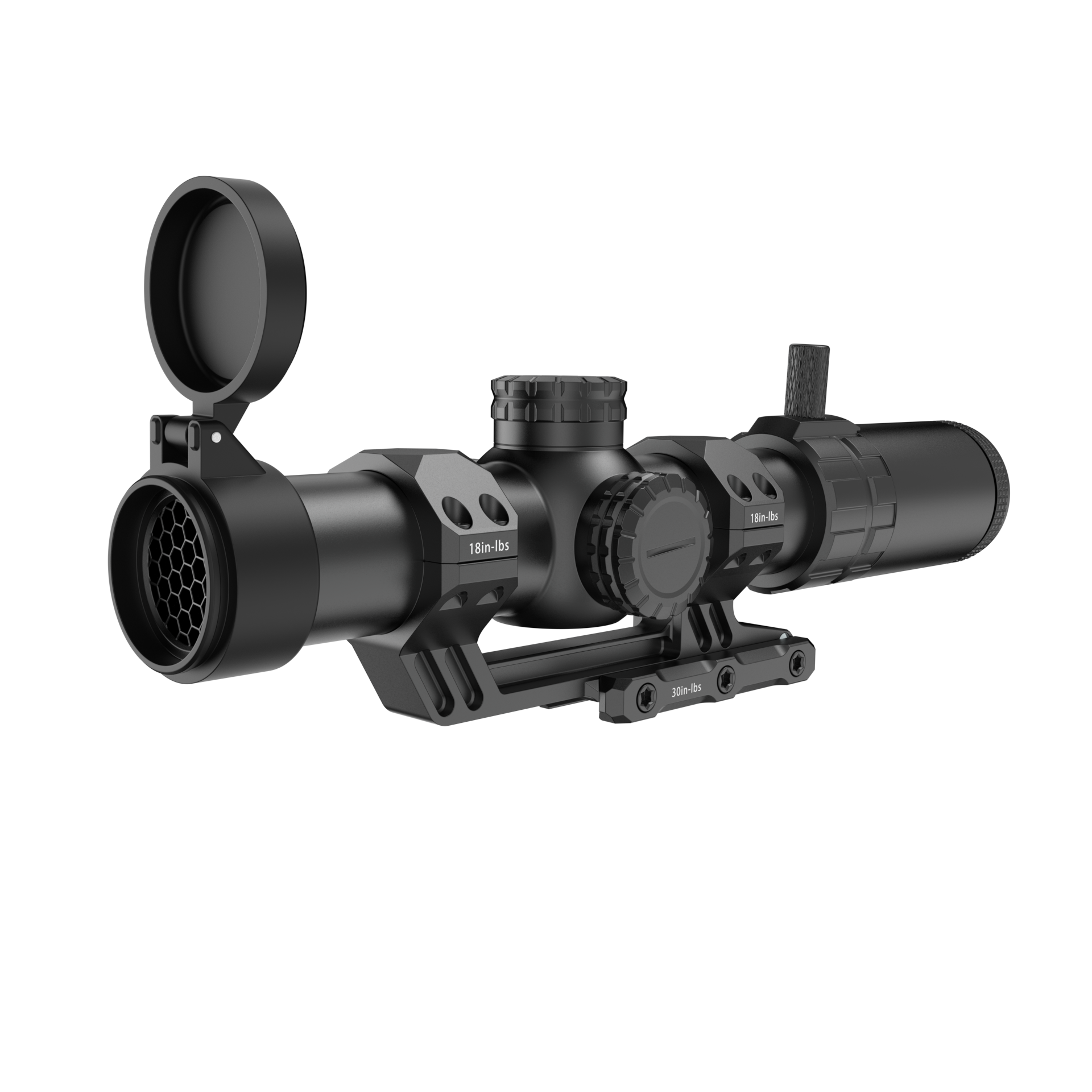
Throughout this article we will show why pairing the M1A with the SWAT Optics HSS DMR .308 1–10× FFP LPVO and the M-Reticle turns it into a doctrine-driven, visual-fit ranging system grounded in FM 3-22.9-style marksmanship concepts—not just nostalgia.
M1A LPVO Done Right: Geometry-Driven 7.62 NATO with the HSS DMR .308


Watch the M-Reticle LPVO in Streets, Vehicles & Barriers
These four videos form the core visual library for every M1A LPVO shooter running the HSS DMR M-Reticle. They show how geometry, vehicles and structures look through a 1–10× FFP optic—not just benchrest steel.
Core LPVO & Geometry Resources for M1A Shooters
- Best AR-10 LPVO (2026): Doctrine-Driven 1–10× Setup with the HSS DMR .308 — directly applicable to 7.62×51 / .308 M1A LPVO setups.
- The LPVO Handbook (2026 Edition) — Complete Guide for AR-15 & AR-10 Shooters
- LPVO Mastery Hub 2026 — HSS DMR 1–10× M-Reticle Framework
- HSS DMR M-Reticle Field Manual (2026 Edition)
- W24 / H36 / D36 Structural Ranging Guide
- HSS DMR Ballistics Calculator & Tactical Simulator
- Reticle Academy (2026): HSS DMR LPVO Training for AR Platforms
Table of Contents
- 1. The M1A’s Modern Role and Why an M1A LPVO Makes Sense
- 2. Criteria for a Serious M1A LPVO in 2026
- 3. Mounting & Eye Relief: Getting the HSS DMR onto an M1A Correctly
- 4. M-Reticle Geometry on the M1A: W24, H36, CH5, SUV6 & T-Zones
- 5. Streets, Fields & Glass: How a M1A LPVO Actually Gets Used
- 6. Zeroing a M1A LPVO for 7.62 NATO / .308
- 7. Ballistics Workflow for M1A LPVO Shooters
- 8. M1A LPVO vs. Traditional Optics & Irons
- 9. Training Drills to Unlock the M1A LPVO System
- 10. Next Steps: Building Your M1A LPVO with the HSS DMR .308
1. The M1A’s Modern Role and Why an M1A LPVO Makes Sense
The M1A traces its lineage back to the M14—a 7.62 NATO battle rifle built for distance, durability and field use. In 2026, many shooters still treat the M1A as:
- A nostalgia piece for static ranges.
- A hunting rifle with a heavy traditional scope.
- A classic rifle that “doesn’t really need optics.”
All of those miss the point. With the right M1A LPVO build, the rifle can serve as:
- A 7.62 NATO general-purpose battle rifle from 0–600 yards.
- A rural or suburban overwatch gun for structures, vehicles and treelines.
- A cross-role platform that trains the same geometry language as your AR-10 or AR-15 LPVOs.
The key is pairing it with an optic designed for 7.62 geometry—not a 5.56 BDC or a hunting duplex. That is where the HSS DMR .308 1–10× FFP M-Reticle comes in.
M1A Chambering Reminder
M1A rifles are not chambered in 5.56. They are typically chambered in 7.62×51mm NATO / .308 Winchester. Your optic choice, zero, and ballistic workflow must match that reality. Treating an M1A like a 5.56 carbine is a doctrinal error.
2. Criteria for a Serious M1A LPVO in 2026
When you evaluate candidates for an M1A LPVO, you are not shopping for a fashion accessory. You are evaluating whether the optic lets a 7.62 NATO battle rifle perform its mission under real geometry. Serious criteria:
- True 1–10× FFP: 1× for close-in work, 4–6× for streets and structures, 8–10× for 400–600+ yard PID.
- First focal plane subtensions: All reticle rulers must stay honest at every power, matching FM 3-22.9 principles for consistent ranging and holds.
- Geometry-based reticle: The glass must measure windows, doors, vehicles and exposure—not just bullet drop.
- 7.62 recoil durability: The optic, mount and rings must hold zero on a reciprocating, gas-operated 7.62 platform with authority.
- Non-electronic survivability: The reticle must remain usable if illumination dies or batteries fail.
- Shared language with your other rifles: For many shooters, the ideal M1A LPVO shares a reticle language with their AR-10 and AR-15 optics for cross-platform training.
The HSS DMR .308 1–10× FFP was built against those requirements. It treats the M1A as a real fighting system, not a museum piece.
3. Mounting & Eye Relief: Getting the HSS DMR onto an M1A Correctly
An M1A is not a flat-top AR. Before we ever talk about holds or ranges, you must get the mounting geometry correct:
- Quality M1A scope mount: Use a proven mount that interfaces solidly with the receiver and maintains zero under recoil. Avoid bargain mounts that walk or cant after a few hundred rounds.
- Optic height and cheek weld: Many M1A stocks benefit from a cheek riser or adjustable stock solution to ensure you can run the HSS DMR’s 1–10× range without “hunting for the eyebox.” Your M1A LPVO should feel natural from low to high magnification.
- Eye relief under recoil: Confirm that at 10×, with your preferred shooting position, your eye is safe and comfortable under full .308 recoil cycles.
- Balance and handling: The HSS DMR is built as a work-ready optic; ensure the total package (rifle + mount + optic) still balances well for positional shooting and vehicle work.
Once the mounting and eye relief are dialed in, you can fully exploit what the M1A LPVO + M-Reticle combination offers.
4. M-Reticle Geometry on the M1A: W24, H36, CH5, SUV6 & T-Zones
The reason the HSS DMR is such a strong M1A LPVO is the same reason it dominates AR-10 geometry work: the M-Reticle is built around real-world rulers, not arbitrary hash marks.
4.1 W24 – 24″ Horizontal Structural Width
W24 is a 24-inch horizontal stadia tied to real structural widths:
- Window panels and small balcony openings.
- Effective lanes between vehicles, poles, and street furniture.
- Chest rigs or backpacks in the 10–12″ width class as visual references.
On an M1A, W24 answers, “How much of this opening or lane do I actually own?” before you worry about dial values or exact yard lines. Your 7.62 decisions become lane-based, not guess-based.
4.2 H36 – 36″ Vertical Structural Ruler (Not a Torso Marker)
H36 is a 36-inch vertical structural ruler. It is vertical only and is not a torso or silhouette measurement. For an M1A LPVO, H36 is used to:
- Estimate kneeling shooter height at realistic PID distances like 400, 600 and 800 yards when conditions allow.
- Assess how much of a shooter is exposed above a vehicle hood, engine block, or low wall.
- Read vertical segments of structures: parapets, balcony rail heights, and stairwell windows.
You are not counting inches. You are checking proportional fill of H36 at a given magnification, then pairing that with pre-validated 7.62 holds from your data.
4.3 CH5 & SUV6 – Vehicle Stadia for Streets & Lots
Vehicles are part of nearly every modern problem set. The M-Reticle folds them into your M1A LPVO workflow using:
- CH5: Approximate 60″ sedan height—when a typical sedan roofline fills this stadia, you have a fast, credible range band for that vehicle class.
- SUV6: Approximate 72″ SUV / truck height—tuned to larger vehicles and higher rooflines.
Combined with W24 and H36, CH5 and SUV6 let a 7.62 shooter answer:
- How far is that vehicle, realistically?
- How much of the threat is truly behind hard structure vs. soft exposure?
- Which angles give the M1A’s 7.62 NATO round the most ethical, accountable path?
4.4 T-Zones (T1–T4) – Communication Sectors, Not Aim Points
The T-Zones (T1–T4) on the M-Reticle are reference grid sectors for communication, not precision aim points or ballistic markers. On an M1A overwatch gun, they support:
- “Contact in T2 window, moving toward T3.”
- “You own T1/T2, I own T3/T4 on this building face.”
- “Watch T3 rooftop near the vent stack.”
A good M1A LPVO should help you Shoot, Move, Communicate as part of a team, not just see farther. The T-Zones lock that communication into the glass.
5. Streets, Fields & Glass: How a M1A LPVO Actually Gets Used
It is easy to picture the M1A on a bench at 300 yards. It is harder—but more honest—to picture it where a modern 7.62 battle rifle might actually matter:
- Parked vehicle rows with limited angles into narrow lanes.
- Mixed residential/commercial streets with cluttered backgrounds.
- Property lines with tree belts, power poles and small outbuildings.
- Glass, reflections and interior clutter in windows and doors.
In these environments, the M1A LPVO + HSS DMR setup lets you:
- Use W24 to frame the horizontal space you truly own.
- Use H36 to sanity-check vertical exposure above vehicles or structures.
- Use CH5 / SUV6 to convert sedans and trucks into range bands without electronics.
- Use T-Zones to mark and communicate sectors across the field of view.
The result is an M1A that no longer lives just on classic iron sight stories—it functions as a modern, geometry-driven 7.62 NATO rifle using LPVO glass.
6. Zeroing a M1A LPVO for 7.62 NATO / .308
M1A shooters have strong opinions about zeros. You can still respect tradition while aligning with doctrine and data. Common, defensible patterns for a M1A LPVO using the HSS DMR .308:
6.1 100-Yard Zero – Classic & Clean
- Aligns cleanly with many traditional M1A / M14 data sets.
- Makes ballistic tables easy to interpret and validate for 300–600 yards.
- Pairs well with a role where your M1A is a precision-leaning battle rifle or overwatch gun.
6.2 36-Yard Zero – Extended Mid-Range Control
- Provides a solid balance between near and mid-range impact behavior.
- Useful if your M1A LPVO is expected to handle 300–500 yard engagements regularly.
- Integrates well with M-Reticle holds mapped through the HSS DMR Ballistics Calculator.
6.3 50/200-Style Zero – General-Purpose Battle Rifle
- Good choice if your M1A is a general-purpose 0–300 yard rifle with occasional 400+ work.
- Keeps vertical deviations manageable while simplifying holds inside typical engagement envelopes.
- Plays well with 1× / 4× staging when your M1A LPVO lives around vehicles and structures more than ridge lines.
Whichever pattern you choose, lock it in, confirm your zero from stable positions, and then build your data book and visual language around that choice instead of constantly chasing new zeros.
7. Ballistics Workflow for M1A LPVO Shooters
The M1A LPVO combination can be powerful even without electronics, but serious shooters tie their glass to a disciplined ballistic workflow. A practical approach:
- Open the HSS DMR Ballistics Calculator & Tactical Simulator and select a .308 profile close to your load (for example, 147gr M80, 168gr match, or your chosen 7.62 NATO equivalent).
- Input your real muzzle velocity, bullet weight, BC, barrel length and environmental data.
- Set your chosen zero (100, 36, or 50/200-style) and generate a trajectory table out to your maximum realistic distance.
- On the range, confirm how those drops appear in the M-Reticle at 6× and 10×:
- Which reticle features bracket a 300-yard target kneeling behind a vehicle?
- How does a 400–500 yard shot appear when W24 and H36 are partially filled?
- Translate those findings into plain-language notes in your data book: “400 yards ≈ kneeling exposure above hood, H36 nearly full, hold X here.”
- Periodically re-validate as seasons, loads and barrel wear change—update notes, don’t guess.
Over time, your brain stops thinking “M1A” and “scope” as separate items. It simply sees an integrated 7.62 NATO system that speaks the M-Reticle language.
8. M1A LPVO vs. Traditional Optics & Irons
Many M1A owners default to two setups:
- Classic irons, sometimes with a match front sight.
- Heavy, high-magnification hunting scopes with limited close-in utility.
Both have strengths—but the M1A LPVO approach with the HSS DMR .308 offers a unique combination:
- Faster close-in work than high fixed scopes, thanks to true 1×.
- Better PID and ranging than irons, especially past 200 yards.
- More flexible magnification bands that match real engagement distances instead of locking you into a single magnification.
- Shared reticle language with any AR-10 / AR-15 you run using the HSS DMR M-Reticle.
Where an M1A LPVO Really Wins
The M1A LPVO build shines in:
- Mixed rural/suburban properties where 100–500 yards are realistic.
- Training environments where you want the same reticle language on multiple rifles.
- Scenarios where glass-based PID matters more than raw magnification numbers.
In those roles, the HSS DMR .308 is not just “an optic on a classic rifle.” It is the core of a modern, geometry-driven M1A system.
9. Training Drills to Unlock the M1A LPVO System
Tools without repetitions are just gear. To actually unlock your M1A LPVO + HSS DMR combination, combine this guide with the Reticle Academy (2026) and run drills such as:
- W24 lane drills: Use real or scaled windows, doorways and vehicle gaps. Practice identifying when a lane is full, half, or partially occupied by a target at different distances.
- H36 exposure drills: Simulate a hood or wall, then raise a silhouette until H36 is filled. Call the vertical exposure and your hold before any shot.
- CH5 / SUV6 vehicle-ranging runs: Work from 100 to 400+ yards on sedans and trucks (or scaled targets). Validate how CH5 and SUV6 reads tie into your 7.62 drop data.
- Magnification staging drills: Practice running the HSS DMR from 1× → 4× → 6× → 10× while moving around props, maintaining PID and backstop awareness.
- T-Zone communication: On a line with other shooters using M-Reticle optics, practice “T2 window,” “T3 rooftop,” etc. Confirm everyone is seeing and owning the same sectors.
The end state is simple: when you pick up your M1A with an LPVO, the geometry should feel as natural as iron sight holds once did—only more precise, more accountable and more scalable.
10. Next Steps: Building Your M1A LPVO with the HSS DMR .308
A serious M1A LPVO build respects what the rifle is: a 7.62 NATO battle rifle with real reach, not a 5.56 carbine and not just a nostalgia piece. With the HSS DMR .308 1–10× FFP M-Reticle, you gain:
- True 1× to 10× coverage for close, mid and extended engagements.
- Geometry-based ranging over W24, H36, CH5, SUV6 and T-Zones.
- A reticle language that matches your other HSS DMR-equipped rifles.
- A full ecosystem of ballistic tools, field manuals and training content.
To turn this into a real system:
- Equip the rifle: Mount the HSS DMR .308 1–10× FFP LPVO on your M1A using a proven M1A scope mount and confirm eye relief at 1× and 10×.
- Choose your zero: Decide whether 100, 36 or 50/200-style zero best matches your mission and terrain.
- Run your data: Build and validate your 7.62 NATO / .308 trajectory using the HSS DMR Ballistics Calculator & Tactical Simulator .
- Study the geometry: Work through the HSS DMR M-Reticle Field Manual and the W24 / H36 / D36 structural ranging guide .
- Train with intent: Use Reticle Academy drills until your M1A LPVO feels as natural as irons, but with far greater information and control.
When you reach that point, you are not just running “an optic on an old rifle.” You are running a modern, geometry-driven M1A LPVO system built around real streets, real structures and real 7.62 NATO consequences.
All trademarks belong to their respective owners. Comparisons are editorial opinions based on publicly available specifications and field use.