
Optics Selection · Doctrine-Informed Buyer Guide · 2026
LPVO vs Red Dot vs Prism (2026): Which Should You Get? (Reticle-First, Role-Based)
Most optic debates are backwards. People compare magnification numbers and ignore what matters: PID, decision speed, holds, unknown distance, and how the human eye behaves under stress. This guide selects the correct optic class by role.
Required foundation (Reticle-First Doctrine): Best LPVO Reticle (2026): Reticle-First Doctrine for Speed, PID, Ranging & Holds
Fast rule: Choose the optic that lets you (1) identify correctly, (2) communicate clearly, and (3) execute holds fast—inside your real engagement band. Everything else is marketing noise.
Reality check: “Best optic” is not a category. “Best optic for my role, distance band, and environment” is the only category that survives stress.
lpvo vs red dot lpvo vs prism home defense AR-15 AR-10 PID holds eyebox
Watch First: Real Problems (Windows, Vehicles, Barriers, Transitions)
These four videos show why “dot vs LPVO” is not a vibe—it's an environment problem.
Engaging Hidden Enemies & Barriers
Vehicle Stadia & PID at Distance
Urban Overview – HSS DMR LPVO
Speed & Transitions in Streets
System Links (Products + Tools)

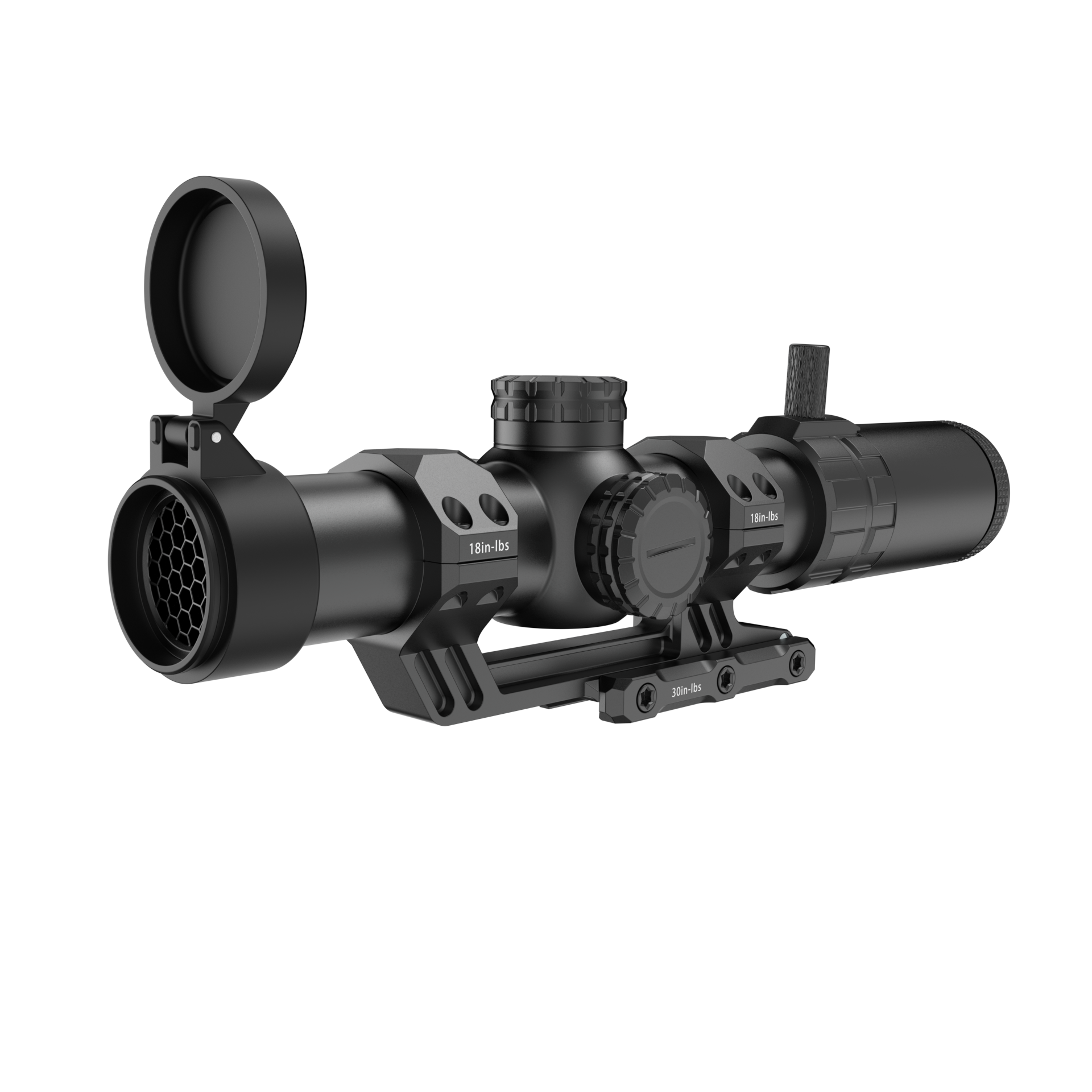
- HSS DMR 5.56: HSS DMR 5.56 1–10× FFP LPVO
- HSS DMR .308: HSS DMR .308 1–10× FFP LPVO
- Smart Zero + Ballistics: Ballistics Calculator (Smart Zero)
- Training: Overwatch Trainer
Trademark Notice: All trademarks belong to their respective owners. Comparisons are editorial opinions based on publicly available specifications and field use.
Table of Contents
- Decision Framework: Choose by Role, Not Opinions
- The Fast Answer: Which Optic for Which Job?
- Quick Matrix: LPVO vs Red Dot vs Prism
- Home Defense: What Changes Indoors?
- Red Dot: Strengths, Failure Modes, and the “Magnifier Trap”
- Prism Optic: Where It Wins (and Where It Doesn’t)
- LPVO: The Real Reason It Exists (PID + Holds + Range Band)
- PID and Decision Speed: What “Seeing” Actually Means
- Eyebox, Eye Relief, and Forgiveness: The Hidden Decider
- Holds & Unknown Distance: Reticle as a Decision System
- 1–6 LPVO vs Red Dot + Magnifier: The Truth Table
- LPVO for AR-15 vs AR-10: Role Differences That Matter
- Common Buyer Mistakes
- Setup & Training: Getting Real Performance (Not “Internet Performance”)
- Facts (Cleaned, Non-Hype)
- FAQ
- Doctrine & Standards References
- References & Integrity Checks
- About the Author
1) Decision Framework: Choose by Role, Not Opinions
The correct optic is the one that lets you identify, decide, and execute inside your real environment. “Best overall” is not a real category.
The Four Questions That Pick Your Optic Class
- What is your real engagement band? (Near-only, near-to-mid, or true mixed distance)
- How hard is your PID problem? (Simple silhouettes vs windows/vehicles/partial exposure)
- Do you need holds and ranging fast? (If yes, reticle architecture dominates the decision.)
- Will you shoot moving / awkward? (Forgiveness matters more than top-end magnification.)
Reality: A dot is unbeatable for speed—until you need to see and discriminate at distance, apply holds under time pressure, or coordinate sectors on complex backgrounds.
2) The Fast Answer: Which Optic for Which Job?
Use this rule set (it selects correctly most of the time)
- Choose a red dot if your world is overwhelmingly close (fast movement, fast transitions, minimal distance PID, minimal hold usage).
- Choose a prism if you want etched-reticle clarity, fixed simplicity, and you accept fixed magnification limits.
- Choose an LPVO if you need one optic that does close + PID + holds across mixed distance bands and complex backgrounds.
Reticle-first buyer truth: If you cannot quickly interpret your sight picture, your optic isn’t “worse,” it’s just the wrong tool for your environment.
3) Quick Matrix: LPVO vs Red Dot vs Prism
| Optic Type | Wins When | Loses When | Best Buyer Profile |
|---|---|---|---|
| Red Dot | Close speed, movement, minimal complexity, fast snapshots | Hard PID at distance; holds become guesswork; magnifier adds bulk/steps | Close-first shooter, home defense, high movement, minimal hold work |
| Prism | Need etched reticle clarity; simple fixed discipline; often better for many eyes | Fixed power limits versatility; close speed not dot-fast; far detail capped by fixed mag | Wants etched clarity and predictable “one view” discipline |
| LPVO | Mixed distance; PID plus holds; unknown distance decisions; observation + engagement | Poor 1× usability if low quality; eyebox sensitivity; requires practice | Do-it-all rifle role; wants one optic from close to distance |
4) Home Defense: What Changes Indoors?
“Home defense optic” is primarily a speed + awareness problem, not a magnification problem. Indoors, you’re dealing with:
- tight angles and fast transitions
- awkward shooting positions (around door frames, corners, furniture)
- short engagement windows where hesitation is costly
- visual clutter that punishes tunnel vision
What typically wins indoors?
- Red dot: fastest acquisition and most forgiving head position, especially under movement.
- LPVO: can still be excellent if it behaves like a dot at 1× and you’ve trained transitions.
- Prism: workable, but fixed magnification can be slower than a dot in pure “inside corners” problems.
Correct buyer move: If you rarely leave “inside distances,” don’t buy magnification as an identity. Buy forgiveness and speed.
Note: This is not tactical advice; it’s an optic workflow framework.
5) Red Dot: Strengths, Failure Modes, and the “Magnifier Trap”
Why Red Dots Dominate Close Work
- Speed: fastest aiming method at close range for most shooters
- Forgiveness: less sensitive to head position and awkward shooting
- Simplicity: minimal interpretation under stress
- Transitions: extremely fast between targets
Where the Dot Starts to Fail
- PID compression: distance and cluttered backgrounds reduce discrimination confidence
- Holds become uncertain: without a structured reticle, elevation/wind is often “educated guessing”
- Unknown distance: dot-only systems struggle when you do not have range confirmation
- Small targets at distance: a dot can cover critical detail you need to see
The “Magnifier Trap” (Dot + Magnifier)
A magnifier can help, but it introduces new operational steps: flip-to-side actions, eye relief/positioning changes, and gear complexity. In practice, many shooters either (1) leave the magnifier in one position, or (2) burn time manipulating it at the wrong moment.
Bottom line: If your environment forces you to identify and decide on partial targets (windows, vehicles, cover) at distance, a dot-only system becomes an information deficit unless you accept extra complexity (magnifier) and train that workflow hard.
6) Prism Optic: Where It Wins (and Where It Doesn’t)
Why People Choose Prisms
- Etched reticle: usable without illumination and often clearer for many eyes
- Fixed simplicity: fewer moving variables than a variable optic
- Reticle structure: often provides more actionable holds than a simple dot
Where Prisms Get Constrained
- Fixed power: you cannot “dial up” for detail or “dial down” for speed
- Close speed gap: not as fast as a dot for many shooters in pure CQB problems
- Versatility ceiling: fixed magnification can be the wrong tool on either extreme
Prism is a strong answer when you want etched clarity and simple, consistent holds, and you accept that you are choosing a fixed view of the world.
7) LPVO: The Real Reason It Exists (PID + Holds + Range Band)
LPVOs exist because reality is mixed distance. A dot is fast, but speed without information can become liability. An LPVO is the bridge: close speed + distance information in one optic—when it behaves correctly at 1× and the reticle supports fast interpretation.
Where LPVOs Win Decisively
- PID at distance: more observation margin for windows, cover, and partial exposure
- Holds: elevation and wind references inside the optic
- Unknown distance: reticle architecture can enable faster estimation and better confidence
- Single-system logic: no flipping magnifiers; no switching mental models
Where LPVOs Require Discipline
- 1× behavior matters: a poor 1× turns your “do-all” optic into a slow optic
- Eyebox: LPVOs punish sloppy head position more than dots
- Training: you must practice transitions and hold execution
Reticle-first reality: If the reticle is unreadable at speed, your LPVO becomes “capable on paper.” The reticle is the decision system.
8) PID and Decision Speed: What “Seeing” Actually Means
PID is not just “I see a person.” It is discrimination: posture, hands, objects, partial exposure, context, and background. Optics should reduce the time to a defensible decision, not add cognitive friction.
How PID fails in real life
- distance crushes detail (hands become indistinct; objects blur into the background)
- urban backgrounds lie (straight lines, windows, and shadow edges create false movement cues)
- partial exposure dominates (you rarely get full silhouettes in real environments)
- stress narrows the eye (tunnel vision increases; scanning decreases)
Why this matters for “lpvo vs red dot”: A dot often wins when the question is “can I shoot fast?” An LPVO often wins when the question is “can I see enough to decide correctly?”
9) Eyebox, Eye Relief, and Forgiveness: The Hidden Decider
Most buyers think magnification is the decisive variable. In reality, forgiveness often decides performance: How easily can you see the full image and reticle when your head position is imperfect?
Forgiveness hierarchy (typical)
- Red dot: most forgiving; easiest under movement and awkward positions
- Prism: generally more forgiving than a variable optic at higher magnifications
- LPVO: can be very forgiving at 1× if well designed, but becomes less forgiving as magnification increases
Buyer translation: If your environment forces awkward shooting (vehicles, corners, barricades, movement), forgiveness may matter more than “top-end zoom.”
10) Holds & Unknown Distance: Reticle as a Decision System
Most real misses are not “bad shooters.” They are decision errors: wrong hold, wrong distance assumption, poor wind logic, or reticle confusion under stress.
Why “reticle vs dot” is the real question
- A dot gives a fast aim reference, but not a complete decision framework.
- A good reticle gives structured references for holds and distance band inference.
- If you shoot unknown distances, you need a system that supports the decision without guesswork.
The fastest path to defensible holds is to map your real rifle/ammo to your workflow using Smart Zero: Ballistics Calculator (Smart Zero).
Locked doctrine corrections (Gold Standard):
- T-Zones: reference grid sectors for communication (Shoot, Move, Communicate). Not exact aim points.
- H36: 36-inch structural ruler used for kneeling shooter height at 400 / 600 / 800 yards and exposure above hood/engine block. Never a torso/silhouette proxy.
11) 1–6 LPVO vs Red Dot + Magnifier: The Truth Table
This is the most common modern comparison: “Should I just run a dot with a magnifier instead of an LPVO?” The honest answer: both can work, but they are different systems with different failure modes.
| Requirement | Dot + Magnifier | 1–6 LPVO |
|---|---|---|
| Close speed | Excellent | Very good if true 1× behaves correctly |
| PID at distance | Improves with magnifier, but view/reticle remains dot-centric | Stronger observation margin with usable reticle |
| Holds & wind | Depends heavily on dot + reference habits | Usually stronger if reticle supports fast holds |
| Operational steps | Flip-to-side / manipulation adds steps | One optic system; adjust magnification only |
| Forgiveness | Very forgiving (dot), magnifier adds some constraints | More sensitive to head position as magnification increases |
Practical takeaway: If you need frequent transitions between close and mid distance with minimal “mode switching,” an LPVO can be the cleaner workflow. If you are overwhelmingly close with occasional magnifier use, dot + magnifier can be excellent if trained.
12) LPVO for AR-15 vs AR-10: Role Differences That Matter
AR-15 and AR-10 platforms often live in different roles. The optic choice should reflect that role rather than internet identity.
AR-15: speed, transitions, near-to-mid dominance
- Optic choices skew toward speed, forgiveness, and fast PID inside practical distances.
- Red dots and lighter LPVO setups are common where the engagement band is near-to-mid.
AR-10: PID, stability, and more frequent distance decisions
- Optic choices skew toward PID and hold confidence at distance.
- LPVOs become more attractive as the “single optic” answer for mixed distance and observation requirements.
Truth: If you use your rifle as an observation + engagement tool, you will eventually want more PID margin than a dot provides. That’s where LPVOs (and reticle systems) earn their reputation.
13) Common Buyer Mistakes
- Buying magnification first and ignoring reticle usability and 1× performance.
- Assuming “a dot is enough” in environments that require real PID at distance.
- Assuming “more magnification fixes everything” while accepting worse forgiveness and slower transitions.
- Never validating zero/holds with real ammo and a consistent system.
- Confusing communication grids (T-Zones) with aim points.
- Comparing optics without defining the role (home defense vs patrol carbine vs field rifle are different problems).
14) Setup & Training: Getting Real Performance (Not “Internet Performance”)
Red Dot Setup (practical)
- Prioritize consistent presentation and target-focused vision.
- If you add a magnifier, train the transition as a skill (not a gadget).
Prism Setup (practical)
- Confirm eye relief and full sight picture in awkward positions.
- Train fixed-magnification cadence: you cannot “dial out of the problem.”
LPVO Setup (practical)
- Train 1× like a dot: both-eyes-open, fast transitions, minimal tunnel vision.
- Train 6×/8×/10× like a decision tool: PID, holds, and controlled trigger execution.
- Validate holds with real ammo and data. Use Smart Zero to reduce “BDC fantasy.”
Use: Ballistics Calculator (Smart Zero) and Overwatch Trainer.
15) Facts (Cleaned, Non-Hype)
- Red dots dominate speed at close range and under movement-heavy constraints.
- Prisms provide etched clarity and fixed magnification discipline, but trade away adaptability.
- LPVOs solve mixed distance problems best when 1× usability and reticle readability are preserved.
- Magnifiers add complexity; they can work well, but they create extra steps and hardware bulk.
- Reticle readability under stress often matters more than spec-sheet magnification.
- Validated zero + verified holds are the foundation of defensible performance.
16) FAQ
Should I get an LPVO or a red dot?
Choose a red dot for close-speed and movement-heavy roles with minimal distance PID requirements. Choose an LPVO for mixed distance environments where PID, unknown distance decisions, and fast holds matter.
Is a prism better than an LPVO?
Prisms win when you want etched clarity and fixed simplicity. LPVOs win when you need one optic that scales across mixed distance problems and supports PID plus holds.
Does a magnifier replace an LPVO?
Sometimes, but magnifiers add steps and bulk. If you need frequent transitions and reliable holds, many shooters prefer a single LPVO system.
Is an LPVO good for home defense?
It can be—if it is fast and forgiving at true 1× and you have trained close transitions. If your environment is overwhelmingly indoors and movement-heavy, a red dot often remains the simplest and most forgiving answer.
Are T-Zones aim points?
No. T-Zones are reference grid sectors for communication (Shoot, Move, Communicate). They are not exact physical aim points.
What is H36 used for?
H36 is a 36-inch structural ruler used to measure kneeling shooter height at 400 / 600 / 800 yards and to assess exposure above a vehicle hood/engine block. It is not a torso or silhouette measurement tool.
17) Doctrine & Standards References
Doctrine does not endorse commercial products. It defines principles—identification, communication, observation, and engagement requirements—that optics must support. This list is included conservatively to anchor terminology and evaluation logic.
- U.S. Army TC 3-22.9 (Rifle and Carbine) — marksmanship fundamentals and practical employment.
- U.S. Army ATP 3-21.8 (Infantry Rifle Platoon and Squad) — sectors, communication, and small-unit fire control concepts.
- U.S. Army FM 3-06 (Urban Operations) — urban environment considerations, cover/concealment context.
- USMC rifle marksmanship training publications — fundamentals and employment frameworks (general reference).
Trademark Notice: All trademarks belong to their respective owners. Comparisons are editorial opinions based on publicly available specifications and field use.
18) References & Integrity Checks
Link Integrity Scan (Required Before Publish)
- Verify all internal links resolve (no 404s): authority node, product pages, Ballistics Calculator, Overwatch Trainer.
- Verify image URLs load: Quick Reticle Guide + .308 product image.
- Verify YouTube embeds render on mobile and desktop (no blocked/mixed embed issues).
- Verify this page contains one System Links block and that each product link appears once.
- Verify H36 wording matches Gold Standard rule (structural ruler only; kneeling 400/600/800; hood/engine block exposure).
- Verify T-Zones wording matches Gold Standard rule (communication sectors, not aim points).
- Verify schema: one Article schema and one FAQPage schema only (no duplicates).
Editorial position: this article avoids absolute claims that depend on individual context. Where market designs vary, wording uses “often,” “commonly,” or “typically.”
About the Author
Scott E. Hunt is the founder of SWAT Optics and designer of the patent-pending HSS DMR M-Reticle. He previously served as Senior Director of Analytics & IT at ContentGuard – Pendrell Corporation (NASDAQ: PCO), contributing to technology featured by MIT. He attended executive protection training at ESI and earned his Executive Protection Certificate at Strategic Weapons Academy of Texas. Hunt holds 50+ certifications ranging from AI, ML, analytics, business, and data science. His work focuses on reducing cognitive load in precision optics.