
For decades, the “standard” optic for a rifle was a fixed or 3–9x hunting-style scope. Today, LPVOs (Low Power Variable Optics) are rapidly replacing them on AR-15s and modern carbines. This guide breaks down why LPVOs—especially the SWAT Optics HSS DMR 1–10x—are outperforming traditional 3–9x scopes for real-world defensive use, training, and tactical applications.
Before we compare glass, watch how fast a stable street scenario collapses into chaos. In moments like these, the ability to go from 1x CQB to magnified PID is not optional—it’s survival.
As exposure, angles, and distances shift, the optic that lets you see, identify, and range faster is the optic that wins. That’s where LPVOs start to pull away from legacy 3–9x scopes.
Where Traditional 3–9x Scopes Fall Short on Modern Carbines
Classic 3–9x scopes were designed around hunting and static shooting, not dynamic urban engagements or defensive use. They still work—but they carry limitations when dropped onto a modern AR-15:
1. No True 1x Capability
- “Low” power usually starts at 3x, not 1x.
- At close range, 3x can be too much magnification and too little field of view.
- Transitions inside 0–25 yards become slower and more visually constricted.
2. Narrow Field of View & Slow Target Acquisition
- Traditional eye boxes often punish imperfect head placement.
- Hunting glass assumes time, not chaos.
- Urban, CQB, or vehicle-based engagements demand much faster sight pictures.
3. Reticles Not Built for Urban Geometry or Holds
- Most 3–9x scopes use simple duplex or basic BDC reticles.
- They rarely provide math-free ranging using real-world objects like windows, doors, and vehicles.
- Elevation and wind holds are often coarse or insufficient for rapid-shot decisions.
Why LPVOs Are Displacing Traditional 3–9x Scopes
LPVOs were built for the problems that AR-15 shooters actually face: inside-the-house distances, street-level engagements, vehicle-based shooting, and mid-range precision from 100–400 yards.
1. True 1x for CQB, With the Option to Dial Up
- At 1x, a good LPVO like the HSS DMR behaves like a red dot: both-eyes-open, fast, and intuitive.
- You can immediately dial to 4x, 6x, 8x, or 10x as distance, terrain, or threat profile changes.
- This eliminates the “two-optic problem” (red dot + magnifier or backup scope).
2. Modern Reticles Built for Real Environments
LPVO reticles are no longer simple crosshairs. The M-Reticle inside the HSS DMR, for example, is built around urban geometry and real-world object sizing:
- W24 — 24″ window width reference
- H36 — 36″ window height reference
- D36 — common doorframe width reference
- CH5 — calibrated sedan height reference
- LH-SUV6 — calibrated SUV/truck height reference
Instead of guessing, you can visually “fit” windows, doors, and vehicles inside the reticle to approximate distance—without doing math under stress.
3. Holdovers and Wind Holds at Your Fingertips
LPVOs support purpose-built holdover systems. Rather than dialing turrets like a slow hunting optic, you can:
- Use reticle stadia for elevation holds at 200, 300, 400 yards and beyond.
- Reference wind holds directly in the glass.
- Confirm and refine this with the SWAT Optics Ballistics Calculator using your ammo and barrel length.
LPVOs in Real Urban Chaos: What 3–9x Scopes Can’t Do
The difference between an LPVO and a traditional 3–9x becomes obvious when you look at actual angles, glass, and exposure in an urban environment.
Traditional 3–9x scopes were never designed for this style of engagement. LPVOs were.
When a LPVO Outperforms a 3–9x Scope
1. Home Defense & Suburban Protection
- 1x for room-distance, hallway, and doorway engagements.
- Magnification to 4–10x for PID through windows, across yards, or down the street.
2. Urban Training & Vehicle-Based Work
- Fast transitions in and around vehicles.
- Ranging common structures using the M-Reticle’s W24, H36, D36, CH5, and LH-SUV6 markers.
- Rapid holds rather than slow turret dialing.
3. Mid-Range Carbine (100–400 Yards)
- LPVOs provide precise aiming points at 300–400 yards.
- Traditional 3–9x scopes often lack meaningful hold references for dynamic shooting.
- The HSS DMR’s reticle and the Ballistics Calculator can be matched to your specific loads.
Pairing Your LPVO With Real Data (Not Guesswork)
The optic is only half the solution. The other half is knowing your actual trajectory and wind holds. That’s where the SWAT Optics Ballistics Calculator comes in:
- Enter barrel length, ammo type, and environmental data.
- Generate realistic drop and wind tables for your HSS DMR setup.
- Map those numbers onto your reticle, so holds become automatic instead of guesses.
Traditional 3–9x scopes can’t fully take advantage of this level of data because their reticles were never designed for it. LPVOs were.
LPVO Knowledge Hub (Recommended Reading)
Upgrade From 3–9x to a Purpose-Built LPVO
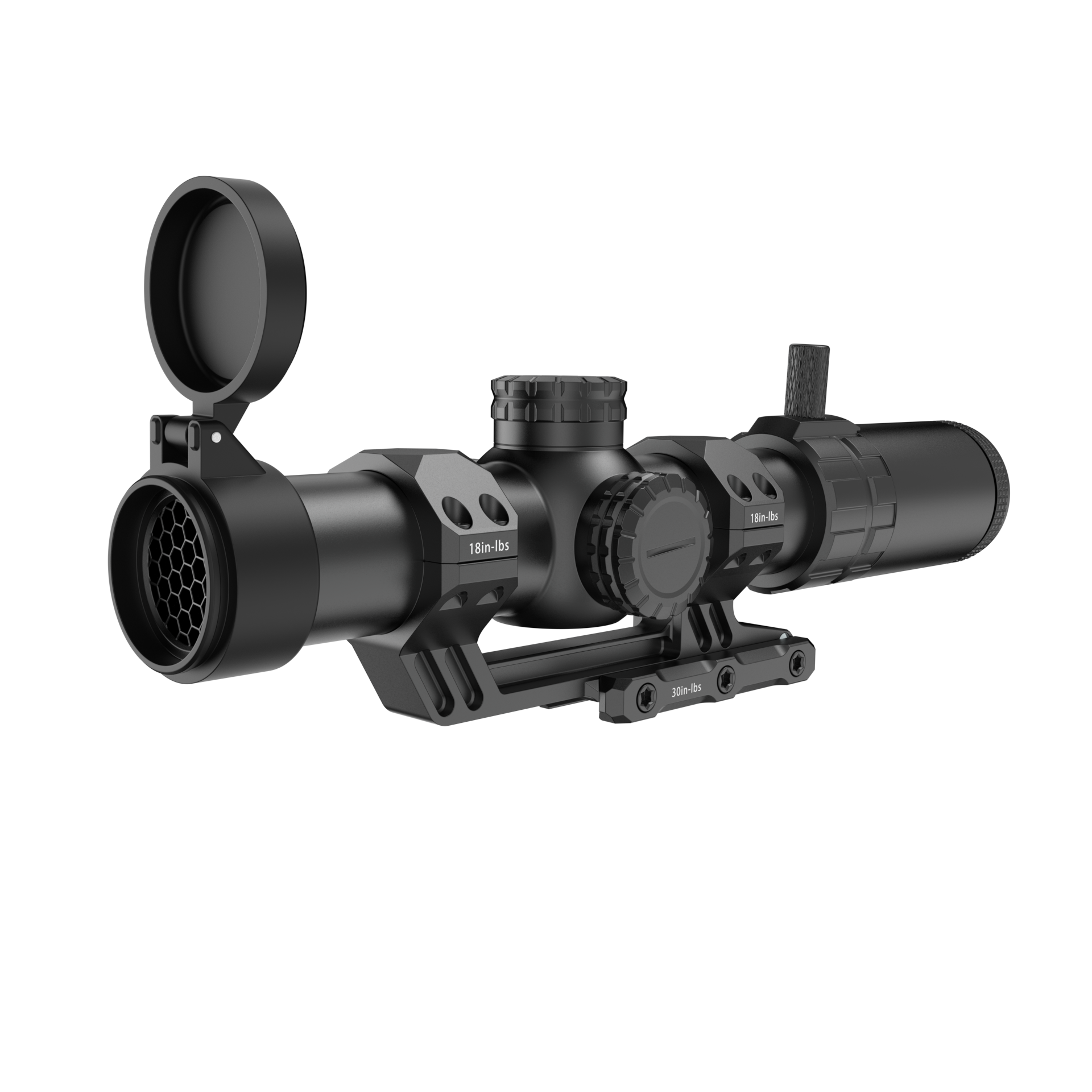
The SWAT Optics HSS DMR 1–10x is designed to replace outdated 3–9x scopes with a modern, urban-geometry LPVO platform. You get CQB speed at 1x, math-free ranging using real-world structures, and precise holdovers at distance—all tied into a ballistic calculator that speaks your rifle’s language.
Conclusion: LPVOs Are the New Standard for Modern Carbines
Traditional 3–9x scopes still have a place in the hunting world—but on AR-15s and tactical carbines, LPVOs offer a superior balance of speed, precision, and flexibility.
- 1x speed that behaves like a red dot.
- Magnification on demand up to 10x.
- Reticles built for urban geometry and real-world ranging.
- Integration with tools like the SWAT Optics Ballistics Calculator.
If your carbine still wears a traditional 3–9x scope, you are leaving capability on the table. A well-designed LPVO like the HSS DMR doesn’t just add magnification—it adds information, speed, and decision-making power when it matters most.