
The eyebox is one of the most misunderstood — yet most critical — elements of LPVO performance. A forgiving eyebox lets you acquire the reticle instantly, shoot from unconventional positions, and maintain visual clarity while moving. A tight eyebox forces perfect head alignment, causes scope shadow, and slows you down under stress.
This guide breaks down the optical science behind the eyebox, why many budget LPVOs struggle, and how premium optics like the SWAT Optics HSS DMR 1–10x achieve a wide, usable eyebox across the full magnification range.
First, take a look at how fast a situation can change in the real world. Under chaos, even a slight delay caused by a tight eyebox can cost you valuable seconds.
What Is an LPVO Eyebox?
The “eyebox” is the three-dimensional space behind your LPVO where the image is clear, bright, and free of scope shadow. Move too far outside that space — even slightly — and the edges darken, distort, or disappear entirely.
The eyebox is influenced by:
- Exit pupil diameter (bigger is more forgiving)
- Optical design and internal lens geometry
- Glass quality and multi-layer coatings
- Magnification setting
- Your mount height and natural head position
A high-quality LPVO maintains a stable, wide eyebox at low, mid, and high magnification. Cheap scopes cannot.
Why Cheap LPVOs Have Tight, Unforgiving Eyeboxes
1. Small Exit Pupil & Basic Lens Architecture
Exit pupil = objective diameter ÷ magnification. Low-end optics often have:
- small objective lenses
- limited internal space for optical groups
- basic architecture that restricts light transmission
Result: a narrow “tunnel” of usable eye position.
2. Budget Glass = Low Brightness + Distortion
Cheap lenses reduce:
- contrast (washed-out image)
- edge-to-edge sharpness
- low-light performance
Cheap glass collapses the eyebox — especially at 6–10x.
3. Weak Coatings (Glare, Flare, Shadow)
Good multi-coat layers are expensive; budget LPVOs often skip them. Without proper coatings, the eyebox becomes extremely sensitive to tiny head movements.
4. Tunneling at 1x
Many inexpensive LPVOs exhibit “tunneling” at 1x, where the field of view narrows instead of staying panoramic. This slows down CQB transitions dramatically.
How the HSS DMR Achieves a Wide, Forgiving Eyebox
The HSS DMR 1–10x uses ED glass, precision lens geometry, and an optical system engineered specifically to maintain visual stability through the entire magnification range.
Key engineering features:
- ED Japanese glass with exceptional clarity
- Zero tunneling at 1x for red-dot speed
- High-transmission coatings on all critical surfaces
- Optimized optical groups designed around the M-Reticle system
- Wide eyebox at 1–4x for mobility
- Stable eyebox at 6–10x for precision
You get a scope that works fast, stays bright, and maintains the reticle even when shooting from awkward positions.
The HSS DMR: Designed for Real-World Shooting
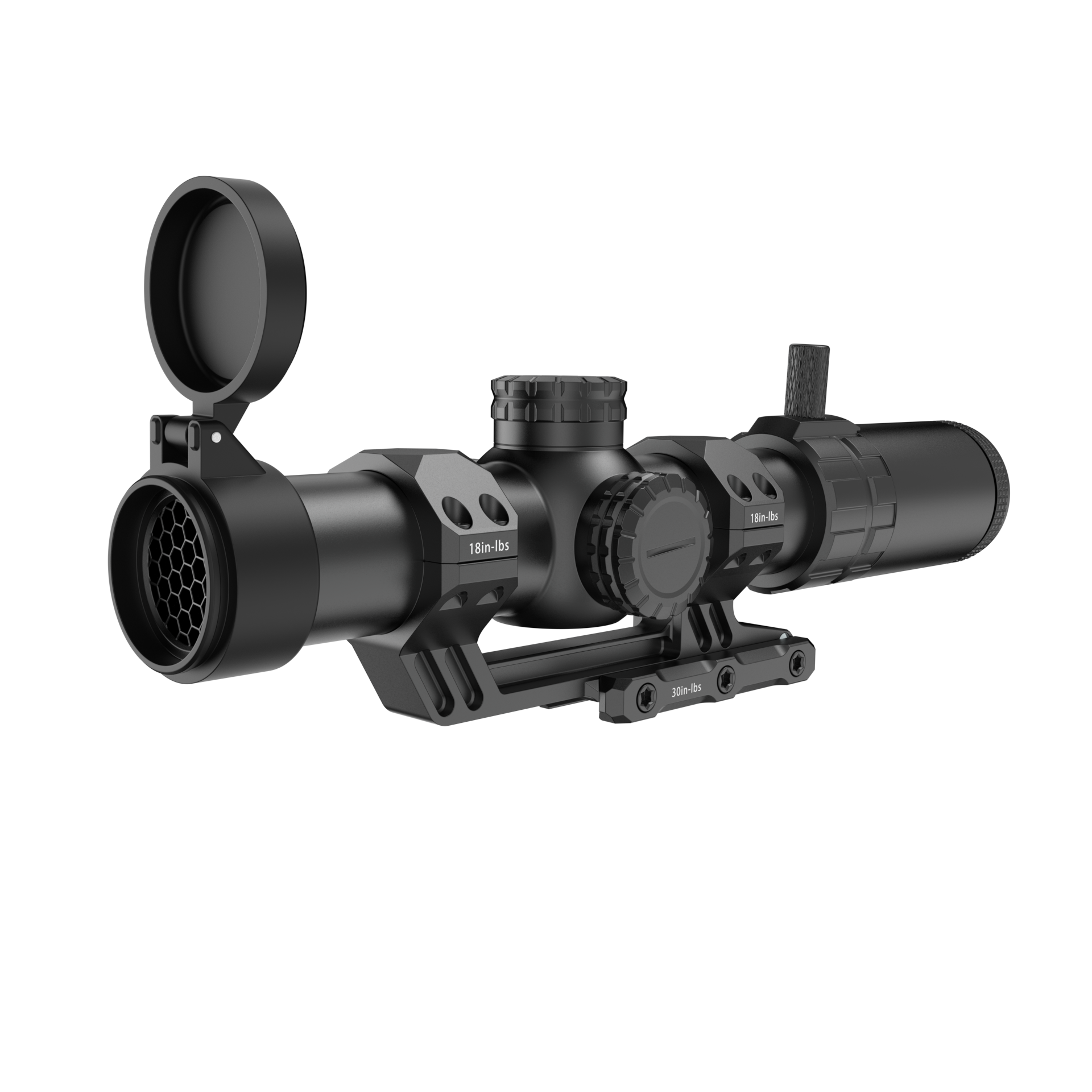
The HSS DMR 1–10x FFP LPVO was engineered to solve the biggest problem in budget LPVOs: a tight, unforgiving eyebox. With superior glass, premium coatings, and a geometry-optimized design, the HSS DMR gives shooters rapid acquisition, shadow-free clarity, and premium performance at all magnifications.