
Most shooters obsess over glass clarity, magnification, or reticle design—but none of it matters if your LPVO can’t hold zero. Durability determines whether your optic is a reliable fire-control system or a liability waiting to fail under recoil, heat, vibration, or real-world impact.
In this guide, we break down the mechanical and optical engineering behind LPVO durability: erector spring tension, turret tracking, lens bonding, recoil impulse behavior, thermal expansion, and what separates professional-grade scopes from those that fail under basic field conditions.
Before getting into durability science, watch this scenario. In a moment like this, you do not have time to diagnose a zero-shift or reticle failure.
When chaos hits, your LPVO must respond instantly. A scope that loses zero—or experiences reticle movement under recoil— can cost you accuracy, confidence, or a clean PID. This is why durability is everything.
Why Cheap LPVOs Lose Zero
LPVO durability is largely determined by internal mechanical systems. Cheap scopes cut corners with weak springs, soft turret components, thin tube walls, and lenses that shift under recoil.
1. Weak Erector Springs (The #1 Failure Point)
The erector spring holds your reticle in position. Cheap LPVOs use:
- Low-tension springs that can’t resist recoil impulse
- Inconsistent spring steel tempering
- Springs that fatigue after 200–500 rounds
Result: Point-of-impact shifts between shots, or after bumps, or even during vehicle transport.
2. Soft Turret Components
LPVO turrets rely on precision-machined detents and hardened cams. Cheap optics use softer metals or loose tolerances:
- Turrets lose their click definition
- Zero drifts under recoil
- Impact shifts occur from mild bumps
3. Lens Movement Under Recoil
Budget LPVOs often fail adhesive integrity testing. When bonding compounds are too soft or poorly applied:
- Lenses micro-shift within the tube
- Image warps at certain magnifications
- Reticle plane alignment changes
This leads to unpredictable accuracy—especially on magnification transitions.
Tube Strength: Why 6061 Scopes Bend and 7075 Scopes Survive
The aluminum alloy determines how well the scope resists impacts, flex, and vibration.
6061-T6 Aluminum (Most Budget LPVOs)
- Softer
- Easier to machine
- Cheaper
- More prone to bending or denting
7075-T6 Aluminum (Premium LPVOs)
- Significantly stronger
- Better impact resistance
- Less flex under recoil
- Retains zero even after drops or vehicle impacts
The SWAT Optics HSS DMR uses a hardened 30mm tube engineered to withstand recoil from 5.56, .308, and higher-pressure gas systems without zero shift.
Thermal Expansion: The “Invisible” Killer of Cheap LPVOs
Heat changes metal dimensions—especially in thin-walled tubes or poorly bonded lenses. Cheap LPVOs often expand unevenly, causing:
- Reticle drift during long shooting sessions
- POI shift on hot summer days
- Magnification ring binding
- Fogging or seal failure
Premium scopes use:
- Thermal-stable epoxy blends
- Better O-ring systems
- Lens seating designed to expand symmetrically
The result is a scope that holds zero even after 300 rounds of rapid fire.
Drop & Impact Testing: What “Shockproof” Actually Means
Most LPVO failures occur outside the range—not on the range.
Common real-world causes of failure:
- Rifle falling over at the range
- Bumping a door frame during movement
- Vehicle vibration over time
- Hard impacts from training or competition
Quality LPVOs pass:
- 1,000+ G force shock tests
- 3–4 ft drop tests onto concrete
- Temperature cycling from -20°F to +140°F
- Recoil simulation beyond .308 / 7.62 NATO
The HSS DMR’s internal components, lens bonds, and turret assemblies are engineered to survive abusive environments where cheaper scopes instantly lose zero.
Fogproof & Waterproof Engineering
Fogging is a major sign of poor sealing or improper nitrogen/argon purging.
Cheap scopes commonly suffer from:
- Incomplete O-ring seals
- Low-pressure nitrogen purging
- Lens delamination after moisture exposure
Premium LPVOs use:
- High-compression O-ring systems
- Proper internal purging
- Hydrophobic and oleophobic lens coatings
Good seals = zero moisture = zero fogging = reliable PID in bad weather.
Durability + Ballistics: Why Zero Consistency Matters
Your dope chart and holdovers are only accurate if your optic’s zero is stable.
Confirm your ballistic setup here: SWAT Optics Ballistics Calculator
LPVO Knowledge Hub (Recommended Reading)
The LPVO Built to Survive Real-World Abuse
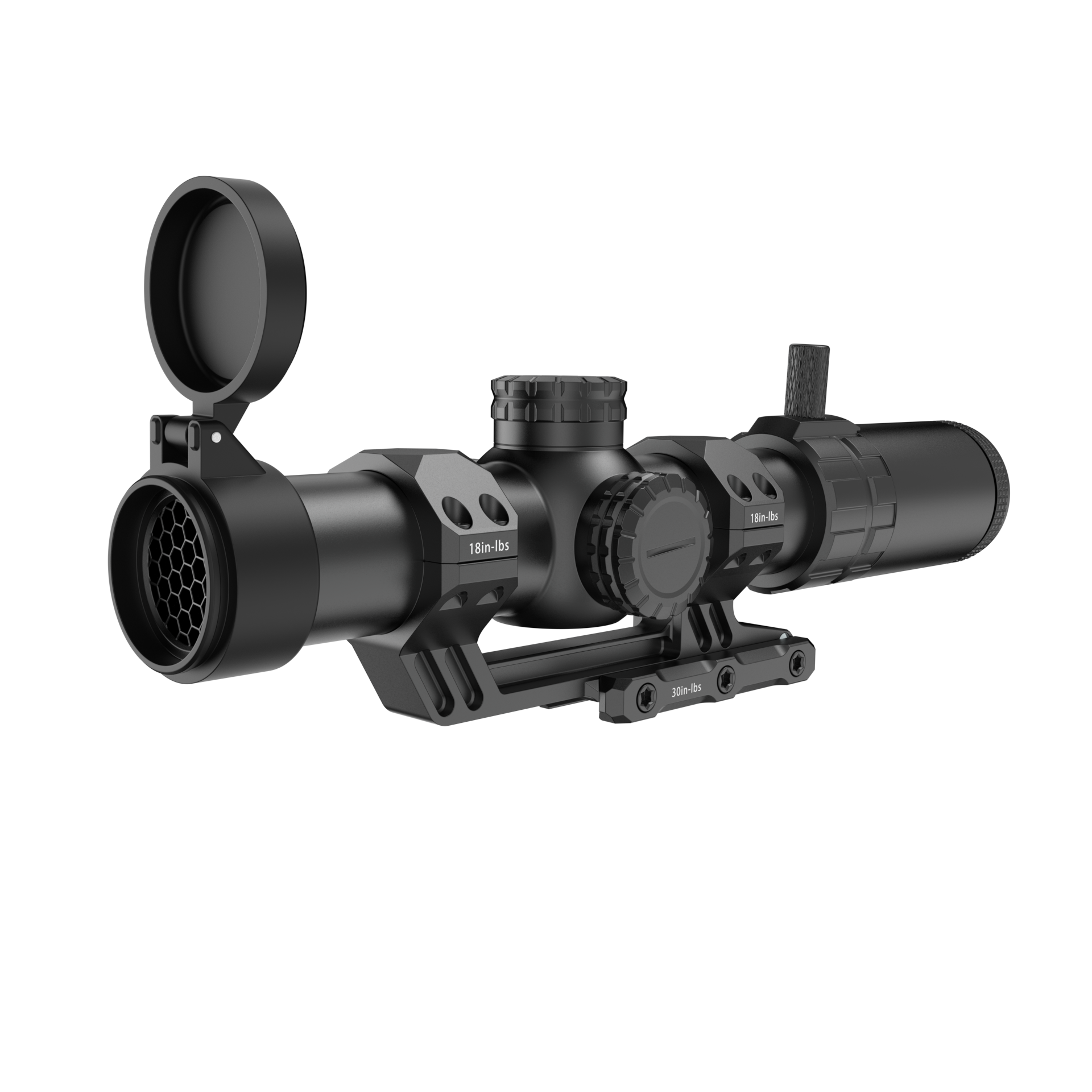
The SWAT Optics HSS DMR 1–10x is engineered with hardened materials, ED glass, advanced seals, and a shock-rated internal system designed to hold zero under recoil, heat, vibration, and impact.
Conclusion: A Scope That Loses Zero Is Not a Scope
LPVO durability is not a marketing phrase—it is a mechanical science. If the scope can’t withstand recoil, heat, and real-world handling, it becomes a liability.
- Erector springs determine zero consistency
- Tube material dictates impact resistance
- Bonding agents affect recoil performance
- Thermal stability prevents POI drift
The HSS DMR is engineered to survive where cheaper LPVOs fail. Durability is not optional—it is the foundation of accuracy.