
AR-10 · .308 · LPVO Doctrine · 2026 Edition
Best LPVO Scope for AR10 (2026 Guide): Why the HSS DMR 1–10× FFP Redefines the Platform
When shooters search for the best LPVO scope for AR10, most articles skim over the one thing that actually matters: decision-making under geometry. The AR-10 is not just “an AR with more recoil.” It is a .308 mission set—deeper penetration, more accountability at distance, and bigger consequences if you are wrong.
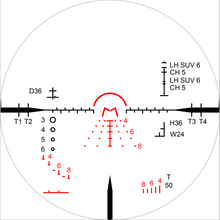
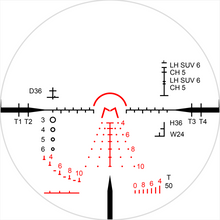
This 2026 guide is written for shooters who want more than marketing. We will look at how an AR-10 really lives—in streets, vehicles, fields and structures—and why the SWAT Optics HSS DMR .308 1–10× FFP LPVO with the M-Reticle is the best LPVO scope for AR10 users who care about geometry, PID, and doctrine-based holds backed by FM 3-22.9 and ATP 3-21.8 principles.
See the Best LPVO Scope for AR10 as a System, Not a Spec Sheet

Watch the Best LPVO Scope for AR10 in Streets, Vehicles & Barriers
Before you read another spec sheet, watch how the HSS DMR M-Reticle behaves in real geometry: streets, windows, vehicles, clutter, and partial exposure. This is where the best LPVO scope for AR10 earns its keep.
Build Your AR-10 LPVO Knowledge Stack
- Best AR-10 LPVO (2026): Doctrine-Driven 1–10× Setup with the HSS DMR .308
- The LPVO Handbook (2026 Edition) — Complete Guide for AR-15 & AR-10 Shooters
- LPVO Mastery Hub 2026 — HSS DMR 1–10× M-Reticle Framework
- HSS DMR M-Reticle Field Manual (2026 Edition)
- HSS DMR Ballistics Calculator & Tactical Simulator
- AR-15 LPVO (2026 Guide): Distances, Holds, Reticles & Urban Target Work
Table of Contents
- 1. The AR-10 Mission: Why “Best LPVO Scope for AR10” Means Geometry
- 2. Criteria for the Best LPVO Scope for AR10 in 2026
- 3. M-Reticle Geometry: W24, H36, CH5, SUV6 & T-Zones
- 4. Streets, Structures & PID: The Real .308 Problem Set
- 5. Magnification Bands on AR-10: 1× / 4× / 6× / 10×
- 6. Zeroing the Best LPVO Scope for AR10
- 7. Ballistics Workflow: Calculator, Data Book & Reticle Mapping
- 8. Why the HSS DMR 1–10× Is the Best LPVO Scope for AR10
- 9. Training Drills to Unlock Full Capability
- 10. Next Steps: Building Your AR-10 LPVO System
1. The AR-10 Mission: Why “Best LPVO Scope for AR10” Means Geometry
The AR-15 is a lightweight 5.56 carbine. The AR-10 is a .308 fighting system. With more mass, more recoil, more retained energy, and more barrier performance, the AR-10 is responsible for:
- 0–25 yards: Tight interior spaces, doorways, garages, narrow hallways.
- 25–200 yards: Vehicles in driveways, parking lots, barns, alleyways and cross-street lanes.
- 200–600+ yards: Wood lines, ridge lines, building faces, rural approaches and overwatch positions.
If you want the best LPVO scope for AR10, your optic must support geometry, PID, and sectors across that entire envelope. It cannot simply be “bright and expensive.” It must help you answer:
- What is that person doing, and what is in their hands?
- How far is that vehicle or window, based on real dimensions?
- How much of the target is exposed above cover or behind glass?
- Which sectors are you accountable for within your field of view?
That is why this guide focuses on geometry-based LPVOs—specifically the HSS DMR .308 M-Reticle system— instead of generic BDC scopes that were never designed for AR-10 realities.
2. Criteria for the Best LPVO Scope for AR10 in 2026
When we talk about the best LPVO scope for AR10, we are not comparing Instagram pictures. We are comparing doctrine-aligned capability. A credible AR-10 LPVO must support:
- First focal plane (FFP) subtensions: All rulers, stadia and structural references must stay honest from 1× through 10×. If your ranging marks only work at one power, they will fail you under time pressure.
- Geometry-based ranging: The reticle must measure real objects—windows, door widths, vehicle heights, structural segments, kneeling exposure—not just abstract hashes.
- .308 recoil durability: The optic and mount must withstand sustained .308 use without losing zero.
- PID clarity: Glass quality and reticle design must support reading posture, hands and backstop through clutter, heat shimmer, and environmental noise.
- T-Zone communication sectors: The field of view should be segmented into intuitive sectors (T1–T4) so you can Shoot, Move, Communicate using a shared visual language.
- Non-electronic survivability: The reticle must function with dead batteries or illumination off. Electronics are a bonus—not a dependency.
Many LPVOs meet parts of this list. Very few were built from the ground up around it. The HSS DMR .308 was.
What “Best LPVO Scope for AR10” Really Means
For this guide, “best” does not mean “most expensive.” It means the scope that gives an AR-10 shooter the strongest combination of:
- Fast visual acquisition in complex scenes
- Reliable geometry-based ranging across real objects
- Clean, repeatable holds backed by data, not guesswork
- A reticle language that survives when electronics fail
That is the evaluation lens used throughout this article.
3. M-Reticle Geometry: W24, H36, CH5, SUV6 & T-Zones
The reason the HSS DMR is the best LPVO scope for AR10 is simple: the M-Reticle is not a decorative BDC ladder. It is a visual measuring system designed for real structures, vehicles and human exposure.
3.1 W24 – 24″ Horizontal Structural Width
W24 is a 24-inch horizontal stadia line. It is grounded in real-world dimensions like window widths, door segments, and gear profiles. In practical AR-10 terms:
- A typical residential or commercial window panel often occupies something close to W24 at a specific distance band.
- A chest rig or backpack in the 10–12″ width class will fill part of W24, giving you distance clues when combined with magnification.
- W24 lets you think in “how much of this opening or object am I seeing?” instead of guessing distances out of thin air.
On a .308, this is crucial: you are not just deciding if you can hit—you are deciding if you should.
3.2 H36 – 36″ Vertical Structural Ruler (Not a Torso Marker)
H36 is a 36-inch vertical structural ruler. It is vertical-only and is not a human torso or silhouette measurement tool. In the best LPVO scope for AR10, H36 is used for:
- Estimating kneeling shooter height at realistic PID distances like 400, 600 and 800 yards when conditions and glass allow.
- Assessing how much of a shooter is exposed above a vehicle hood or engine block—for example, head and shoulders vs. partial helmet.
- Measuring vertical segments of structures: balcony openings, stairwell windows, and parapet heights.
You are not measuring inches at 600 yards. You are asking: “Does this kneeling figure, or this vertical exposure, roughly fill H36 at this magnification?” If yes, you are in a known distance band tied to pre-validated .308 holds.
3.3 CH5 & SUV6 – Vehicle Stadia for Real Streets
Modern engagements are full of vehicles. The best LPVO scope for AR10 must treat them as reference objects, not background clutter. The M-Reticle bakes in:
- CH5: Approximately 60″ sedan height. When a typical sedan roofline fills CH5, you have a fast, credible range band for that vehicle type.
- SUV6: Approximately 72″ SUV / truck height. Tuned for larger vehicles and higher rooflines.
On an AR-10, CH5 and SUV6 help you:
- Understand how far that vehicle really is before you commit to a shot.
- Judge how much of a threat is truly covered vs. concealed by the vehicle.
- Cross-check distances with W24 and H36 on nearby structures for multi-object confirmation.
3.4 T-Zones (T1–T4) – Communication Sectors, Not Aim Points
The M-Reticle also contains T-Zones (T1–T4). These are reference grid sectors for communication, not exact physical aim points on the scope and not ballistic markers. They exist to support the core doctrine of: Shoot, Move, Communicate.
In practice, that lets you say:
- “Contact in T2 window, moving toward T3.”
- “You own T1/T2. I own T3/T4.”
- “Watch T3 rooftop near the HVAC unit.”
When the best LPVO scope for AR10 gives you both measurement tools and a shared language, your rifle becomes part of a fire-control system—not just a magnified picture.
4. Streets, Structures & PID: The Real .308 Problem Set
The AR-10 spends far less time on perfect square ranges than most photos suggest. In reality, the best LPVO scope for AR10 has to work in:
- Angled driveways with vehicles and mailboxes cutting your sightlines.
- Urban or suburban streets filled with parked cars, poles, HVAC units and signage.
- Mixed residential/commercial building faces with complex window patterns.
- Rural property lines with treelines, sheds, and partial ridgeline exposure.
In those environments, you often see:
- Only a head and shoulders above a hood.
- Partial silhouettes behind glass and curtains.
- Movement between parked vehicles.
- Targets breaking cover at oblique angles, not square to you.
The HSS DMR M-Reticle tackles this problem set by turning the glass into a geometry interpreter:
- W24 frames horizontal openings and lanes.
- H36 checks vertical exposure and kneeling height bands.
- CH5 / SUV6 read vehicle height into distance bands.
- T-Zones overlay an intuitive grid for callouts and accountability.
Why This Matters for the Best LPVO Scope for AR10
A .308 round carries energy and responsibility much farther than a 5.56. The best LPVO scope for AR10 must therefore support:
- Stronger PID before you press the trigger.
- Better understanding of what is behind and around the target.
- Cleaner decisions on whether the shot should be taken at all.
A geometry-driven M-Reticle outperforms simple BDC trees because it measures the world, not just bullet drop.
5. Magnification Bands on AR-10: 1× / 4× / 6× / 10×
The best LPVO scope for AR10 is not “always on 10×.” It is staged deliberately based on the geometry and distances in front of you. A practical, doctrine-aligned way to run the HSS DMR 1–10× is:
- 1×: Interior movement, vehicles at bad-breath distances, unknown corners, and immediate threats.
- 4×: Streets, driveways, alleys, small lots and 50–200 yard problems around structures and cars.
- 6×: Complex PID between 200–400 yards—windows, balconies, partial exposure, mixed clutter.
- 10×: 400–600+ yards where you must read posture, hands and backstop before a .308 shot.
Because the HSS DMR is first focal plane, W24, H36, CH5 and SUV6 remain honest at every band. That means you can:
- Use CH5 / SUV6 at 4× to read vehicle distance before committing to a shot.
- Use W24 / H36 at 6× to classify exposure at 250–400 yards.
- Use the full M-geometry at 10× for posture analysis and fine hold confirmation.
The key is consistency: tie magnification bands to mission bands, not to mood.
6. Zeroing the Best LPVO Scope for AR10
There is no single magic zero for every AR-10, but three patterns cover almost all realistic use cases when paired with the HSS DMR M-Reticle and the HSS DMR Ballistics Calculator & Tactical Simulator :
6.1 50/200 Zero – General-Purpose Battle Rifle
- Great for a mobile AR-10 that must move between vehicles, structures and short rural lanes.
- Keeps vertical deviation modest inside 0–250 yards with .308 loads.
- Pairs well with 1× / 4× staging and W24/H36 geometry inside built-up areas.
6.2 36-Yard Zero – Extended Mid-Range Control
- Favors DMR-style work where 300–500 yard shots are routine.
- Often pushes the second intersection farther out for many .308 loads.
- Pairs cleanly with HSS DMR mid-range holds mapped through the calculator.
6.3 100-Yard Zero – Precision & Data Clarity
- Provides the cleanest trajectory tables for long-range .308 work.
- Simplifies confirming 300–600 yard holds against steel or realistic silhouettes.
- Ideal when your AR-10 leans more toward overwatch/precision but still needs a credible 1× capability up close.
Whichever you choose, the key is to lock it in, build a data book, and align your W24/H36/CH5/SUV6 reads with that zero. Changing zeros constantly is the enemy of repeatability.
7. Ballistics Workflow: Calculator, Data Book & Reticle Mapping
The M-Reticle is powerful even with no electronics, but the best LPVO scope for AR10 becomes even more capable when you tie it to a disciplined ballistic workflow. A proven method:
- Open the HSS DMR Ballistics Calculator & Tactical Simulator and select an HSS DMR .308 profile or manual input.
- Enter your actual muzzle velocity, bullet weight, BC, barrel length and environment (temperature, elevation, density altitude if available).
- Set your chosen zero (50/200, 36 or 100 yards) and generate a trajectory table out to your maximum expected distance.
- On the range, confirm where your impacts land in the M-Reticle at 6× and 10×:
- How does your 300-yard hold relate to a partial exposure above a hood that fills H36?
- How does a 400-yard shot align with a kneeling silhouette behind a vehicle that fills CH5 and part of W24?
- Record those relationships in plain language in your data book. For example: “400 yards ≈ kneeling exposure just above hood, H36 nearly full, 0.6 mil hold.”
- Re-run the calculator as seasons, loads, or locations change and update your notes rather than guessing.
The goal is to merge glass + geometry + data into one mental picture. That is what separates a generic LPVO from the best LPVO scope for AR10.
8. Why the HSS DMR 1–10× Is the Best LPVO Scope for AR10
With all of this in mind, here is why the SWAT Optics HSS DMR .308 1–10× FFP LPVO stands out as the best LPVO scope for AR10 in 2026:
- True 1–10× FFP: One optic that can live on the rifle from CQB to 600+ yards.
- ED glass tuned for PID: Clarity that lets you read posture, hands and background instead of just “seeing a blur at distance.”
- M-Reticle geometry: W24, H36, CH5, SUV6 and T-Zones integrated into a funnel-shaped reticle with a 0.5 MOA open center gap for precise aiming.
- First focal plane subtensions: All rulers remain honest regardless of magnification, matching FM 3-22.9 principles for consistent ranging.
- Non-electronic survivability: Fully etched reticle that works with or without illumination, giving you EMP-safe / battery-independent usability.
- Included mount & kill flash: Built as a complete fighting system, not just a bare optic.
- Ballistics Calculator & training ecosystem: A dedicated ballistic tool, Field Manual and Reticle Academy series built around the same M-Reticle language.
Comparing Against Typical “Best LPVO for AR-10” Lists
Most “best LPVO scope for AR10” lists mix together red dots with magnifiers, basic BDC LPVOs, and hunting scopes with no structural rulers. They might work at the bench, but they rarely give you:
- Dedicated structural scaling for streets and buildings.
- Vehicle stadia for CH5 & SUV6-style ranging.
- T-Zone communication sectors embedded into the glass.
- An integrated ballistic and training ecosystem tied to the reticle.
That is the difference between owning “an optic” and owning a doctrine-driven AR-10 LPVO system.
9. Training Drills to Unlock the Best LPVO Scope for AR10
No scope can compensate for lack of repetitions. To actually earn the label “best LPVO scope for AR10” in your hands, combine this guide with the Reticle Academy (2026) and run drills such as:
- Full / half W24 window drills: Use real or scaled windows to practice reading full W24 vs half-W24 fills at different distances and magnifications.
- H36 exposure drills: Simulate a hood or barricade, then raise a target until it fills H36. Call the exposure (“head and part of shoulders”) and your pre-validated hold before breaking the shot.
- CH5 / SUV6 vehicle runs: Work around sedans and trucks (or scaled mockups) at known distances. Validate how CH5 and SUV6 read at 4× and 6×, then integrate those reads into your hold decisions.
- T-Zone communication reps: On a live range or dry-fire layout, practice calling “T2 balcony,” “T3 rooftop,” or “T1 alley mouth.” Confirm that every shooter with an HSS DMR sees the same reference.
- Magnification staging drills: Run timed stages where you must transition from 1× to 4× to 10× while maintaining PID, sector control and backstop awareness.
Over time, W24, H36, CH5, SUV6 and T-Zones stop feeling like “features” and become a single visual language across your AR-10 and AR-15 platforms.
10. Next Steps: Build Your Best LPVO Scope for AR10 System
Choosing the best LPVO scope for AR10 is less about brand loyalty and more about whether the optic supports what doctrine actually demands: PID, geometry, ranging, sectors and repeatable holds.
To turn this guide into capability:
- Equip your AR-10: Mount the HSS DMR .308 1–10× FFP LPVO using the included mount and kill flash.
- Choose your zero: Decide whether 50/200, 36-yard or 100-yard best matches your environment and mission.
- Run your ballistics: Build and verify your .308 trajectory in the HSS DMR Ballistics Calculator & Tactical Simulator .
- Study the geometry: Work through the HSS DMR M-Reticle Field Manual and the W24 / H36 / D36 structural ranging guide .
- Train with intent: Use Reticle Academy drills until the M-Reticle becomes your default language for both AR-10 and AR-15.
When your rifle, your optic, your geometry and your data all agree, you are no longer just running “an optic.” You are running the best LPVO scope for AR10 as a complete, doctrine-backed battle rifle system.
All trademarks belong to their respective owners. Comparisons are editorial opinions based on publicly available specifications and field use.