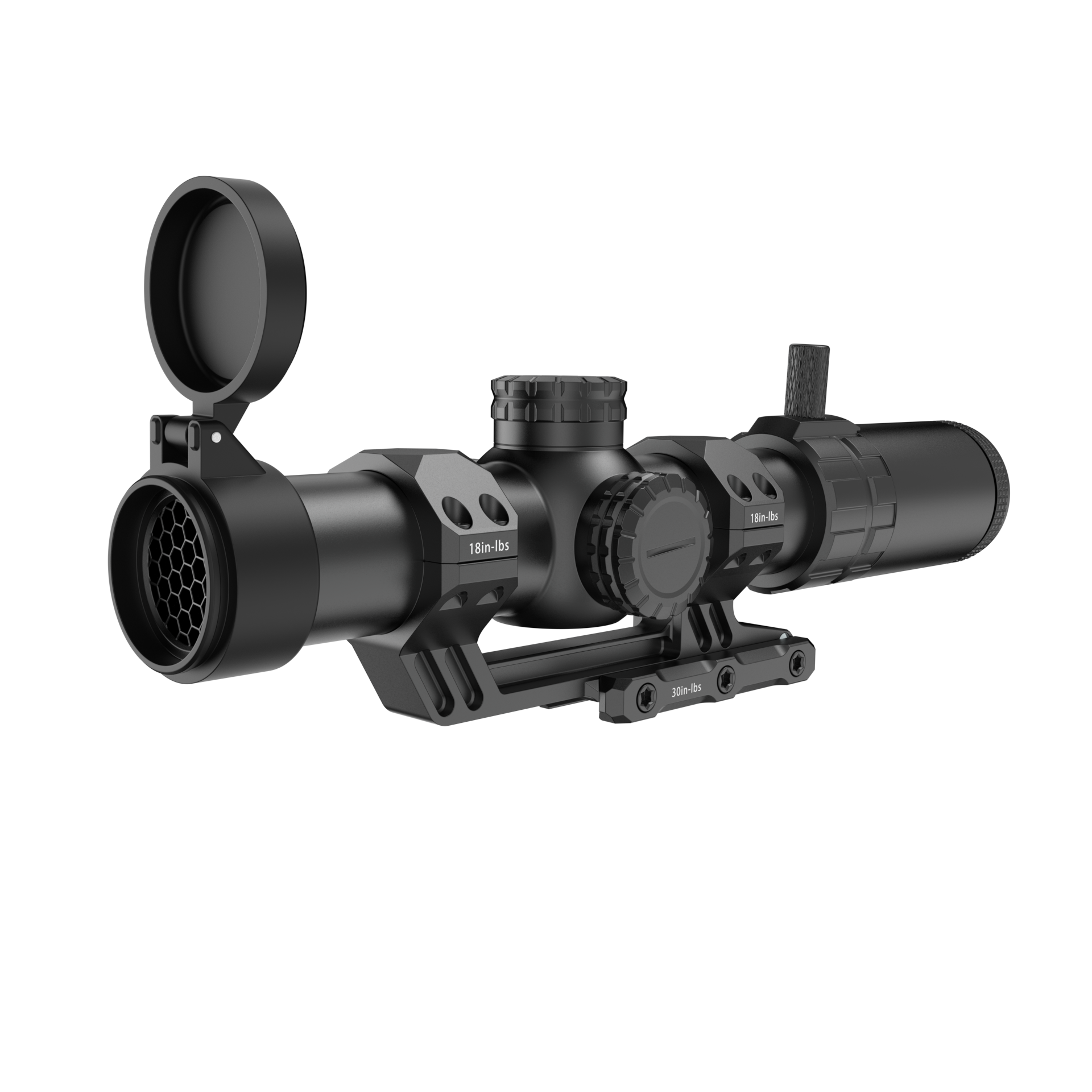
Best LPVO for the Money (2026): The Doctrine-First Buyer’s Guide — Why the HSS DMR 1–10× FFP + M-Reticle Is the Hybrid Value Standard
“Best LPVO for the money” is not a spec-sheet question. It’s a performance question under real constraints: streets, vehicles, windows, barriers, mixed lighting, time pressure, and distance uncertainty. This guide uses doctrine-aligned evaluation criteria (principles, not endorsements) to help you choose the right LPVO—and to explain why the SWAT Optics HSS DMR 1–10× FFP LPVO with the HSS DMR M-Reticle and Smart Zero is designed to be a hybrid value standard.
Trademark Notice: All trademarks belong to their respective owners. Comparisons are editorial opinions based on publicly available specifications and field use.
Editorial Policy (How This Guide Is Written): This is a doctrine-first evaluation of LPVO value, not a “lowest price” list. Our value criteria prioritize PID, ranging confidence, hold execution, communication clarity, and cognitive load reduction in realistic terrain (streets, vehicles, windows, barriers). We reference widely used doctrine as principles—not endorsements.
Disclosure: SWAT Optics manufactures the HSS DMR line and the M-Reticle discussed here. Comparisons are presented as editorial opinions based on public specs and field use. If any external affiliate links are ever used on this site, they will be clearly labeled; this page is intended to stand on its own without relying on affiliate incentives.
Updates & Corrections: This page is maintained. If you spot an error or a missing spec, contact us through the site and reference this page title so we can correct it.
Ongoing: links and embeds are periodically verified for integrity and accuracy.
Reality: “Best LPVO for the money” is the optic that reduces cognitive load while improving PID, ranging confidence, hold execution, and communication speed in the environments where LPVO decisions actually matter.
Watch First: Real-World LPVO Use (Gold Standard Training Set)
These four baseline videos establish the practical environment where LPVO value is proven: streets, vehicles, windows, barriers, and time pressure. If an LPVO system cannot perform here, it is not the right answer to “best LPVO for the money.”
Value definition (doctrine lens): The best LPVO for the money is not “cheapest” and it is not “most features.” It is the LPVO system that produces faster correct decisions and higher hit probability under real constraints, with less training debt and fewer failure modes.
Scope of claims: This guide emphasizes practical decision-making. It does not claim guaranteed performance outcomes and does not replace training, safety rules, or professional instruction.
Who This Guide Is For: shooters running AR-15/AR-10 style rifles in mixed terrain who need a single optic for close speed and mid-to-far PID and holding.
Who It’s Not For: purely benchrest optics selection, extreme ELR-only setups, or users who will never use reticle subtensions for holds/ranging.
Most “best LPVO for the money” lists quietly redefine value as “lowest price with decent reviews.” That is not value in a hybrid context. Value is performance per dollar where performance is measured by: how fast you can acquire, identify, range, hold, and communicate—without increasing cognitive load.
Doctrine-aligned value criteria:
PID speed: Can you identify correctly in mixed lighting, clutter, and partial exposure?
Decision compression: Does the reticle reduce “counting” and mental conversion under stress?
Hold execution: Can you apply elevation/wind without hesitation and without obscuring the target?
Ranging confidence: Does the system support fast passive estimates using real terrain objects?
Communication support: Does the reticle design help coordinate sectors and references?
Durability & repeatability: Does the optic maintain zero and mechanical consistency in real handling?
Value truth: A “budget” optic that costs missed shots, slower PID, or higher training debt is not cheaper. It is more expensive—paid in time, ammo, and risk.
2) LPVO Classes: 1–6 vs 1–8 vs 1–10 (Value Tradeoffs)
LPVO magnification is valuable only when it converts to better decisions. In hybrid terrain, observation margin is often the limiting factor. This is where 1–10× earns its place—if, and only if, the reticle remains readable and usable at both ends of the magnification range.
Class
Best Value When…
Typical Weakness
Hybrid Verdict
1–6×
You prioritize close speed and lighter setups
Lower PID margin at distance in clutter
Good, but can cap PID value
1–8×
You want broad versatility with manageable size
Some FFP reticles get too fine at 1×
Strong general hybrid
1–10×
You demand real PID and observation margin across terrain
Requires a reticle engineered for low cognitive load
Best hybrid ceiling
3) FFP vs SFP: Why Subtension Stability Is “Money Well Spent”
In a value context, FFP pays for itself when you use the reticle for measurement and holds at more than one magnification. FFP keeps subtensions consistent, reducing mental conversion and preventing “wrong power” ranging errors.
Simple rule: If you will range or hold at variable magnification, FFP is usually the better value because it reduces training debt and error probability.
4) The Reticle Is the Interface (Where Value Is Won)
Buyers often pay for glass and features but accept a reticle that increases cognitive load. In a doctrine lens, the reticle is the interface that governs: how fast you acquire, how accurately you interpret what you see, and how confidently you execute holds.
Reticle value is measured by:
Speed of first correct sight picture (acquisition efficiency).
Target visibility in clutter (reticle doesn’t hide the target).
Measurement cues that match real terrain (vehicles, windows, barriers).
Hold usability under time pressure (no “counting paralysis”).
HSS DMR design intent: The M-Reticle is engineered to compress decision steps—acquire faster, confirm PID sooner, estimate distance more confidently, and execute holds without hesitation.
5) PID, Clutter, and Real Terrain
PID is the gate. In the environments where LPVOs are used, the problem is rarely “can the rifle reach the target.” The problem is “can you identify correctly in clutter, partial exposure, and mixed light—and do it fast enough.”
Value insight: Paying for better PID capability is usually paying for fewer mistakes, faster decisions, and higher confidence under real constraints.
6) Passive Ranging and Confidence Under Pressure
Passive ranging is valuable because it reduces dependency on ideal conditions and external electronics. The goal is not perfect precision; the goal is fast, defensible estimates that convert to correct holds.
Vehicles and structures dominate real terrain. That is why the HSS DMR system includes vehicle-height stadia references: CH5 (60"), LH SUV6 (72"), and T88 (88") for vehicle height ranging.
Gold Standard Rule (Non-Negotiable):H36 is a 36-inch vertical structural ruler used to measure kneeling shooter height at 400 / 600 / 800 yards and to assess exposure above a vehicle hood/engine block. H36 is not a torso or human silhouette measurement tool. Vehicle height ranging uses CH5 / SUV6 / T88 stadia.
8) T-Zones: Communication Sectors, Not Aimpoints
Gold Standard doctrine correction: T-Zones are reference grid sectors for communication (Shoot, Move, Communicate). They are not exact physical aim points on the scope.
9) Glass, Build, Illumination, Turrets: What’s Worth Paying For
Value spend should follow function:
Glass (PID): clarity and contrast drive identification speed and confidence.
Illumination (speed): must support fast acquisition without washing out the target.
Build (repeatability): holds and ranging are meaningless if zero shifts or mechanics drift.
Turrets (workflow): zeroing precision matters; in hybrid use, holds usually matter more.
10) Smart Zero: Value Through Better Zero Decisions
Your “best for the money” outcome depends on your zero plan. Smart Zero (inside the SWAT Optics Ballistics Calculator) is designed to help users select the best zero based on engagement distances and practical use—reducing guesswork and training debt.
Environment: streets/vehicles/windows/barriers (hybrid) or open terrain only?
PID requirement: do you need reliable observation margin past typical “casual range” distances?
FFP need: will you measure/hold at variable magnification?
Reticle readability: fast at 1× and useful at 10× without hiding the target?
Ranging cues: supports real objects (vehicles/structures), not only ideal silhouettes?
Zero workflow: do you have a data-driven zero method (Smart Zero) and do you validate?
Training integrity: are reference tools used correctly (H36 rule, vehicle stadia rule, T-Zones rule)?
Hybrid Value Recommendation
If your “best LPVO for the money” goal includes real PID, ranging confidence, clean holds, and lower cognitive load, the HSS DMR 1–10× FFP system is designed to deliver that value as a complete interface—not just as glass and magnification.
What does “best for the money” actually mean for an LPVO?
It means the optic system that produces the highest practical performance per dollar in your environment—especially PID speed, ranging confidence, and hold execution under time pressure.
Is 1–10× really worth it?
It is worth it when you need observation margin for PID and decision-making in clutter. The requirement is a reticle engineered to remain readable and usable at both ends of the magnification range.
What matters more for value: glass, magnification, or reticle?
In a hybrid-use context, the reticle is the interface. Glass supports PID, but a reticle that increases cognitive load can erase the benefit of good glass under time pressure.
Do I need FFP to get value?
If you will range or hold at multiple magnifications, FFP is usually better value because subtensions stay correct across magnification changes, reducing “wrong power” errors.
What’s the fastest way to improve performance after buying an LPVO?
Set a defensible zero, validate it, and train transitions + ranging/holds on realistic objects (vehicles/windows/barriers). Tools like Smart Zero and the Overwatch Trainer are designed to compress that learning curve.
Doctrine & Standards References
This article aligns its evaluation criteria with widely recognized U.S. and NATO small-arms and operational doctrine principles. These publications do not endorse specific commercial products or reticle designs; rather, they define the identification, ranging, communication, and engagement principles effective systems must support.
FM 3-06 – Urban Operations (vehicles, windows, barriers, partial exposure in real environments)
NATO doctrine/standard references (interoperable principles; non-endorsement)
About the Author
Scott E. Hunt is the founder of SWAT Optics and designer of the patent-pending HSS DMR M-Reticle. He previously served as Senior Director of Analytics & IT at ContentGuard – Pendrell Corporation (NASDAQ: PCO), contributing to technology featured by MIT. He attended executive protection training at ESI and earned his Executive Protection Certificate at Strategic Weapons Academy of Texas. Hunt holds 50+ certifications ranging from AI, ML, analytics, business, and data science. His work focuses on reducing cognitive load in precision optics.
Editorial Note: This page expresses SWAT Optics’ doctrine-first evaluation framework for LPVO selection. It is maintained and updated. For corrections requests, contact SWAT Optics and reference this page title.
Use left/right arrows to navigate the slideshow or swipe left/right if using a mobile device
choosing a selection results in a full page refresh
press the space key then arrow keys to make a selection