
AR-10 · LPVO Scope · .308 Battle Rifle Geometry
AR-10 LPVO Scope (2026 Guide): How to Build a Doctrine-Driven .308 System with the HSS DMR 1–10×
If you own an AR-10 in .308 / 7.62 NATO, your optic choice matters more than almost any other accessory on the rifle. A serious AR-10 LPVO scope has to survive recoil, work inside vehicles and structures, and let you make responsible shots from 0 to 600+ yards without turning your brain into a math problem.
This guide walks through how to set up and run a doctrine-driven AR-10 LPVO scope using the SWAT Optics HSS DMR .308 1–10× FFP LPVO . We will focus on real geometry (windows, doors, vehicles, exposure), real .308 distances, and the M-Reticle’s visual measuring system backed by FM 3-22.9 and ATP 3-21.8 concepts—not influencer hype.
See the AR-10 LPVO System First: HSS DMR .308 1–10× & M-Reticle Geometry

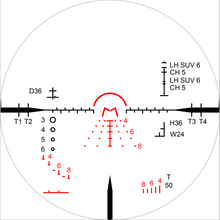
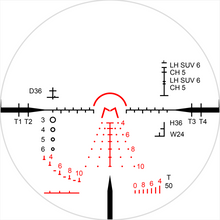
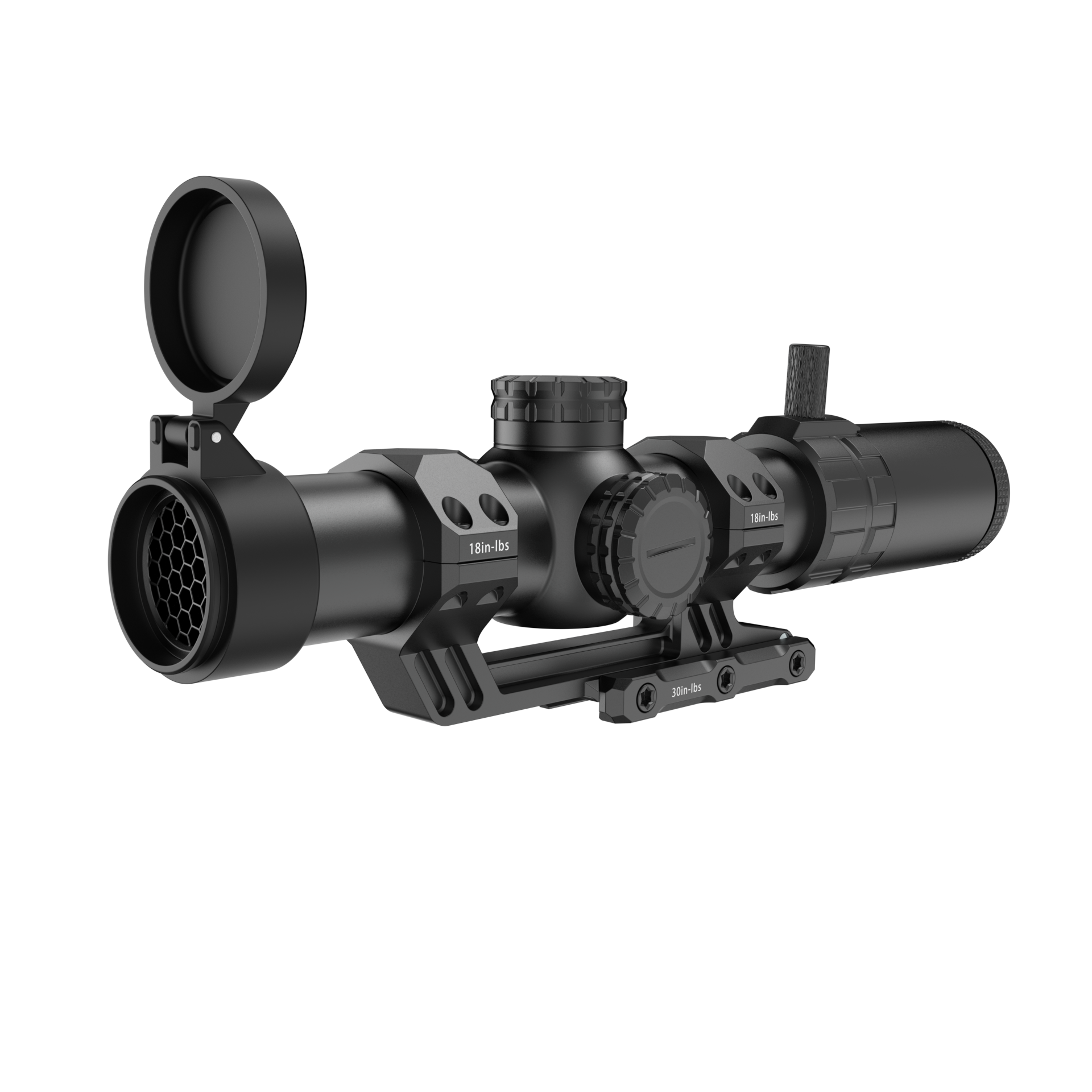
Watch the AR-10 LPVO Scope in Real Streets, Vehicles & Windows
Before you read, watch how the HSS DMR M-Reticle behaves on real AR platforms. These clips show streets, vehicles, partial exposure and geometry—not just flat-range steel.
Build Your AR-10 LPVO Knowledge Stack
- The LPVO Handbook (2026 Edition) — Complete Guide for AR-15 & AR-10 Shooters
- LPVO Mastery Hub 2026 — HSS DMR 1–10× M-Reticle Framework
- Best LPVO 2026 — Ultimate Military-Based Guide for AR-15 & AR-10
- HSS DMR M-Reticle Field Manual (2026 Edition)
- HSS DMR Ballistics Calculator & Tactical Simulator
- AR-15 LPVO (2026 Guide): Distances, Holds, Reticles & Urban Target Work
- Best AR-10 LPVO (2026): Doctrine-Driven HSS DMR .308 Setup
Table of Contents
- The AR-10’s Mission in 2026: Where the LPVO Lives
- What an AR-10 LPVO Scope Must Actually Do
- Magnification Bands: 1× / 4× / 6× / 10× on .308
- M-Reticle Geometry on the AR-10 Platform
- Streets, Vehicles & Windows: Real AR-10 Use Cases
- Zeroing an AR-10 LPVO Scope for .308
- Using the HSS DMR Ballistics Calculator with AR-10
- AR-10 LPVO Scope Setups: Battle Rifle vs DMR
- Training Drills for AR-10 LPVO Mastery
- Next Steps: Build Your AR-10 LPVO Scope System
1. The AR-10’s Mission in 2026: Where the LPVO Lives
The AR-15 owns the lightweight carbine space. The AR-10 owns the “hit harder, see farther” space. In practical terms, that means your .308 AR-10 is responsible for:
- 0–25 yards: Home defense, rooms, narrow halls, tight vehicle work.
- 25–200 yards: Streets, parked vehicles, driveways, barns, tree lines across property.
- 200–600+ yards: Ridges, woodlines, cross-street overwatch, rural interdiction.
An AR-10 LPVO scope has to keep that whole envelope honest. If your glass is only good for bench shooting at 300 yards, you have thrown away the AR-10’s primary advantage: heavier caliber reach combined with fight-speed handling.
That is why the HSS DMR .308 is built as a 1–10× FFP LPVO with a geometry-based M-Reticle: one optic that can work from a car hood at 15 yards to a barricade shot at 550 yards—without needing electronics or guesswork.
2. What an AR-10 LPVO Scope Must Actually Do
Most “best AR-10 LPVO scope” lists just compare price tags, brand names, and illumination features. Doctrine cares about something else entirely:
- Positive Identification (PID): What is in the target’s hands? Is that a weapon or a tool?
- Range estimation: How far is that person or vehicle, given real geometry in the scene?
- Holds under stress: Can you apply repeatable elevation and wind holds inside a limited decision window?
- Sectors & accountability: Are you controlling a lane, building face, or engagement area, not just “a target”?
For an AR-10 LPVO scope to be doctrinally credible, it needs to support those tasks:
- First focal plane (FFP): All stadia and structural markers must stay honest from 1× to 10×. If your “ranging hash” only works at one magnification, it will fail you when you are under time pressure.
- Geometry-based reticle: The etched pattern should measure real objects—windows, doors, vehicle heights, vertical exposure—not just abstract hash marks.
- Non-electronic survivability: The reticle must be usable with dead batteries and in degraded illumination, not dependent on a glowing center to function.
The HSS DMR .308 1–10× FFP LPVO is built around exactly that reality, using the M-Reticle as a visual measuring system rather than a decorative BDC.
3. Magnification Bands: 1× / 4× / 6× / 10× on the AR-10
One of the biggest advantages of a 1–10× AR-10 LPVO scope is the ability to “stage” magnification based on the geometry in front of you. Instead of spinning the ring randomly, you run defined bands:
- 1×: Close work, vehicles, doorways, entries, and unexpected turns.
- 4×: Streets, alleys, driveways, parking lots where 50–200 yards are common.
- 6×: Complex structures, partial exposure at 200–400 yards, PID through clutter.
- 10×: 400–600+ yards, reading posture and objects in hand, verifying backstop and exposure.
Because the HSS DMR is FFP, the positions of W24, H36, CH5 and SUV6 are always honest. That means:
- At 4×, you can fit a vehicle roof into CH5 or SUV6 and get a fast, credible range band.
- At 6×, you can use W24 and H36 to understand window width and vertical exposure.
- At 10×, you can confirm posture, object in hand, and how much of the upper body is above the hood or barricade.
This is how an AR-10 LPVO scope should be used: magnification tied to engagement bands and geometry, not just “more zoom.”
4. M-Reticle Geometry on the AR-10 Platform
The HSS DMR M-Reticle is not a generic BDC ladder. It is a geometry system designed to measure real structures and vehicles in the scene and turn them into fast, visual distance bands. On the AR-10, that geometry is especially powerful because .308 carries energy and accountability much farther than 5.56.
4.1 W24 – 24″ Horizontal Structural Width
W24 is a 24-inch horizontal stadia tied to common window widths and openings. In AR-10 terms:
- Full W24 fill ≈ closer structural band (for example, ~200 yards in many scenarios).
- Half W24 fill (≈ 12") ≈ farther structural band (~400-yard class exposure).
- Used with backpacks and chest rigs in the 10–12" range to classify width vs distance.
On a .308 AR-10, W24 helps you decide if a shot is inside or outside your doctrinal envelope—and what hold you should be thinking about before you even touch the trigger.
4.2 H36 – 36″ Vertical Structural Ruler
H36 is a 36-inch vertical structural ruler. It is vertical-only and is not a torso silhouette marker. It is used to:
- Estimate kneeling shooter height at realistic PID distances such as 400, 600 and 800 yards when conditions allow.
- Check how much of a shooter is exposed above a vehicle hood or engine block.
- Measure vertical structural segments in windows, balcony openings and stairwells.
You are not counting inches at 600 yards. You are asking, “Does this kneeling figure or vertical exposure roughly fill H36 at this magnification?” If yes, you are in a known distance band, and you can apply pre-validated .308 holds from your data book and the HSS DMR Ballistics Calculator.
4.3 CH5 & SUV6 – Vehicle Stadia for Real Streets
Vehicles are some of the most common reference objects in modern engagements. The M-Reticle bakes in vehicle stadia so your AR-10 LPVO scope can read the street in real time:
- CH5: Approximately 60″ sedan height. When a typical sedan roofline fills CH5, you have a fast, credible range band.
- SUV6: Approximately 72″ SUV / truck height. Used the same way but tuned to larger vehicles.
On the AR-10, where barrier performance and retained energy matter, CH5 and SUV6 help you:
- Know how far a vehicle is before you commit to a shot.
- Understand whether a threat using the vehicle as cover is fully or partially protected.
- Cross-check distances by comparing CH5/SUV6 with W24 and H36 on structures near the same vehicle.
4.4 T-Zones for Communication Beyond 100 Yards
The M-Reticle’s T-Zones (T1–T4) are communication reference sectors, not physical aim points on the glass. On an AR-10 overwatch gun, they let you:
- Call out “contact, T2 window” instead of “second window from the left on the third floor.”
- Divide a building face into sectors—“You own T1/T2; I own T3/T4.”
- Mark suspected positions for later: “Watch T3 rooftop near the ventilation unit.”
That is how a doctrine-backed AR-10 LPVO scope should behave: as a measurement and communication layer, not just a zoomed picture.
5. Streets, Vehicles & Windows: Real AR-10 LPVO Scope Use Cases
Most marketing photos show AR-10s on benches shooting steel at 300 yards under perfect lighting. Real AR-10 use is very different:
- Angled shots off car hoods and fenders.
- PID through windshields with glare and interior clutter.
- Long-axis streets where targets appear between parked cars and structures.
- Leaning around cover with only partial upper body exposed.
A doctrine-driven AR-10 LPVO scope must support that environment. The HSS DMR system does this by tying the M-Reticle’s stadia to real objects:
- W24: Reads window width, balcony openings and the effective “lane” you are aiming into.
- H36: Checks vertical exposure above hoods, barricades and interior cover.
- CH5 / SUV6: Turn sedans and trucks into instant range markers without electronics.
That means your workflow becomes: identify → measure → decide → apply pre-validated hold. The LOS stays visual and geometry-based instead of devolving into “guess and send it.”
6. Zeroing an AR-10 LPVO Scope for .308
Your zero must match both your .308 trajectory and the way you actually use your AR-10. There is no one “magic” zero, but three options cover nearly all realistic missions:
6.1 50/200 Zero — General-Purpose Battle Rifle
A 50/200-style zero is often ideal if your AR-10 is a mobile, general-purpose rifle:
- Fast hits from 0–250 yards with minimal vertical deviation.
- Clean elevation language when paired with W24/H36 and vehicle stadia.
- Works well with 1×/4×/6× staging when most of your problem set is 50–300 yards around structures and vehicles.
6.2 36-Yard Zero — Extended Mid-Range Emphasis
A 36-yard zero favors DMR-style work where you can stretch distance:
- Pushes the second intersection farther out for some .308 loads.
- Pairs well with pre-validated 300–400 yard holds on the M-Reticle.
- Useful when your AR-10 lives in rural or mixed suburban/rural environments.
6.3 100-Yard Zero — Precision & Data Clarity
A 100-yard zero is the cleanest option for data and longer-distance work:
- Provides very clean tables from the HSS DMR Ballistics Calculator.
- Makes it easy to confirm 200–600 yard holds on steel or realistic targets.
- Excellent if your AR-10 leans more toward precision/overwatch but still needs CQB capability at 1×.
Whichever zero you choose, the key is consistency: tie it to your primary load and stick with it while you build a data book and reticle language for that rifle.
7. Using the HSS DMR Ballistics Calculator with Your AR-10 LPVO Scope
The M-Reticle is designed to be powerful even with no electronics, but you still want your holds grounded in real .308 data. That is where the HSS DMR Ballistics Calculator & Tactical Simulator comes in.
For an AR-10 LPVO scope, your workflow looks like this:
- Select the HSS DMR .308 profile (or the closest preset) in the calculator and input your actual muzzle velocity, bullet weight, BC, barrel length and environment.
- Choose your zero distance (50/200, 36 or 100 yards) and generate a trajectory table out to the farthest distance you realistically expect to shoot.
- On the range, confirm where those drops appear in the M-Reticle at 6× and 10×—for example, how a 400-yard hold relates to a kneeling profile behind a hood that fills H36 and W24 at a given magnification.
- Record those relationships as plain-language dope in your book: “400 yards ≈ kneeling exposure just above hood, H36 filled, hold here.”
- Train until W24/H36/CH5/SUV6 + your dope table become one mental picture, not separate tasks.
The goal is to avoid “ballistic guesswork.” The AR-10 LPVO scope should be the visual front-end to a doctrine-backed fire-control system, not a vague aiming device.
8. AR-10 LPVO Scope Setups: Battle Rifle vs DMR
With the same HSS DMR .308 AR-10 LPVO scope, you can bias your build toward a faster battle rifle or a heavier DMR, depending on configuration.
8.1 Battle Rifle-Centric AR-10 LPVO Setup
- Rifle: 16–18" AR-10 / .308 with reliable gas system.
- Optic: HSS DMR .308 1–10× FFP LPVO
- Mount: Duty-grade mount with proper torque and eye relief for .308 recoil.
- Accessories: Kill flash, weapon light, sling, and magazines configured for real movement.
- Zero: 50/200 or 36-yard, depending on your typical environment.
Run your magnification staging as 1× → 4× → 6× → 10× and focus on vehicle, street and structure work. Your AR-10 now behaves like a carbine with reach, not a slow bench gun.
8.2 DMR-Centric AR-10 LPVO Setup
- Rifle: 18–20" AR-10 with high-quality barrel and consistent ammunition.
- Optic: Same HSS DMR .308 1–10× LPVO—no need to change reticles between roles.
- Zero: Often 100 yards for maximum data clarity and precision.
- Focus: 300–600+ yards, cross-street overwatch, rural property lines, elevated positions and ridge lines.
In this role you still use W24, H36, CH5 and SUV6, but you’ll spend more time verifying posture, backstop and exposure at 8–10× before taking shots.
9. Training Drills for AR-10 LPVO Scope Mastery
No optic—no matter how well designed—can replace disciplined training. To wire the AR-10 LPVO system into your brain, combine this guide with the Reticle Academy (2026) and run drills such as:
- W24 / half-W24 drills: Use windows or scaled targets to practice full vs half W24 fill and associate those bands with distance and holds.
- H36 exposure drills: Have a partner raise and lower a target above a simulated hood or barricade until it fills H36—then call the exposure and hold without firing.
- CH5 / SUV6 vehicle runs: Work around sedans and trucks (or scaled targets) at known distances to validate your CH5/SUV6 read at 4× and 6×.
- Magnification staging: Run timed courses where you must transition from 1× to 4× to 10× using the throw lever while maintaining PID and backstop awareness.
- T-Zone communication: On a live range or dry-fire layout, practice calling out “T2 balcony,” “T3 rooftop,” etc., and verifying that everyone on the line can see the same point.
Over time, W24, H36, CH5, SUV6 and T-Zones stop feeling like “features” and start operating as one visual language across your AR-10 and AR-15 rifles.
10. Next Steps: Build Your AR-10 LPVO Scope System
A serious AR-10 LPVO scope is not just about glass clarity or specs on a box. It is about whether the optic supports doctrine: PID, geometry, ranging, holds and sectors. The HSS DMR .308 1–10× LPVO and M-Reticle are built from the ground up around that reality.
From here, your next steps are simple:
- Equip your AR-10: Mount the HSS DMR .308 1–10× FFP LPVO with its included mount and kill flash.
- Choose your zero: Use the LPVO zeroing and AR-10 zeroing guides to lock in 50/200, 36 or 100 yards based on your environment.
- Run your loads: Build and verify your trajectory in the HSS DMR Ballistics Calculator & Tactical Simulator .
- Study the geometry: Work through the HSS DMR M-Reticle Field Manual and W24 / H36 / D36 structural ranging guide .
- Train with intent: Use Reticle Academy and your own range time to validate what you see in the glass under pressure.
When your AR-10, your AR-10 LPVO scope, your geometry and your data all agree, you are no longer just “running .308.” You are running a doctrine-driven battle rifle system built around real streets, real structures and real consequences.
Editorial Standards & Update Log
This article is written as a technical reference for LPVO selection and field use. It prioritizes clear definitions, repeatable evaluation methods, and conservative claims that can be validated in real conditions.
Scope & Claim Boundaries
- What this page covers: optics fundamentals, reticle interpretation, setup considerations, and decision workflows (e.g., Smart Zero).
- What this page does not claim: ammunition terminal effects, guaranteed performance outcomes, or universal “best” statements that depend on individual context.
- How claims are handled: where market designs vary, language uses “most,” “often,” or “commonly” and avoids absolutes.