
LPVO vs Prism Optics (2026): Which Is Better for AR-15 & Tactical Carbines?
Prism optics have been popular for years due to their fixed magnification, simplicity, and clear etched reticles. But modern low-power variable optics (LPVOs) like the SWAT Optics HSS DMR 1–10x have rapidly become the dominant choice for AR-15 and real tactical carbines. This guide compares both systems and explains why LPVOs are overtaking prisms in 2026—especially when you factor in magnification, PID, and the patent-pending M-Reticle’s real-world geometry.
Before comparing LPVO and prism optics, watch this short scenario. It highlights why magnification and PID matter when threats appear suddenly or from unexpected angles.
Moments like these are where the LPVO’s advantages—magnification, PID, and geometry-based ranging—stop being “nice to have” and become essential.
What Is a Prism Optic?
Prism optics use a fixed magnification (usually 1x, 3x, or 5x) and an etched reticle. They’re known for:
- Short, compact form factor
- Clear etched reticle (works without batteries)
- Simple, point-and-shoot ergonomics
For static ranges or fairly predictable engagement distances, a prism can work well. But that simplicity has clear limitations once you step into truly dynamic engagement environments.
Where Prism Optics Fall Short
- Fixed magnification limits flexibility when distances change quickly
- No true 1x on many prisms, which creates tunnel vision at close range
- Limited PID capability beyond short distances
- No visual-fit ranging using windows, doors, or vehicles
- Very basic holdovers compared to purpose-built LPVO BDC systems
In fast-changing distances or urban environments, fixed power stops being a feature and starts becoming a liability.
Why LPVO Beats Prism Optics for AR-15 Platforms
1. True 1x for CQB
LPVOs like the HSS DMR deliver red-dot-like speed at 1x with both eyes open. No fisheye, no heavy barrel distortion, and no “permanent magnifier” tunnel vision. At 1x, the optic disappears and the reticle simply floats on target.
2. Adjustable Magnification (1x–10x)
The biggest prism weakness is fixed power. The biggest LPVO strength is variable power.
With the HSS DMR you get:
- 1x — CQB, home defense, room-distance work
- 2–4x — urban scanning, windows, alleys, vehicles
- 6–10x — PID, mid-range precision, and observation
Instead of choosing between “CQB gun” and “distance gun,” the LPVO lets your AR-15 flex across missions just by rolling the magnification ring.
3. Math-Free Visual Ranging (Urban Geometry)
The patent-pending M-Reticle in the HSS DMR lets shooters estimate distance based on real-world objects that exist in almost every environment:
- W24 — 24″ window width
- H36 — 36″ window height
- D36 — 36″ doorframe width
- CH5 — sedan height
- LH-SUV6 — SUV height
Instead of running mental math on mils, you are asking, “How does that window or vehicle fit inside the reticle?” That is something your brain can do very quickly under stress. Prism optics, with fixed magnification and simpler reticles, simply cannot match that level of geometry-based scaling.
Real-World LPVO Ranging Examples
These videos show how LPVO magnification and geometry-based ranging outperform fixed-power prisms in messy, real-world conditions.
LPVO Mid-Range Precision — The Prism Can’t Compete
At 100–400 yards, the gap between a prism and a well-designed LPVO becomes obvious:
- Prisms force you to “hold somewhere high” instead of using precise, verified holds
- LPVOs give you defined elevation references tied to real trajectories
- LPVOs make wind calls and distance holds repeatable, not guesswork
- Magnification improves target clarity dramatically as backgrounds get busy
Use the SWAT Optics Ballistics Calculator to generate exact drop and wind holds for your rifle, barrel length, and load—then confirm them on steel.
LPVO Knowledge Hub (Recommended Reading)
The LPVO That Outperforms Prism Optics
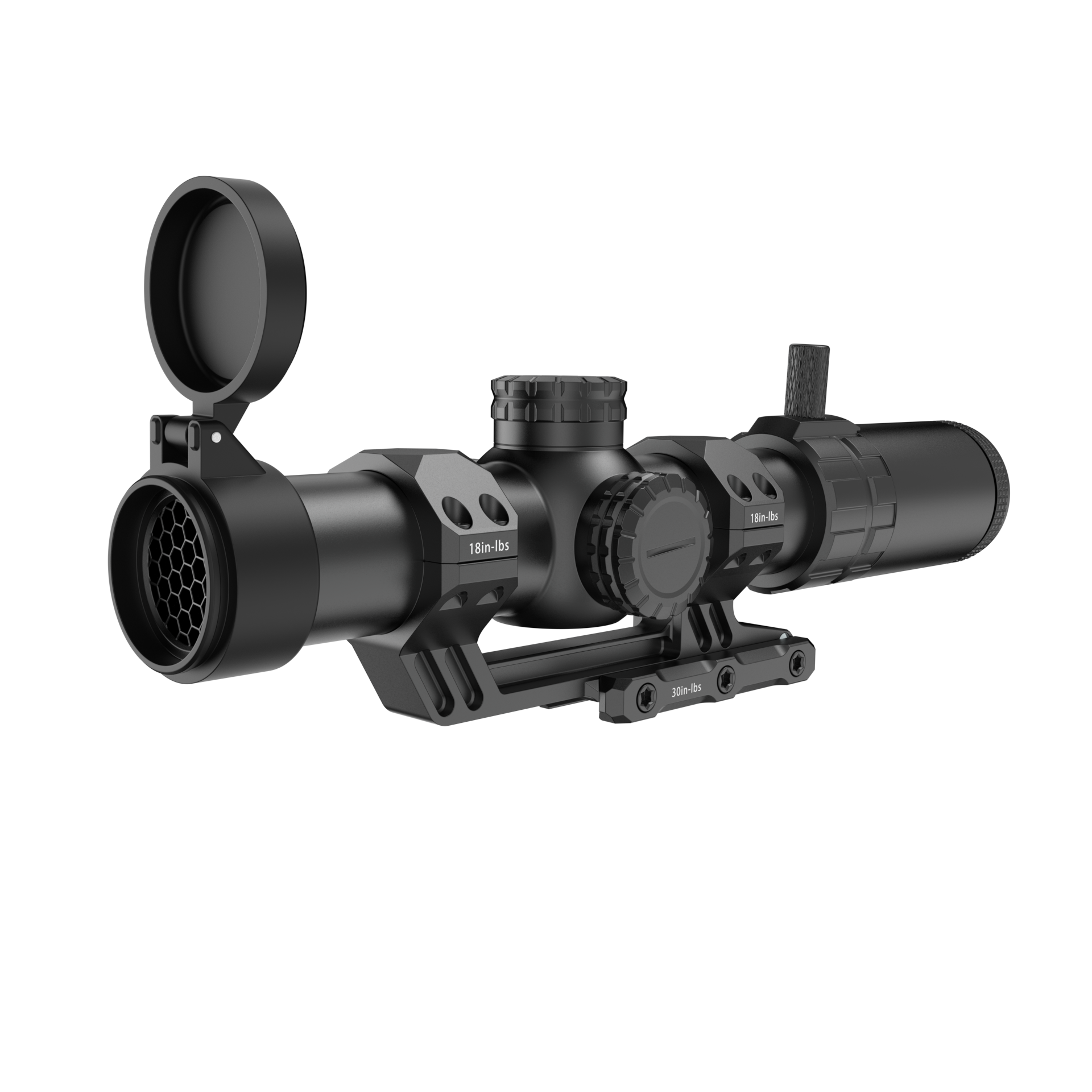
The SWAT Optics HSS DMR 1–10x offers CQB speed, true 1x, adjustable magnification, geometry-based ranging, and unmatched flexibility compared to prism optics—backed by multiple patents pending on the M-Reticle and associated systems.
Conclusion: LPVO Is the New Standard
Prisms are solid, simple, and reliable—but LPVOs outperform them in every practical category that matters in 2026.
- CQB speed with true or near-true 1x
- Variable magnification for changing distances
- PID and observation capability at meaningful ranges
- Visual ranging using real-world geometry (windows, doors, vehicles)
- Mid-range precision supported by real ballistic data
If you want a single optic that does everything a prism does—and everything it cannot—the LPVO is the clear winner. On an AR-15 or similar fighting carbine, a well-executed LPVO like the HSS DMR isn’t just an upgrade; it’s a different category of capability.