
Parallax, distortion, tunneling, chromatic aberration, edge shadowing, fisheye, and “fake 1x” are the most misunderstood optical concepts in the LPVO world. Yet these issues directly impact CQB speed, accuracy, and target identification. Most shooters blame themselves for slow sight acquisition—when in reality, the problem is often the optic geometry itself.
In this guide, we’ll break down the real science behind LPVO parallax and distortion, explain why cheap scopes fail, and show how advanced optics like the SWAT Optics HSS DMR 1–10x solve these issues with superior glass, design, and reticle architecture.
Before we get into the science, watch how quickly a calm street turns into a threat environment. If your optic fights you with distortion or parallax shift, you will lose precious seconds.
When stress hits, your optic must disappear—giving you a clean, distortion-free, parallax-minimized sight picture. This is where premium LPVO engineering matters.
What LPVO Parallax Actually Is (Most People Get This Wrong)
Parallax is the optical shift between the reticle and the target as your eye moves behind the scope. If the reticle appears to move relative to the target when you shift your head, that’s parallax error.
Why Parallax Exists
LPVOs are factory-parallaxed (usually at 100–150 yards) because adjustable side focus systems make LPVOs heavier and slower.
What People Think Happens
- “If my eye isn’t perfectly centered, I’ll miss by a mile.”
- “LPVOs are inaccurate because of parallax.”
- “Cheap scopes have the same parallax as expensive ones.”
What Actually Happens
- At 1x, a well-engineered LPVO has near-zero parallax.
- At 4–10x, parallax error exists but should be minimal and predictable.
- Cheap LPVOs have massive parallax drift, especially between 1–4x.
The HSS DMR minimizes parallax through better optical alignment, ED glass, and proper reticle focal-plane positioning.
Distortion Types: Why Cheap LPVOs Feel “Fish-Eyed” at 1x
1. Barrel Distortion
Straight lines bow outward. This creates a fisheye effect and makes moving targets appear faster than they are.
2. Pincushion Distortion
Straight lines bend inward, making the world feel like it’s collapsing toward the middle.
3. Angular Magnification Error (AME)
The world looks “compressed” or “expanded.” This affects ranging accuracy and speed.
4. Astigmatic Distortion
Shapes elongate or smear when you move your head—common in budget LPVOs.
What Distortion Does to Your Shooting
- Slower target transitions
- Misjudged distance at 1x
- Difficulty reading doorways, windows, and movement
- Inconsistent PID
High-end LPVO manufacturers reduce distortion through precision lens shaping, better coatings, edge correction geometry, and tighter optical tolerances. The HSS DMR uses ED glass to reduce distortion and maximize clarity.
Tunneling: The #1 Red Flag of a Cheap LPVO
Tunneling happens when the field of view shrinks at mid-range magnification (usually 2–4x). The image literally looks like you’re viewing through a long tube.
Why It Happens
- Poor erector system engineering
- Inconsistent lens spacing
- Improper magnification ring cam geometry
Premium LPVOs avoid tunneling by maintaining a consistent field of view across the zoom range. The HSS DMR is engineered specifically to have no tunneling—a critical feature for fast shooting and mid-range PID.
Chromatic Aberration: Why Cheap LPVOs “Glow Purple or Green”
Chromatic aberration happens when different wavelengths of light bend differently through low-quality glass. The result is color fringing—usually purple or green—around high-contrast edges.
The solution is ED (Extra-low Dispersion) glass, which the HSS DMR uses to reduce fringing and improve PID at distance.
Parallax + Distortion Directly Affect Eyebox Forgiveness
A forgiving eyebox means you can move your head without losing the image. Distortion and parallax issues dramatically shrink this margin.
Cheap LPVOs suffer because:
- The exit pupil collapses unevenly
- The reticle shifts under movement
- The optical axis is not perfectly centered
A good LPVO feels “easy to get behind”—a trait the HSS DMR optimizes through proper optical alignment and edge correction.
Why Distortion Affects Ranging & The Ballistics Calculator
Distortion changes how objects appear in size and shape. When your reticle is calibrated for real-world geometry, distortion ruins the math.
This is why the M-Reticle and SWAT Ballistics Calculator are built around consistent optical geometry and ED glass.
Try your setup here: SWAT Optics Ballistics Calculator
LPVO Knowledge Hub (Recommended Reading)
Upgrade to an LPVO Built to Eliminate Distortion
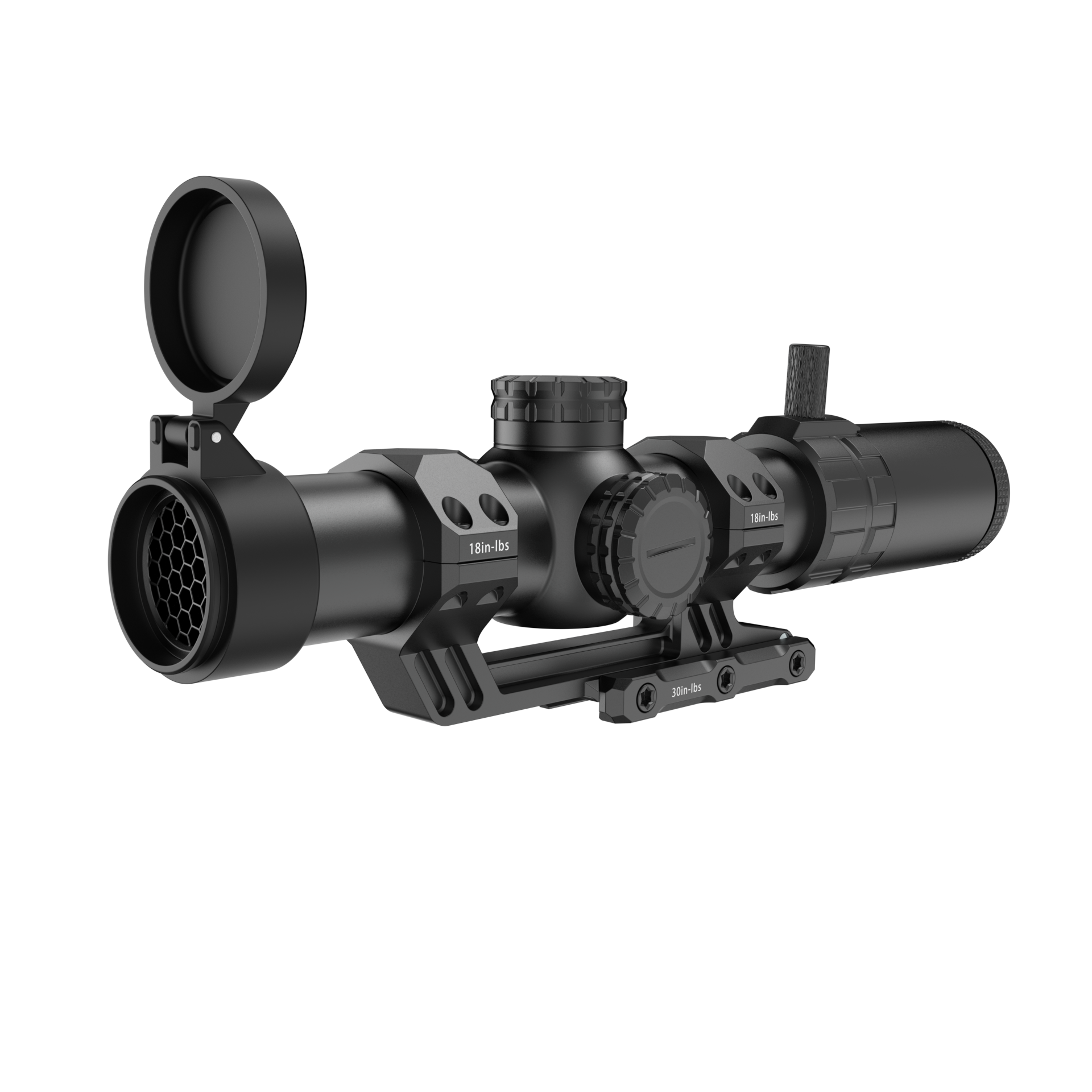
The SWAT Optics HSS DMR 1–10x uses ED glass, optimized lens geometry, and a distortion-free 1x design to deliver fast CQB performance, true field-of-view consistency, and precise ranging at distance.
Conclusion: LPVO Parallax & Distortion Are Not “Minor Issues”
They are the dividing line between a budget scope and a professional optical system. When distortion is low and parallax is controlled, the rifle becomes an extension of the shooter. When they're not, the optic fights you at every stage.