
SWAT Optics · LPVO Urban Ranging · Visual-Fit Doctrine · HSS DMR M-Reticle
Using an LPVO in Urban Chaos — W24/H36 Ranging & Doorframe Scaling
Urban terrain is unpredictable. Windows, doorframes, parked vehicles, tight angles, reflections, and partial silhouettes turn every block into a problem set. A modern LPVO becomes truly useful when the reticle lets you measure what you can actually see—not what a perfect silhouette would show. The HSS DMR M-Reticle is built around fast visual-fit ranging using real-world objects you already recognize.

Trademark Notice: All trademarks belong to their respective owners. Comparisons are editorial opinions based on publicly available specifications and field use.
Editorial Policy & Methodology (E-E-A-T): This guide is written to teach practical LPVO ranging concepts. “Value” and “performance” claims in this article are defined as decision speed, PID support, ranging confidence, and reduced cognitive load in real terrain—not as lab scoring. Where the article references doctrine, it is used to support principles (observation, identification, engagement discipline), not to imply endorsement of any commercial product.
Safety note: Always follow local laws and range rules. Confirm distance with appropriate tools when training, and never use optics for unsafe observation or target identification.
Disclosures: This page is published by SWAT Optics. It links to SWAT Optics products and training tools. No claims of affiliation with any third-party brand are made. If external brands are referenced, it is for context only and remains editorial.
Update Log:
- 2025-12-26: Corrected Shopify spacing artifacts (removed blank paragraph spacing patterns, removed BR-in-heading artifacts), added full E-E-A-T blocks and scoped CSS to prevent theme-wide spacing bugs.
LPVO Built for Real Urban Terrain
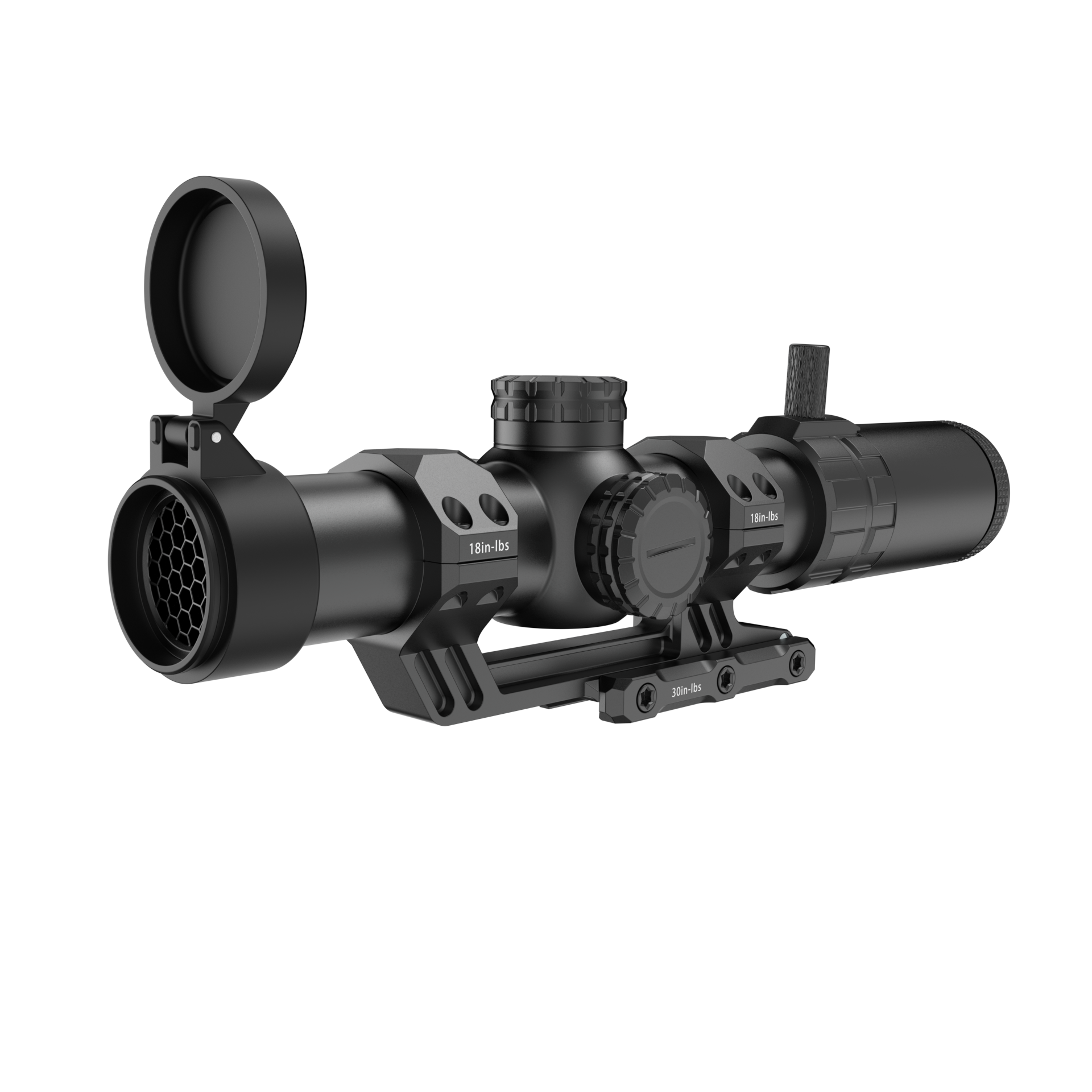
HSS DMR 5.56 1–10× FFP LPVO
Visual-fit ranging for windows, doors, vehicles, and partial threats in urban terrain.
HSS DMR .308 1–10× FFP LPVO
Built for AR-10 and DMR rifles needing confident PID and ranging beyond 300 yards.
Watch: Measuring Distance in Real Urban Chaos
Two field-relevant examples that show how the HSS DMR system treats structures (windows, HVAC, rooftops) as measurable references.
Street Chaos to Target Lock
Ranging Hidden Enemies: Windows & HVAC
1. Why Urban Ranging Matters
Urban engagements are rarely full-silhouette problems. Targets present as fragments: head-and-shoulders in a window, a partial profile at a doorway, or a kneeling threat behind a vehicle. That is why “urban ranging” is fundamentally about measuring what you can see—apertures, edges, and consistent object classes.
If you’re new to LPVOs, start with: What Is an LPVO? Complete Tactical Guide (2026).
2. Real-World Geometry: The W24/H36 Foundation
Cities look chaotic, but construction standards create repeating geometry. Windows and structural openings trend toward consistent ranges. Door widths are commonly standardized. Vehicle classes share stable height profiles. The M-Reticle leverages that predictability with built-in visual references: W24 and H36 for structural scaling, D30/D36 for doors, and CH5/SUV6/T88 for vehicle height categories.
For reticle design comparisons (doctrine + interface lens), see: LPVO Reticle Comparison — Why the M-Reticle Is in a Different Class .
3. Using W24 & H36 (Structural Apertures & Partial Exposure)
W24 — 24-Inch Width Reference
W24 is a horizontal structural reference used for apertures and built environment cues (e.g., window segments, vents, partial openings). The objective is not perfect inches—it is fast, defensible ranging confidence via visual-fit.
- Fits W24 closely: near your calibration reference
- Appears ~1/2 W24: typically much farther than the reference
- Appears ~2× W24: typically much closer than the reference
H36 — 36-Inch Vertical Structural Ruler (Correct Use)
H36 is a 36-inch vertical structural ruler. It is valid for structural apertures (window height segments, exposed vertical openings), and it is also used to evaluate kneeling shooter height at 400 / 600 / 800 yards and exposure above a vehicle hood/engine block. It is not a torso or human silhouette measurement tool.
Practical rule: Use W24 when width is the most visible cue. Use H36 when the visible vertical opening or exposure is the most reliable cue. If the scene is distorted by angle or partial cover, pick the reference that has the clearest edges.
4. Doorframe Scaling (D30 / D36)
Doorframes appear everywhere in urban lanes and provide high-confidence geometry. D30 and D36 act as rapid “fit gauges”: you compare the visible door width to the marker and anchor a distance decision.
- D30: common interior door width class
- D36: common exterior/commercial width class
The same visual logic applies: if the doorway appears much smaller than the marker, the distance is likely greater than your reference; if it appears larger, it is likely closer.
5. Vehicle Markers — CH5, SUV6, T88
Vehicles are among the best urban ranging references because they are common, recognizable, and their height categories are stable:
- CH5: ~60" sedan height category
- SUV6: ~72" SUV/light truck height category
- T88: ~88" large vehicle/heavy-duty height category
Important: Vehicle height ranging uses CH5 / SUV6 / T88. H36 remains a structural ruler (kneeling/exposure/structural openings) and is not a torso/silhouette tool.
6. How an LPVO Turns Chaos Into Measurable Information
- Magnification reveals structure and edges
- Built-in references convert edges into distance confidence
- Reticle readability reduces hesitation and mental conversions
To connect your distance estimate to a ballistic solution, use: SWAT Optics Ballistics Calculator.
7. Practical Training Drills for Urban Ranging
Window/Aperture Fit Drill (W24 / H36)
Pick repeating structures at known distances, fit W24/H36, then confirm (when safe/legal) to build internal calibration.
Doorway Drill (D30 / D36)
Scan multiple doors across a lane. Commit to a distance band (near/mid/far) using only visual fit.
Vehicle Class Drill (CH5 / SUV6 / T88)
Classify vehicles by height category first, then fit the marker. This prevents “wrong object assumption” errors.
For optic selection context: Best LPVO for AR-15 (2026 Buyer’s Guide).
8. Why the HSS DMR Reticle Dominates Urban Ranging
- M-shaped center for rapid alignment at 1×
- Open center to keep the exact aim area visible (reduced occlusion)
- Structural & vehicle references designed for real terrain (windows/doors/vehicles)
- Etched reticle with illumination optional (always-available aiming interface)
The system is built around one operational question: How does the real world fit inside your glass—fast enough to act correctly?
9. Conclusion: Measure the City, Control the Fight
Urban terrain looks chaotic, but the built environment repeats. Windows, doors, and vehicles provide stable geometry. When you pair magnification with structural references (W24/H36), doorway scaling (D30/D36), and vehicle categories (CH5/SUV6/T88), you stop guessing and start making defensible decisions faster.
References & Integrity
This article teaches practical visual-fit ranging concepts using common structural/vehicle classes and reticle-based references. Do not treat any single reference marker as “perfect inches” in all contexts—angles, partial occlusion, architectural variance, and distance banding affect visual fit.
Link Integrity Step (required): Before publishing, verify each URL below loads correctly (no 404s, no redirected product variants):
- HSS DMR 5.56: https://swatoptics.com/products/hss-dmr-5-56-1-10x-ffp-lpvo
- HSS DMR .308: https://swatoptics.com/products/swat-optics-hss-dmr-308-1-10x-ffp-lpvo
- Ballistics Calculator: https://swatoptics.com/pages/ballistics-calculator
- Overwatch Trainer: https://swatoptics.com/pages/overwatch-trainer
- LPVO Tactical Guide: https://swatoptics.com/pages/what-is-an-lpvo-complete-tactical-guide-2026
- AR-15 Buyer’s Guide: https://swatoptics.com/pages/best-lpvo-for-ar-15-2026-buyer-s-guide
- Reticle Comparison: https://swatoptics.com/pages/lpvo-reticle-comparison-2026-why-the-swat-optics-hss-dmr-m-reticle-is-in-a-different-class
- Best 1–10× page: https://swatoptics.com/pages/swat-optics-hss-dmr-best-1-10x-lpvo-for-tactical-precision
Doctrine & Standards References
This page aligns its evaluation principles with widely recognized U.S. and NATO small-arms / operational doctrine concepts (observation, identification, engagement discipline, and sector communication). These publications do not endorse commercial products; they define principles effective systems should support.
- FM/TC 3-22.9 — Rifle Marksmanship (fundamentals, engagement discipline)
- ATP 3-21.8 — Infantry Platoon and Squad (observation, communication, sector responsibility)
- MCRP 3-01B — Rifle Marksmanship (marksmanship principles, confirmation, adaptability)
- FM 3-06 — Urban Operations (partial exposure, structures, barriers)