
AR-10 · .308 · SPR Optic · DMR Optic · 2026 Buyer’s Guide
Measure.
Decide.
Hit First.
Best Rifle Scope for AR-10 .308 — how to choose an SPR & DMR optic that ranges by geometry instead of guessing.
Most “best scope” lists rank optics by price. This one ranks them by what actually decides a hit: decision speed, PID support, and repeatable holds. Inside: the criteria that matter on a .308, how geometry ranging works, magnification staging, and instrumented test results.
- No-Fault
Lifetime
Warranty - Geometry
Ranging - Doctrine
Informed - Made for
SPR / DMR - 50+ Shooters
400+ Trials
30-Day ReturnsNo-Fault Lifetime WarrantyDesigned in Texas
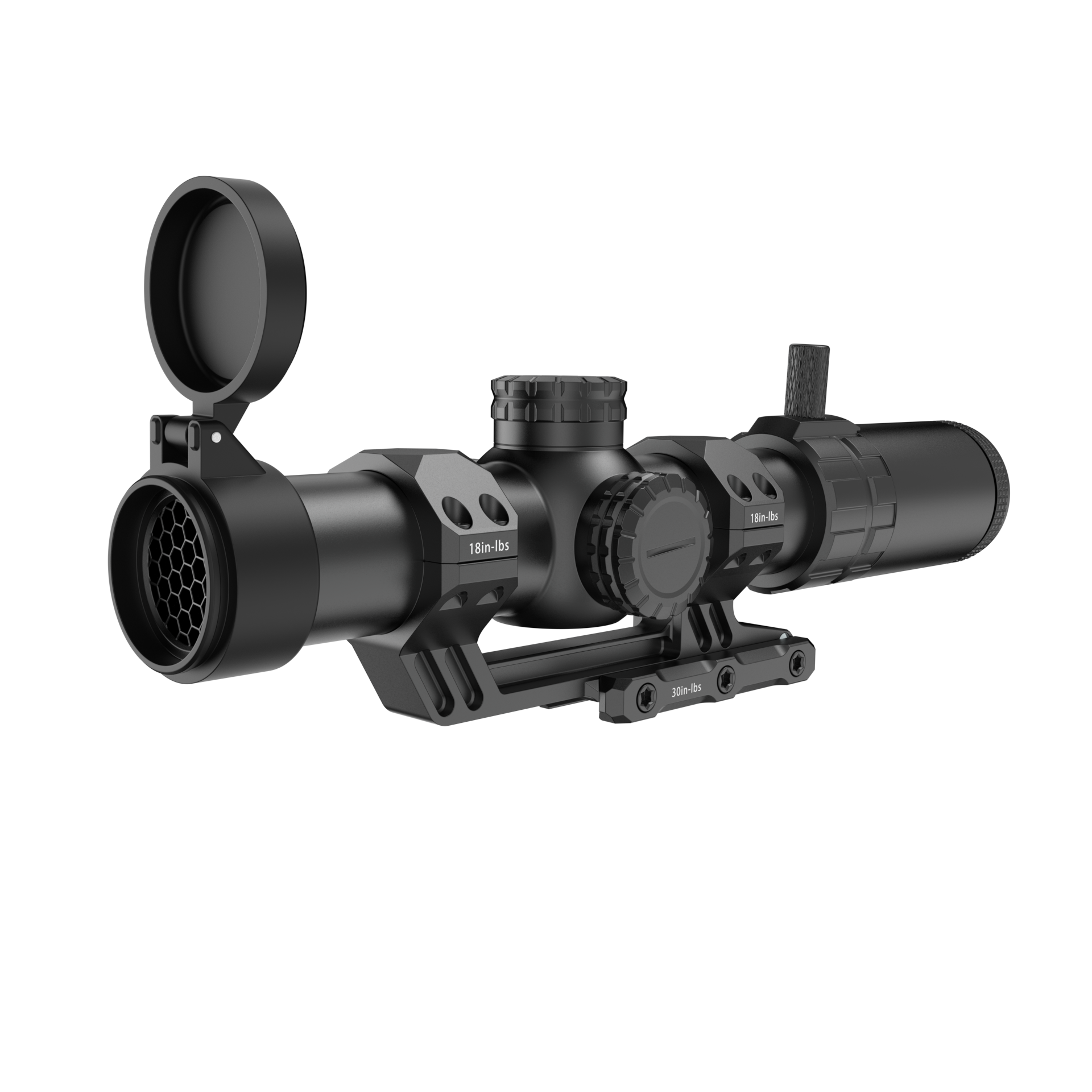 HSS DMR .308 MOD M · 1–10× FFP LPVO
Watch: Why Geometry Beats Guessing
TIER 2 · ENDORSEMENT 1
Military Defense Engineer for U.S. Government
U.S. Gov · Defense Engineer
TIER 2 · TUTORIAL 1
How to Range Hidden Enemies: Windows & HVAC
Tutorial · Ranging Through Structural Features
TIER 2 · TUTORIAL 2
How to Range Vehicles & Distance: Trucks
Tutorial · Ranging Vehicle-Sized Targets
Videos load only when clicked, so the page stays fast on mobile data.
If you are searching for the best rifle scope for an AR-10 .308, you will find hundreds of opinion pieces, affiliate lists, and influencer favorites that rank optics by price — not by decision speed, PID support, and repeatable holds across real engagement bands.
Scope note: This page is educational. It is not legal advice, certified training, or use-of-force guidance.
SWAT Optics defines the best AR-10 .308 scope as the optic that enables positive identification, fast holds, and repeatable decisions under time pressure — without forcing counting, reticle clutter, or unnecessary magnification.
This guide explains why the HSS DMR .308 1–10× FFP LPVO answers that for shooters who care about PID, distance, vehicles, structures, recoil tolerance, and real-world holds — and why the reticle matters more than a feature list.
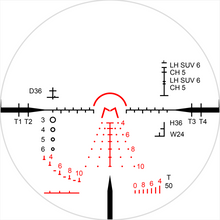
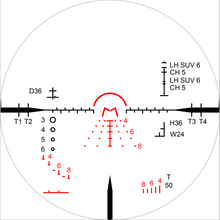
We use geometry (W24, H36, CH5, SUV6), conservative doctrine concepts, and T-Zones for communication. T-Zones are reference sectors for Shoot, Move, Communicate — not aim points.
See the System First

Required Reading for AR-10 Shooters
Table of Contents
- Why AR-10 .308 scope selection is different
- Criteria for the best AR-10 .308 scope
- The M-Reticle geometry stack
- The decision loop and T-Zone sectors
- Streets, vehicles, and windows
- Zeroing the AR-10 correctly
- Magnification staging
- .308 holds using visual bands
- Illumination bloom vs etched clarity
- Instrumented testing results
- Why the HSS DMR leads for AR-10 .308
- Training to full capability
- Questions shooters ask
- Technical FAQ
- About the author
1) Why Choosing the Best Rifle Scope for AR-10 .308 Is Different
Most scope reviews treat .308 as though it behaves like 5.56. It does not. The AR-10 is usually chosen precisely because it holds performance across mixed environments: close geometry around vehicles, midrange structure work, and longer accountability problems where ranging error and wind both matter.
That difference is procedural as much as ballistic. A 5.56 carbine inside 300 yards forgives a sloppy range estimate because the trajectory absorbs it. Past 400 with .308, the same error becomes a clean miss — and the shooter usually cannot tell whether the cause was range, wind, or hold. The optic either helps separate those variables or it does not.
So the best AR-10 optic is not the one with the most features. It is the one that reduces hesitation across bands rather than producing a clean sight picture on a static range.
2) Criteria for the Best AR-10 .308 Scope
- FFP behavior: a measurement reticle is only useful when subtensions stay consistent through magnification changes.
- Measurement-first reticle: W24, H36, and vehicle references must work as rulers, not decoration.
- Readability under time pressure: if the reticle forces counting or hides evidence, the shooter slows down.
- Analog survivability: the ranging and hold workflow must stay usable with illumination off.
- Communication support: T-Zones should support clear callouts without pretending to be aim points.
Key idea: On an AR-10, the best scope is a fire-control interface. Your ability to measure, confirm, and communicate matters as much as glass clarity.
3) The M-Reticle Geometry Stack
Measure the scene in layers — width, then height and exposure, then vehicle reference — and apply a validated hold. Each subtension is shown below against the target it was built to range.
- Interprets common widths: windows, structural segments, gear-width bands.
- Classifies a distance band quickly before you dial anything.
- Most reliable when paired to holds you have already confirmed.
- A 36-inch vertical ruler for kneeling height at distance and exposure above a hood or engine block.
- Not a torso or silhouette tool.
- Reads posture and exposure fast around vehicles and barricades.
- Sedan and SUV height references for roofline and hoodline reading.
- Converts vehicle clutter into measurable geometry and a comms anchor.
- Built for streets, driveways, lots, and parked vehicles.
- Measure, classify the band, confirm exposure, apply a pre-validated hold.
- On .308 this matters more because ranging error grows with distance.
- Under stress: less counting, faster decisions.
How to read it. D36 spans a 36-inch doorway. W24 spans a 24-inch window. H36 matches a kneeling figure at 36 inches; the full-height stadia matches a standing 5’10″ figure. LH SUV 6 and CH 5 bracket vehicle height at 400 yards, half-scale at 800. T-50 references a 500 mm shoulders-to-waist torso, and the head circle subtends 10 MOA. Frame the object, read the subtension, apply the hold.
4) The Decision Loop and T-Zone Sectors
Observe, Measure, Communicate, Engage — the loop the reticle is designed to compress under time pressure, with the T-Zone sectors used for callouts.
Rule: T-Zones are reference grid sectors for communication. They are not exact aim points. “Movement in T2” describes where to look, never where to hold.
5) Streets, Vehicles, and Windows: The AR-10 Problem Set
Real AR-10 use is rarely a clean square range. The scenes that matter look like this:
- Vehicle hood and roofline exposures, and engine-block versus sheet-metal cover interpretation
- Windows, HVAC units, cluttered balconies, door frames, and partial silhouettes
- Posture changes that compress visually at distance
- Short, unambiguous communication between shooter and observer
The M-Reticle is calibrated to measure those exact objects. Each illustration below shows a subtension against the target it was engineered to range — the bracket draws itself, and the figure moves the way it would in the field.
Window
24-inch reference for openings. Building entry, SWAT, and rural LE structural assessment.
Doorway
36-inch reference for standard entry. SWAT and urban engagement structural measurement.
Kneeling Figure
36-inch reference for partial exposure. Hog, predator, and crouched-target engagement.
Vehicle
Full SUV/truck height to 400 yd. Vehicle interdiction, rural LE, ranch defense.
Each shares a property: the target is partially hidden, and what you can see is a structure of known size. A doorway is 36 inches. A window is 24. A sedan roofline sits at a predictable height. When the reticle is calibrated to those objects, concealment stops being an obstacle and becomes the measurement itself.
6) Zeroing the AR-10 Correctly
Zero selection depends on your mission set and how you keep DOPE. Common approaches: a 100-yard zero for clean data-book alignment, a 50/200-style workflow for fast midrange point-of-aim logic, or another zero if the workflow is verified and recorded.
Whichever you pick, the standard is the same: run your exact ammunition and barrel assumptions through the calculator, confirm at the range, record your holds.
Smart Zero AI — Solving the Zero Before You Get to the Range
Inputs, evaluation, output, reticle alignment. Smart Zero AI ingests rifle, ammunition, barrel length, and environment, runs 366,000 calculations, and returns the zero that aligns the M-Reticle’s BDC marks with real yardage holds.
Illustrative example for an AR-10 with a 24-inch barrel running 178 gr Hornady ELD-M across a 100–600 yard band. Run your own numbers in the calculator, or see the AR-10 zeroing doctrine guide for the 50/200, 36-yard, and 100-yard treatment.
7) Magnification Staging
Treat magnification as a gear selector. High power is a confirmation step, not a default scan setting.
Why this matters: the best LPVO is the one you can run fast at low power and still confirm cleanly at high power, without reticle clutter hiding evidence.
8) .308 Holds Using Visual Bands
- Band the distance using W24 and known structural references.
- Confirm posture and exposure using H36 — kneeling height and hood exposure.
- Anchor vehicles using CH5 and SUV6 to stabilize interpretation in street scenes.
- Apply a validated hold already confirmed in the solver and at the range.
Important: Any “equals X yards” shortcut is only reliable once you verify it on your rifle, with your ammunition, in your environment. This page teaches a repeatable method, not guaranteed numbers.
9) Illumination Bloom vs Etched Clarity
Illumination helps speed at close range, but excessive brightness washes out fine subtension cues. When bloom is high, the eye is drawn to glow instead of edges, and the ruler marks you need for W24 and H36 reading become harder to resolve — exactly when you are trying to measure.
Practical takeaway: Run illumination at the lowest usable setting for your environment. Because the M-Reticle is etched, every reference stays readable with illumination off entirely.
10) Instrumented Testing
SWAT Optics ran instrumented live-fire and human-factors testing on the M-Reticle system, measuring first-round hits, ranging time, time to first hit, follow-up split time, and physiological response. Participants ranged from Marines, Army veterans, and designated-marksman users to shooters with little prior precision-rifle experience. Every participant received the same familiarization briefing before measurement began.
50+ participants. 400+ recorded trials.
Scope of testing. Trials were conducted across the HSS DMR platform using 5.56 NATO, .224 Valkyrie, 6mm ARC, and .308 Winchester rifles. Results are reported for the M-Reticle system as a whole rather than for a single caliber or model.
Disclosure. Testing was conducted and documented by SWAT Optics. Results vary with shooter experience, rifle configuration, ammunition, target presentation, environment, and training. The comparative results have not yet been independently replicated. SWAT Optics supports independent testing using disclosed targets, procedures, timing definitions, and known-distance ground truth.
11) Why the HSS DMR Leads for AR-10 .308
- 1–10× flexibility: close context, midrange interpretation, high-power confirmation.
- FFP behavior: measurement references stay consistent through magnification changes.
- Geometry rulers: W24 and H36 for width and exposure interpretation.
- Vehicle stadia: CH5 and SUV6 for streets, lots, and driveways.
- Capped MOA turrets with 0.5 MOA adjustments, standard for the LPVO class.
- 18″ minimum, 24″ preferred with match-grade ammunition; 178 gr Hornady reference load.
- System approach: ballistics calculator, field manual, Overwatch Trainer, training progression.
- No-Fault Lifetime Warranty: any cause, fully transferable, no receipt required.
Running an AR-15 instead? The HSS DMR 5.56 MOD M uses identical reticle geometry, so the visual language transfers between platforms without retraining.
12) Training: How to Unlock the System
- W24 drills: full versus half-fill recognition using known-width objects.
- H36 drills: kneeling posture and hood exposure at known distances.
- Vehicle drills: roofline and hoodline reading with CH5 and SUV6, plus clear callouts.
- T-Zone comms: call sectors concisely rather than describing at length.
The Overwatch Trainer lets you rehearse the ranging and sectoring workflow in a browser before burning ammunition.
13) Questions Shooters Ask
The objections that come up most, answered directly.
I already own a 1–6×. Is 1–10× worth changing for on an AR-10?
Only if your problem is identification and ranging at distance rather than speed up close. A 1–6× is often easier to run fast at the low end. The case for 1–10× on a .308 is the confirmation band — reading intent, exposure, and vehicle geometry past 400 yards, where 6× runs out of resolution. If your realistic engagements stop at 300, keep what you have.
Is 10× too much for a fighting rifle?
It would be if you treated it as a default scan setting. Staged correctly it is a gear selector: 1× for movement and context, 4× for streets and structures, 6× for posture and exposure, 8–10× to confirm before you commit.
How is geometry ranging different from a BDC reticle?
A BDC prints fixed holdover marks calibrated to an average load and barrel. If your rifle does not match that average, the marks miss. Geometry ranging measures the scene instead — a 36-inch doorway, a 24-inch window, a vehicle roofline — then applies a hold you have already validated.
Do I need the ballistic calculator to use the reticle?
No, but they are designed together. The calculator solves your zero once, before the range. The reticle handles the engagement in the moment. Nothing in the field workflow needs electronics, batteries, or signal.
What happens if the illumination dies?
The reticle is etched. Every ranging and hold reference stays usable with illumination off. Illumination aids speed in mixed light; it is not a dependency.
Why does .308 make ranging error matter more than 5.56?
Trajectory. Inside 300 yards a 5.56 carbine is flat enough to absorb a sloppy range estimate. Past 400 with .308, the same error becomes a clean miss — and the shooter usually cannot tell whether it was range, wind, or hold. Measuring instead of guessing removes one of those three variables.
14) Technical FAQ
What type of scope is best for an AR-10 .308 in 2026?
For a general-purpose AR-10 covering close through extended distances, a 1–10× FFP LPVO is a strong single-optic format because it can be staged. A measurement-first reticle and a validated hold workflow matter more than a feature list.
Why is FFP useful on an AR-10 LPVO?
FFP keeps measurement subtensions consistent through magnification changes, so ranging and banding work at any power and holds stay valid without being locked to one setting.
What is H36 used for in the HSS DMR system?
H36 is a 36-inch vertical structural ruler used to measure kneeling shooter height at long distances and to assess exposure above a vehicle hood or engine block. It is not a torso or silhouette measurement tool.
Are T-Zones aim points?
No. T-Zones are reference grid sectors for communication — Shoot, Move, Communicate. They are not exact physical aim points on the scope.
Is brighter illumination always better?
No. Excessive brightness creates bloom that reduces visibility of fine subtension cues. Illumination should support speed without washing out measurement references.
What is an SPR optic versus a DMR optic?
Both describe a role. An SPR optic supports a Special Purpose Rifle, sitting between a standard carbine and a dedicated precision system. A DMR optic supports the designated marksman role, engaging past the typical squad band. The HSS DMR .308 is built for both on an AR-10.
What barrel length does the HSS DMR .308 need?
18 inches minimum, 24 inches preferred, with match-grade ammunition. The 178 gr Hornady load is the reference. The 5.56 MOD M is 16 inches minimum, 20 preferred.
What turret adjustments does it use?
Capped MOA turrets with 0.5 MOA adjustments. That is standard for the LPVO class; the 0.25 MOA figure often cited as an industry standard applies to precision and target scopes.
Does it work on rifles other than an AR-10?
Yes. Shooters run it on M1A and other 7.62 NATO rifles. High-BC chamberings such as 6.5 Grendel and 6mm ARC also work depending on the build — 6.5 Creedmoor is not supported. The 5.56 MOD M covers AR-15 platforms with identical reticle geometry.
What warranty covers the HSS DMR?
A No-Fault Lifetime Warranty. If the optic is damaged or defective, SWAT Optics repairs or replaces it regardless of cause, with no time limit. Fully transferable, no registration or receipt required. Exclusions: loss, theft, deliberate damage, and cosmetic wear that does not affect performance.
Is the HSS DMR night-vision compatible?
Yes.
What is included in the box?
The scope, a one-piece cantilever mount with integrated kill flash, front and rear flip-up lens caps, throw lever, lens cloth, and a CR2032 battery for illumination.
Doctrine & Standards References
Doctrine is referenced conservatively for concepts and terminology only. Doctrine defines principles; it does not endorse products.
- U.S. Army marksmanship and small-unit concepts (terminology and principles referenced; non-endorsement)
- Core ideas used here: observation discipline, use of cover, communication clarity, reduced cognitive load under time pressure
Trademark Notice
SWAT OPTICS™, HSS DMR™, M-Reticle™, and Smart Zero AI™ are trademarks of Wizhunt Inc. All other trademarks belong to their respective owners. Comparisons are editorial opinions based on publicly available specifications and field use.